


With Lovers’ Day around the corner, believers visiting the deity of marriage and love at the Xia Hai City God Temple (霞海城隍廟) in Taipei have recently increased, staff at the temple said.
As of April, the temple said it had already received more than 3,300 worshipers who have returned to the temple to thank the deity for granting their wishes.
Located on Dihua Street (迪化街), the temple has been the home of the deity of marriage and love, also called the Old Man under the Moon (月下老人), since 1971 for the sole purpose of bringing couples together in marriage.
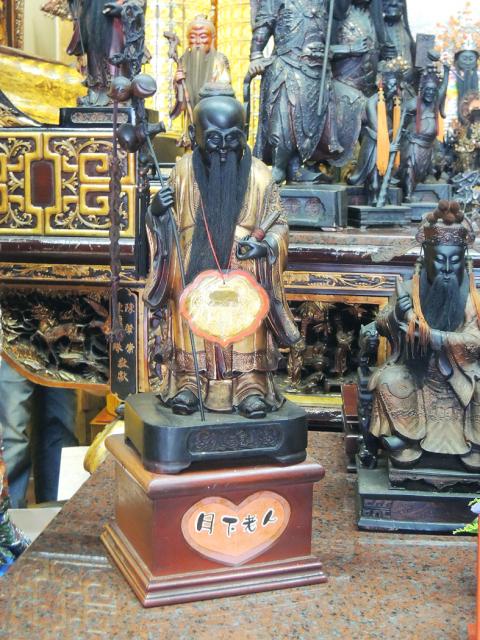
Photo: Tsai Wei-chi, Taipei Times
The fame of the temple had spread across the nation by 2002, not only drawing Taiwanese, but also Japanese and Chinese tourists, who often come to Taiwan to pray at the temple in the hopes of finding their other half, temple staff said.
Staff say statistics kept by the temple since 2000 show the deity had helped more than 61,000 men and women who had come to pray at the temple find love or marriage.
More than 5,000 boxes of marriage cakes have been sent to the temple by newlyweds annually in a gesture of thanks for the deity since 2005, the temple said, adding that the highest number was in 2008, when the temple received more than 9,316 boxes.
Because last year was the nation’s centenary, many couples chose that auspicious time to get married, with 7,871 couples coming to the temple to thank the deity last year, the temple said, adding that it estimated there would be about 7,000 people this year as well.
Titan Wu (吳孟寰), who works in the temple’s publicity department, said that as Lovers’ Day draws closer, the temple is seeing a steady increase of visitors.
Set on the seventh day of the seventh month of the lunar calendar, the day is, according to myth, the one day when a daughter of the Goddess of Heaven can cross the Milky Way to meet her husband on Earth after the lovers were separated by a mandate form the Emperor of Heaven.
While men formerly made up only 30 percent of the visitors, in recent years the proportion of men visiting the temple has increased to 40 percent, Wu said, adding that in the past, older men or women came to the temple to ask for the deity’s blessing for their children, but now they were often also looking for either another marriage, or simply someone to keep them company in their old age.
Wu said that when first visiting the temple, one must prepare a lead coin, a length of red string and some offering, usually sweets commonly seen at weddings, and after praying in front of the figurine symbolizing the presence of the deity, the supplicant has to pass both string and coin above the incense holder clockwise three times, then keep the coin and string in their wallet or purse.
People most often want to know when they will be meeting their other halves, but Wu said that in his experience, at the quickest it takes three months, but some must wait for seven or eight years.
“As long as you believe, the Old Man under the Moon never disappoints,” Wu said.
Wu cited a recent example of a taxi driver who came to thank the deity. The man had visited the temple after he had been going out with his girlfriend for three months.
The very next day after his visit to the temple, his girlfriend told him that she had dreamed of an old man who kept saying good things about the boyfriend and how he was a good man to give herself to in marriage, Wu said, adding that the two were married soon after.

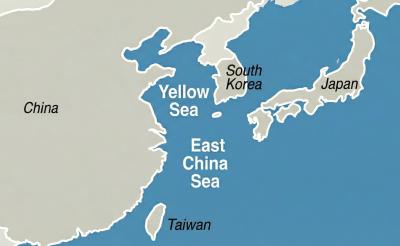
China has reserved offshore airspace in the Yellow Sea and East China Sea from March 27 to May 6, issuing alerts usually used to warn of military exercises, although no such exercises have been announced, the Wall Street Journal (WSJ) reported yesterday. Reserving such a large area for 40 days without explanation is an “unusual step,” as military exercises normally only last a few days, the paper said. These alerts, known as Notice to Air Missions (Notams), “are intended to inform pilots and aviation authorities of temporary airspace hazards or restrictions,” the article said. The airspace reserved in the alert is
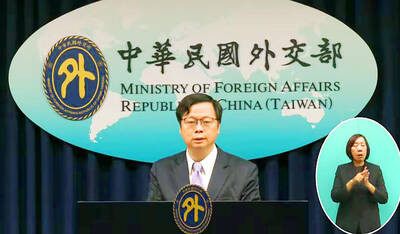
NAMING SPAT: The foreign ministry called on Denmark to propose an acceptable solution to the erroneous nationality used for Taiwanese on residence permits Taiwan has revoked some privileges for Danish diplomatic staff over a Danish permit that lists “Taiwan” as “China,” Eric Huang (黃鈞耀), head of the Ministry of Foreign Affairs’ Department of European Affairs, told a news conference in Taipei yesterday. Reporters asked Huang whether the Danish government had responded to the ministry’s request that it correct the nationality on Danish residence permits of Taiwanese, which has been listed as “China” since 2024. Taiwan’s representative office in Denmark continues to communicate with the Danish government, and the ministry has revoked some privileges previously granted to Danish representatives in Taiwan and would continue to review
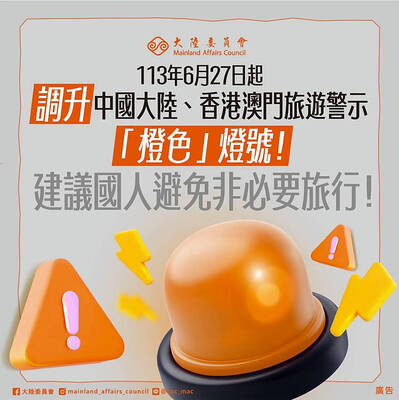
More than 6,000 Taiwanese students have participated in exchange programs in China over the past two years, despite the Mainland Affairs Council’s (MAC) “orange light” travel advisory, government records showed. The MAC’s publicly available registry showed that Taiwanese college and university students who went on exchange programs across the Strait numbered 3,592 and 2,966 people respectively. The National Immigration Agency data revealed that 2,296 and 2,551 Chinese students visited Taiwan for study in the same two years. A review of the Web sites of publicly-run universities and colleges showed that Taiwanese higher education institutions continued to recruit students for Chinese educational programs without

China has reserved offshore airspace over the Yellow Sea and East China Sea from March 27 to May 6, issuing alerts that are usually used to warn of military exercises, although no such exercises have been announced, the Wall Street Journal (WSJ) reported on Sunday. Reserving such a large area for 40 days without explanation is an “unusual step,” as military exercises normally only last a few days, the paper said. The alerts, known as notice to air missions (NOTAMs), “are intended to inform pilots and aviation authorities of temporary airspace hazards or restrictions,” the article said. The airspace reserved in the alert


 RSS
RSS