


In an effort to curb drunk driving, Taipei City’s Department of Transportation said it is gathering opinions from taxi drivers’ unions and companies to formulate an acceptable service charge for the department’s planned improvements to the substitute driver service.
The service usually involves a taxi firm sending two vehicles from its fleet to the passenger who requested a pick-up, with one of the drivers leaving his or her vehicle and driving the passenger’s car, while the other taxi follows and records the journey with a dashboard-mounted camera.
“In light of the rampant incidences of drunk driving and concerns of competition over the service, we would like to discuss with all companies and unions how to make the service more transparent and implement regulations,” department chief Lin Chih-ying (林志盈) said.
While the rates and regulations will not be mandatory, it is thought members of the public would be more receptive if government agencies and private companies discussed the issue, Lin said, adding it would also ensure that any regulations and rates agreed upon would be reasonable.
Lin’s concerns over the issue of competition is explained by the existing policy of substitute driving, implemented three years ago, that governs Taiwanese taxi fleets.
According to Taiwan Taxi, its current designated driver service costs NT$1,000 for the first 15km with an additional NT$100 for every kilometer afterward.
The service receives 150 calls per month, nearly half the amount it got when the service was started, said the company’s general manager, Lee Chung-shu (李瓊淑) said, citing lack of promotion as one reason for the decrease while adding that drivers were concerned at the service’s potential for causing problems, such as car accidents or personal items left behind.
“If the department takes the lead in outlining regulations and setting prices, we’re willing to cooperate,” she said, adding that there was little to no room for a drop in price.
Wu Chun-te (吳俊德), general manager of the Crown Taxi firm, said there were too many gray areas in the designated driver service.
Drivers usually only take on customers with whom they are familiar and there were not that many calls for the service per month, he said.
Substitute driving is a good business idea, but taxi drivers are often worried because driving someone else’s car would be very problematic in case of an accident, Wu said.
For example, if the car being driven by the substitute driver ends up in an accident and is not insured, the driver would not only not earn anything for the journey, but might also have to spend additional time and money to resolve any resultant problems, Wu said.
“We talked with insurance companies before in the hope of insuring substitute drivers, but the insurance companies felt that the risks involved were too high and were unwilling to provide insurance,” Wu said.
If the department could negotiate with insurance companies and the Ministry of Finance could provide substitute drivers with short-term insurance cover, it would give taxi companies the incentive to promote the substitute driver service, he added.
If there is an accident involving a substitute driver, the first thing is to verify which party bears the greater responsibility for causing the accident, said Shang Chin-tang (尚錦堂), chief of the department’s General Transportation Section.
If the substitute driver is not in the wrong, there would be no issue with them receiving their fare, Shang said.
However, Shang added that if business owners felt the substitute driver service would benefit from short-term insurance, then the department would be willing to help in those negotiations.
Translated by Jake Chung, staff writer
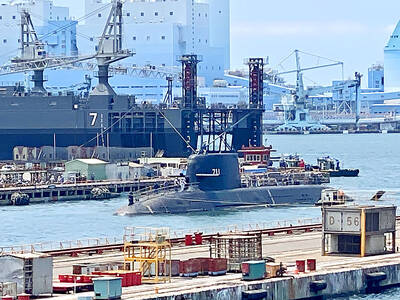
AGING: While Japan has 22 submarines, Taiwan only operates four, two of which were commissioned by the US in 1945 and 1946, and transferred to Taiwan in 1973 Taiwan would need at least 12 submarines to reach modern fleet capabilities, CSBC Corp, Taiwan chairman Chen Cheng-hung (陳政宏) said in an interview broadcast on Friday, citing a US assessment. CSBC is testing the nation’s first indigenous defense submarine, the Hai Kun (海鯤, Narwhal), which is scheduled to be delivered to the navy next month or in July. The Hai Kun has completed torpedo-firing tests and is scheduled to undergo overnight sea trials, Chen said on an SET TV military affairs program. Taiwan would require at least 12 submarines to establish a modern submarine force after assessing the nation’s operational environment and defense
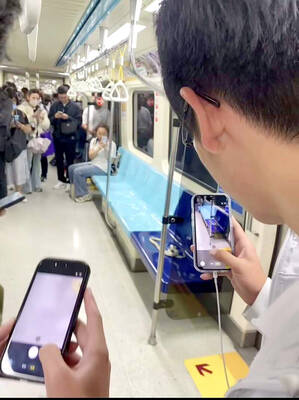
A white king snake that frightened passengers and caused a stir on a Taipei MRT train on Friday evening has been claimed by its owner, who would be fined, Taipei Rapid Transit Corp (TRTC) said yesterday. A person on Threads posted that he thought he was lucky to find an empty row of seats on Friday after boarding a train on the Bannan (Blue) Line, only to spot a white snake with black stripes after sitting down. Startled, he jumped up, he wrote, describing the encounter as “terrifying.” “Taipei’s rat control plan: Release snakes on the metro,” one person wrote in reply, referring
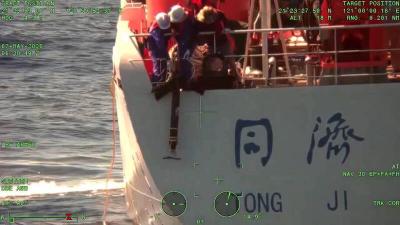
The coast guard today said that it had disrupted "illegal" operations by a Chinese research ship in waters close to the nation and driven it away, part of what Taipei sees a provocative pattern of China's stepped up maritime activities. The coast guard said that it on Thursday last week detected the Chinese ship Tongji (同濟號), which was commissioned only last year, 29 nautical miles (54km) southeast of the southern tip of Taiwan, although just outside restricted waters. The ship was observed lowering ropes into the water, suspected to be the deployment of scientific instruments for "illegal" survey operations, and the coast
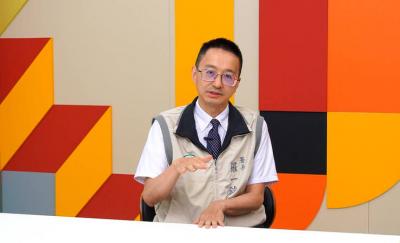
Taiwan’s two cases of hantavirus so far this year are on par with previous years’ case numbers, and the government is coordinating rat extermination work, so there should not be any outbreaks, Centers for Disease Control (CDC) Director-General Philip Lo (羅一鈞) said today in an interview with the Liberty Times (the Taipei Times’ sister newspaper). An increase in rat sightings in Taipei and New Taipei City has raised concerns about the spread of hantavirus, as rats can carry the disease. In January, a man in his 70s who lived in Taipei’s Daan District (大安) tested positive posthumously for hantavirus, Taiwan’s


 RSS
RSS