


Department of Health officials and academics were divided on whether people’s health can be affected by drinking milk from animals infected with mad cow disease, or bovine spongiform encephalopathy (BSE), following the discovery of a new case in the US this week.
Citing a report by the WHO that concludes prions, infectious proteins carried by BSE-infected animals, are not carried in milk, Department of Health Deputy Minister Hsiao Mei-ling (蕭美玲) said that milk from BSE-infected animals was safe for human consumption.
Since 1997, the US has banned the use of adding recycled meat and bone meal from cows into cattle feed — a practice thought to be the cause of BSE, she said. As a result, the number of confirmed cases of BSE in cows in the US has been reduced significantly, she added.
Hsiao said the Taiwanese government would step up inspections on beef producers in the US following the new case of mad cow disease discovered in a dairy cow in California. Taiwan has the authority to inspect beef producers in the US as part of an agreement that allowed the lifting of a ban on imports of US bone-in beef in 2006.
Mad cow disease is fatal to cows and can cause a fatal brain disease, variant Creutzfeldt-Jakob disease (vCJD) — in people who eat tainted beef.
Despite officials’ reassurance about the safety of dairy products, a number of doctors said a more advanced test developed for mad cow disease has shown results that contradict the WHO report.
Chen Sheng-shun (陳勝順), honorary vice president of Chang Gung Memorial Hospital’s Kaohsiung branch, said a Swiss scientist developed a more accurate test for mad cow disease in 2007 that found prion-related proteins (PrPC), a precursor of the pathological prion proteins, in the milk of BSE-infected animals.
The precursor cannot be completely eliminated even when heated to extreme high temperatures, Chen said.
This evidence suggests that stricter quality standards should be applied to dairy products, he added.
Chiang Shou-shan (江守山), a nephrologist at Shin-Kong Wu Ho-Su Memorial Hospital, also urged the government to adopt stricter safety standards on beef and dairy products.
He said domestic cases of classic CJD had risen considerably since the government lifted the ban on US in-bone beef imports.
Since classic CJD — which is unrelated to beef consumption — shows similar symptoms to vCJD, this rise of classic CJD cases in Taiwan may be due to a mistaken diagnosis of vCJD, he said, urging the authorities to probe more deeply into the matter.

Yangmingshan National Park authorities yesterday urged visitors to respect public spaces and obey the law after a couple was caught on a camera livestream having sex at the park’s Qingtiangang (擎天崗) earlier in the day. The Shilin Police Precinct in Taipei said it has identified a suspect and his vehicle registration number, and would summon him for questioning. The case would be handled in accordance with public indecency charges, it added. The couple entered the park at about 11pm on Thursday and began fooling around by 1am yesterday, the police said, adding that the two were unaware of the park’s all-day live

Yangmingshan National Park’s Qingtiangang (擎天崗) nature area has gone viral after a park livestream camera observed a couple in the throes of intimate congress, which was broadcast live on YouTube, drawing large late-night crowds and sparking a backlash over noise, bright lights and disruption to wildlife habitat. The area’s livestream footage appeared to show a couple engaging in sexual activity on a picnic table in the park on Friday last week, with the uncensored footage streamed publicly online. The footage quickly spread across social media, prompting a tide of visitors to travel to the site to “check in” and recreate the

Minister of Digital Affairs Lin Yi-ching (林宜敬) yesterday cited regulatory issues and national security concerns as an expert said that Taiwan is among the few Asian regions without Starlink. Lin made the remarks on Facebook after funP Innovation Group chief executive officer Nathan Chiu (邱繼弘) on Friday said Taiwan and four other countries in Asia — China, North Korea, Afghanistan and Syria — have no access to Starlink. Starlink has become available in 166 countries worldwide, including Ukraine, Malaysia, the Philippines and Vietnam, in the six years since it became commercial, he said. While China and North Korea block Starlink, Syria is not
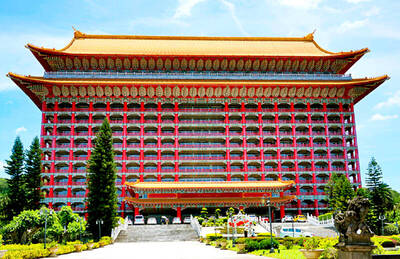
The Grand Hotel Taipei has rejected media reports claiming that the hotel had prevented CBS from broadcasting coverage of the Beijing summit between U.S. President Donald Trump and Chinese President Xi Jinping (習近平) on its premises. Media reports alleging that the hotel owner, dissatisfied with CBS’s coverage, prohibited the network from broadcasting political content on the hotel premises, are not true, the hotel said in a statement issued last night. The reports were “inconsistent with how the hotel actually handled the matter,” it said. The hotel said it received a refund request from a


 RSS
RSS