


Democratic Progressive Party Chairperson Tsai Ing-wen (蔡英文) yesterday paid tribute to two late iconic figures in the Taiwanese independence movement, saying the younger generation must remember their predecessors’ struggles and remember their responsibility for Taiwan’s future.
The outgoing chairperson attended a book-launch for the autobiography of former World United Formosan for Independence (WUFI) chairman Ng Chiau-tong (黃昭堂) and a photographic exhibition in memory of independence activist Deng Nan-jung (鄭南榕), in rare public appearances since losing the presidential election last month.
The exhibition is even more meaningful to the younger generation, Tsai said, because “it makes them realize how many people made sacrifices and endured hardships in the service of Taiwan’s democratization over the years.”
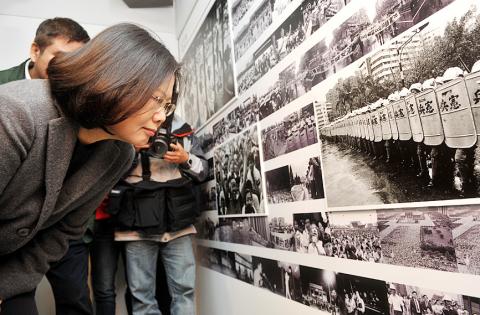
Photo: Chien Jung-fong, Taipei Times
“That is something Taiwan’s society should always remember,” she said at Deng Nan-jung Memorial Museum, which is located in an apartment in downtown Taipei.
On April 7, 1989, Deng, then-publisher of Freedom Era Weekly magazine, committed suicide by self-immolation at the age of 43, when police tried to arrest him for printing a proposal for a constitution for the Republic of Taiwan in the magazine.
The chairperson also paid respect to Deng’s window, former vice premier Yeh Chu-lan (葉菊蘭), who went into politics after Deng’s death.
Tsai also recognized Deng’s advocacy for transitional justice for the 228 Massacre, urging the government to discover the truth and promote reconciliation, and lamenting the deaths of tens of thousands of people, which he described as a tragedy.
On the eve of the 65th anniversary of the brutal massacre in 1947, she said it was imperative for Taiwanese to understand the importance of a fair and just society in which people can live without fear.
Earlier, speaking at the book-launching ceremony, Tsai praised Ng, who died on Nov. 17 last year at the age of 79, as “a real statesman who, unlike others, never wavered in his goal.”
“However, he was also a man with vision who knew how to balance his goal with reality,” Tsai said of Ng, who was the first senior pro-independence politician to endorse Tsai during her presidential campaign.
Tainan-born Ng was known for his decades of dedication to the independence movement. He began participating in the independence movement while he was studying in Japan and later was placed on a Chinese Nationalist Party (KMT) government blacklist. Ng, who did not return to Taiwan until 1992, served as WUFI chairman starting in 1995 and as a presidential adviser during the DPP administration.
Tsai described Ng as someone who always kept her under his wing and nurtured her along the way.
“I felt that he would never leave, that he would always be my teacher, my father figure and one I always miss,” she said.
Asked by reporters about her future after stepping down as party chairperson on March 1, Tsai said she would unveil her plans on Wednesday, when she convenes the DPP’s Central Standing Committee meeting for the last time.
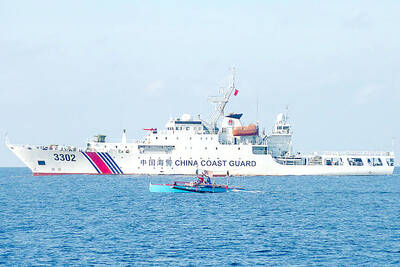
EXPANSIONIST: China deploys an average of 40 to 50 warships and coast guard vessels daily in the South China Sea, despite pledges not to militarize the region, an official said China is attempting to expand its influence across the First Island Chain and increase pressure on Japan by sending coast guard vessels into waters off of Taiwan under the pretext of maritime negotiations with Japan and the Philippines, a national security official said yesterday. China’s recent actions in the waters east of Taiwan and Japan and the Philippines’ exclusive economic zones (EEZ) are attempts to establish dominance in First Island Chain waters, said the official who declined to be named, adding that this is “expansion disguised as law enforcement.” Framing China’s actions solely as a cross-strait issue is a serious misjudgment that
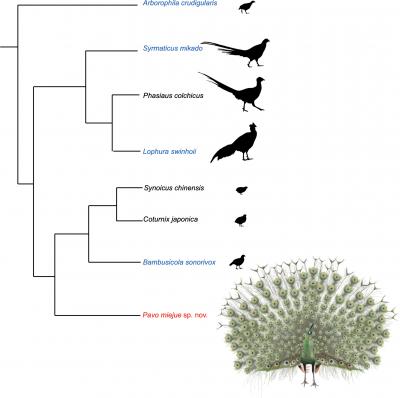
Through analyzing fossil evidence, a research team at National Taiwan University (NTU) discovered the largest endemic bird to have lived in Taiwan, naming it Pavo miejue, or extinct peafowl (滅絕孔雀). The Mikado pheasant, which is printed on the back of the NT$1,000 bank note, was previously believed to be the biggest endemic bird to Taiwan. The research team’s findings suggest that Pavo miejue lived during the Pleistocene epoch tens of thousands of years ago. It is the first endemic extinct bird species discovered and formally named in Taiwan. The study was coauthored by NTU Institute of Ecology and Evolutionary Biology professor Tsai Cheng-hsiu (蔡政修),
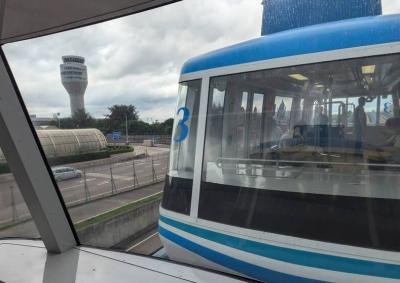
Taiwan Taoyuan International Airport is to suspend its automated Skytrain service connecting Terminal 1 and Terminal 2 starting on July 1 to facilitate connection works for the upcoming Terminal 3, the airport operator said today. Passengers and staff who need to travel between the two terminals after the suspension can instead use the Taoyuan MRT or the airport's 24-hour shuttle bus service, Taoyuan International Airport Corp said. The Taoyuan MRT Airport Line directly links the two terminals, while the shuttle buses are to operate around the clock, the company added. The Skytrain provides free transportation between the airport’s two terminals for travelers and
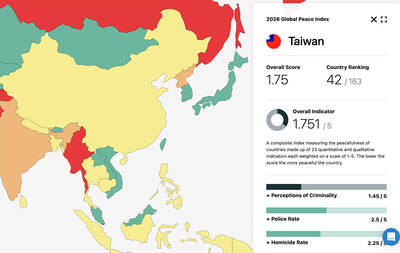
Taiwan ranked 42nd in terms of peacefulness among 163 countries, down five places from last year, according to this year’s Global Peace Index. With an overall score of 1.751, Taiwan dropped from 37th last year, the report published by the global Institute for Economics and Peace showed. The overall score measures a country’s level of peacefulness using 23 quantitative and qualitative indicators across three domains — ongoing domestic and international conflict, societal safety and security, and militarization. While Taiwan ranked 42nd worldwide, it was listed in ninth place among the 19 Asian-Pacific countries in the report, after New Zealand, Singapore, Japan, Malaysia,


 RSS
RSS