


Visiting landmarks like Taipei 101 is a great way to explore the bustling metropolis of Taipei, but a local travel company is now promoting a more authentic way of getting to know the city — living a day in the life of a street vendor.
“We came up with the idea simply because we wanted foreigners to know more about the island and people living on it,” said Peter Lin, the founder of a four-person tourism company established last year.
The 30-year-old and his team of recent graduates escort interested foreigners free of charge to meet local vendors and help them understand how less fortunate people struggle to make a living in the city.
“The visitors are not the only ones who benefit from the program,” Lin said. “The vendors do as well, because they rarely have the chance to interact with foreigners.”
“Sweet Potato Mama for a Day,” one of Lin’s blockbuster tours, for example, brings together visitors and single Taiwanese mothers who have not had much chance to travel, yet still yearn to see the world.
Years ago, a dozen single mothers started selling baked sweet potatoes on Taipei’s streets with the help of a social welfare foundation that promotes independent living.
All day, the women push a portable oven around, often bringing their children along.
“The moms’ faces light up whenever they see people visiting. They just love companionship,” Lin said, noting that the language barrier has never been a problem, because smiles always get the message through.
“I am Canadian and Miss Wong is Taiwanese. My Chinese was as bad as her English, but it didn’t seem to interfere with our connection,” a retired teacher by the name of Dana wrote on Trip Advisor, a Web site that posts opinions about tourism-related issues from globetrotters.
“We laughed a lot and tried to teach each other some language, and I shared her hope,” said Dana, who is also a single mother.
“My experience involved so much more than just eating a healthy snack cooked in a traditional way. I got a taste of a life I would never have known and will never forget,” she said.
A 24-year-old Indonesian who has been studying at a Taiwanese university for two years said he did not know this side of Taiwan until he signed up for the tour.
Besides learning how to bake delicious sweet potatoes, Citra Satria Ongkowijoyo said he became more aware of the concept that “teaching people how to fish is better than giving them fish.”
Nguyen Tuan Anh, president of National Taiwan University’s Vietnamese Student Association, said: “I would suggest the tour to Westerners.”
Many people from Vietnam, like other countries in Southeast Asia, already know what it is like to lead a difficult and challenging life, so the tour would probably be more attractive to people from developed countries, he said.
“The beauty of travel lies in the people you meet and not the sights you see,” said Lin, whose travel experiences in the US as a foreign exchange student and as a volunteer in Nepal inspired him to promote such tours.
Showing postcards and e-mails from customers in the past year, Lin stressed that Taiwan has much to offer.
“Taiwan’s biggest assets are not its infrastructure or geo-political position, but the kindness and vitality of its people,” he said.

The military has spotted two Chinese warships operating in waters near Penghu County in the Taiwan Strait and sent its own naval and air forces to monitor the vessels, the Ministry of National Defense (MND) said. Beijing sends warships and warplanes into the waters and skies around Taiwan on an almost daily basis, drawing condemnation from Taipei. While the ministry offers daily updates on the locations of Chinese military aircraft, it only rarely gives details of where Chinese warships are operating, generally only when it detects aircraft carriers, as happened last week. A Chinese destroyer and a frigate entered waters to the southwest

A magnitude 6.1 earthquake struck off the coast of Yilan County at 8:39pm tonight, the Central Weather Administration (CWA) said, with no immediate reports of damage or injuries. The epicenter was 38.7km east-northeast of Yilan County Hall at a focal depth of 98.3km, the CWA’s Seismological Center said. The quake’s maximum intensity, which gauges the actual physical effect of a seismic event, was a level 4 on Taiwan’s 7-tier intensity scale, the center said. That intensity level was recorded in Yilan County’s Nanao Township (南澳), Hsinchu County’s Guansi Township (關西), Nantou County’s Hehuanshan (合歡山) and Hualien County’s Yanliao (鹽寮). An intensity of 3 was

Japanese Prime Minister Sanae Takaichi’s comment last year on Tokyo’s potential reaction to a Taiwan-China conflict has forced Beijing to rewrite its invasion plans, a retired Japanese general said. Takaichi told the Diet on Nov. 7 last year that a Chinese naval blockade or military attack on Taiwan could constitute a “survival-threatening situation” for Japan, potentially allowing Tokyo to exercise its right to collective self-defense. Former Japan Ground Self-Defense Force general Kiyofumi Ogawa said in a recent speech that the remark has been interpreted as meaning Japan could intervene in the early stages of a Taiwan Strait conflict, undermining China’s previous assumptions
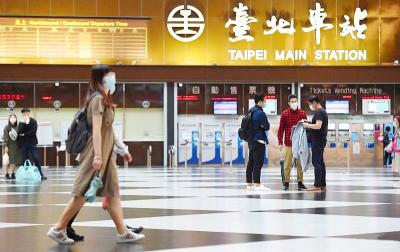
Taiwan Railways Corp (TRC) today announced that Shin Kong Mitsukoshi has been selected as the preferred bidder to operate the Taipei Railway Station shopping mall, replacing the current operator, Breeze Development Co Ltd. Among eight qualified firms that delivered presentations and were evaluated by a review committee, Shin Kong Mitsukoshi was ranked first, while Breeze was named the runner-up, the rail company said in a statement. Contract negotiations are to proceed in accordance with regulations, it said, adding that if negotiations with the top bidder fail, it could invite the second-ranked applicant to enter talks. Breeze in a statement today expressed doubts over


 RSS
RSS