


The Democratic Progressive Party (DPP) yesterday filed another lawsuit against Council for Economic Planning and Development (CEPD) Minister Christina Liu (劉憶如) and played down an opinion poll showing its presidential candidate, DPP Chairperson Tsai Ing-wen (蔡英文), behind by 8 percentage points.
Tsai received 32.2 percent of support from respondents, 8 percentage points behind President Ma Ying-jeou’s (馬英九) 40.2 percent, an opinion poll published yesterday by the Chinese--language Apple Daily showed.
The survey, conducted from Monday to Wednesday with 1,101 samples, also showed 5.5 percent of respondents said they would vote for People First Party Chairman James Soong (宋楚瑜) and 22.1 percent remained undecided.
In response to press queries, Tsai offered the same answer every time she was asked about poll results, saying her campaign would “take the survey as a reference.”
In Taipei, the DPP filed another lawsuit against Liu and KMT spokesperson Lai Su-ju (賴素如) over violations of the Presidential and Vice Presidential Election and Recall Act (總統副總統選舉罷免法), accusing them of spreading rumors or false statements for the purpose of getting a candidate elected or impeding a candidate’s election chances.
Liu yesterday posted two questions on the CEPD Web site about Tsai’s alleged improper involvement in the formation of Yu Chang Biologics Co (宇昌生技股份有限公司), now know as TaiMed Biologics Inc (中裕新藥股份有限公司), when she served as vice premier between 2006 and 2007.
The public-owned National Development Fund (NDF) was authorized by the Executive Yuan to invest in Yu Chang, which appointed three board members and one supervisor, DPP spokesperson Kang Yu-cheng (康裕成) said. As the NDF had only one board member and one supervisor, Liu was wrong to characterize it as the majority investor she said.
DPP spokesperson Chen Chi-mai (陳其邁) said Liu could easily find the answer to her second question regarding the different names of various companies during the formation of Yu Chang by checking information with the Ministry of Economic Affairs.
Liu had repeatedly cited incorrect information or altered documents to smear Tsai and benefit President Ma Ying-jeou’s (馬英九) re-election campaign, he said.
In related news, Chen criticized Ma in a press release yesterday for citing an incorrect report.
Citing a Financial Times report in September, Ma said during a televised platform presentation on Friday night that the US government had expressed concerns about stability across the Taiwan Strait if Tsai was elected president.
Chen said the US Department of State had reaffirmed that comments by the unnamed official quoted in the newspaper did not represent the official position of the US government and the US would remain neutral in Taiwan Jan. 14 presidential and legislative elections
“It was a vicious campaign tactic,” Chen said.

SECURITY: Starlink owner Elon Musk has taken pro-Beijing positions, and allowing pro-China companies to control Taiwan’s critical infrastructure is risky, a legislator said Starlink was reluctant to offer services in Taiwan because of the nation’s extremely high penetration rates in 4G and 5G services, the Ministry of Digital Affairs said yesterday. The ministry made the comments at a meeting of the legislature’s Transportation Committee, which reviewed amendments to Article 36 of the Telecommunications Management Act (電信管理法). Article 36 bans foreigners from holding more than 49 percent of shares in public telecommunications networks, while shares foreigners directly and indirectly hold are also capped at 60 percent of the total, unless specified otherwise by law. The amendments, sponsored by Chinese Nationalist Party (KMT) Legislator Ko
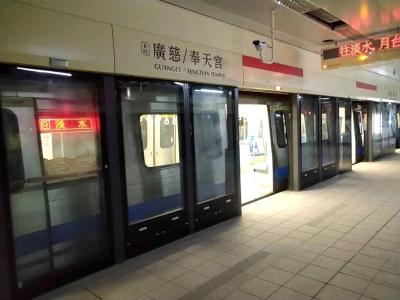
The eastern extension of the Taipei MRT Red Line could begin operations as early as late June, the Taipei Department of Rapid Transit Systems said yesterday. Taipei Rapid Transit Corp said it is considering offering one month of free rides on the new section to mark its opening. Construction progress on the 1.4km extension, which is to run from the current terminal Xiangshan Station to a new eastern terminal, Guangci/Fengtian Temple Station, was 90.6 percent complete by the end of last month, the department said in a report to the Taipei City Council's Transportation Committee. While construction began in October 2016 with an
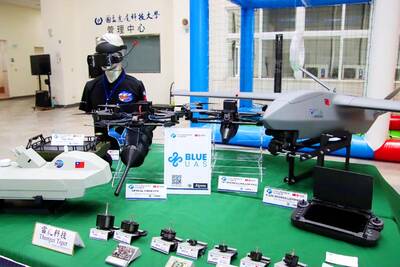
NON-RED SUPPLY: Boosting the nation’s drone industry is becoming increasingly urgent as China’s UAV dominance could become an issue in a crisis, an analyst said Taiwan’s drone exports to Europe grew 41.7-fold from 2024 to last year, with demand from Ukraine’s fight against Russian aggression the most likely driver of growth, a study showed. The Institute for Democracy, Society and Emerging Technology (DSET) in a statement on Wednesday said it found that many of Taiwan’s uncrewed aerial vehicle (UAV) sales were from Poland and the Czech Republic. These countries likely transferred the drones to Ukraine to aid it in its fight against the Russian invasion that started in 2022, it said. Despite the gains, Taiwan is not the dominant drone exporter to these markets, ranking second and fourth
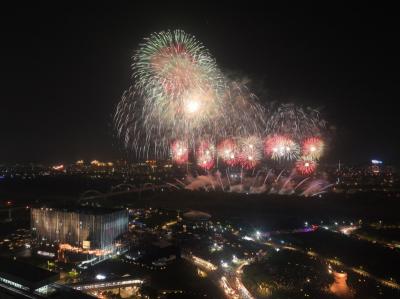
The New Taipei City Art Museum this weekend plans to celebrate its first anniversary with a two-day extravaganza featuring live concerts and a large-scale synchronized fireworks and drone display, the New Taipei City Cultural Affairs Department said. The two-day celebrations are to take place in the museum’s outdoor park, with markets and live performances by singers including Ann Bai (白安), Bii (畢書盡) and the Cosmos People (宇宙人), the department said. The highlight on both evenings would be the "Echoes of Light" show, an aerial spectacle combining fireworks and drone performances designed around the concept of "dual stages in the sky," it


 RSS
RSS