


A dozen anti-nuclear activists protested in front of the Environmental Protection Administration (EPA) building in Taipei yesterday, accusing the government of having no solution for dealing with nuclear waste.
The protest occurred as an environmental impact assessment meeting was beginning at the EPA.
Thousands of anti-nuclear protesters clashed with police over nuclear waste issues in Germany on Friday.
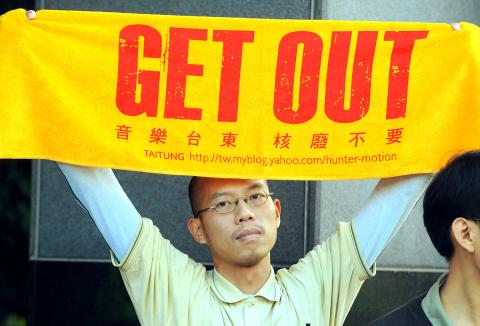
Photo: CNA
Earlier this month, the Ministry of Economic Affairs said that high-level radioactive waste could be disposed of outside of the country and that low-level radioactive waste could be disposed of in Taiwan, some within the plants and some in repositories, during a press conference on energy policy at the Presidential Office.
At yesterday’s second environmental impact assessment meeting on radioactive waste disposal policies, the Atomic Energy Council reported its strategies on nuclear waste storage, including putting the spent fuel rods in storage pools, land-based dry repositories and a final disposal site, while interim storage of spent fuel may include reprocessing abroad.
The protesters said the government was hiding the truth about the danger of both wet and dry storage of spent nuclear fuel by saying that the waste could be dealt with abroad, when actually the final disposal site might be in Taiwan.
They urged the government to halt operations at nuclear power plants to prevent the threat posed by an increasing number of nuclear fuel rods while no safe disposal site exists.
“There are two methods of disposal beyond our national borders. One is to dispose of the spent fuel at a final disposal site abroad, for which there is no precedent internationally,” Green Citizens’ Action Alliance secretary-general Hung Shen-han (洪申翰) said.
“The second is to ship the spent fuel abroad for reprocessing, meaning the uranium would be refined and recycled, but will still be shipped back to Taiwan,” Huang said. “It is irresponsible to say that we can dispose of the spent fuel beyond our national borders.”
The alliance said a feasibility study on the final disposal site would not be finished until 2037, but with the unstable geological conditions in Taiwan and possibly no safe disposal site abroad, it said it wondered where the large number of spent fuel rods would be stored.
“We suggest the government store spent fuel in the basement of the Presidential Office, to let -everyone know that it isn’t dangerous,” Gongliao Anti-nuclear Self-Help Association chairman Wu Wen-chang (吳文樟) said.
The protesting groups included the Green Party Taiwan, Wild at Heart Legal Defense Association, the Homemakers’ Union and Foundation, Taitung Anti-Nuclear, the Anti-Spent Fuel Association and several others.

Yangmingshan National Park authorities yesterday urged visitors to respect public spaces and obey the law after a couple was caught on a camera livestream having sex at the park’s Qingtiangang (擎天崗) earlier in the day. The Shilin Police Precinct in Taipei said it has identified a suspect and his vehicle registration number, and would summon him for questioning. The case would be handled in accordance with public indecency charges, it added. The couple entered the park at about 11pm on Thursday and began fooling around by 1am yesterday, the police said, adding that the two were unaware of the park’s all-day live
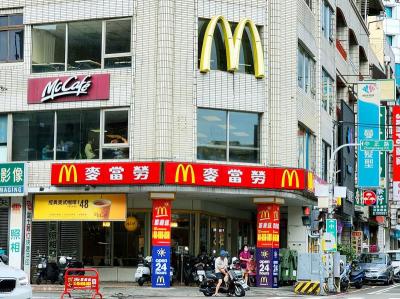
Fast food chain McDonald's is to raise prices by up to NT$5 on some products at its restaurants across Taiwan, starting on Wednesday next week, the company announced today. The prices of all extra value meals and sharing boxes are to increase by NT$5, while breakfast combos and creamy corn soup would go up by NT$3, the company said in a statement. The price of the main items of those meals, if ordered individually, would remain the same. Meanwhile, the price of a medium-sized lemon iced tea and hot cappuccino would rise by NT$3, extra dipping sauces for chicken nuggets would go up
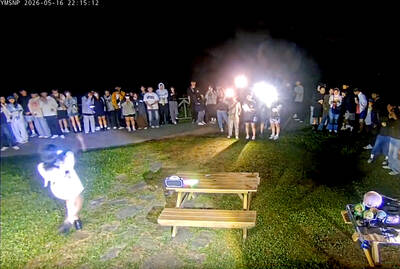
Yangmingshan National Park’s Qingtiangang (擎天崗) nature area has gone viral after a park livestream camera observed a couple in the throes of intimate congress, which was broadcast live on YouTube, drawing large late-night crowds and sparking a backlash over noise, bright lights and disruption to wildlife habitat. The area’s livestream footage appeared to show a couple engaging in sexual activity on a picnic table in the park on Friday last week, with the uncensored footage streamed publicly online. The footage quickly spread across social media, prompting a tide of visitors to travel to the site to “check in” and recreate the

Minister of Digital Affairs Lin Yi-ching (林宜敬) yesterday cited regulatory issues and national security concerns as an expert said that Taiwan is among the few Asian regions without Starlink. Lin made the remarks on Facebook after funP Innovation Group chief executive officer Nathan Chiu (邱繼弘) on Friday said Taiwan and four other countries in Asia — China, North Korea, Afghanistan and Syria — have no access to Starlink. Starlink has become available in 166 countries worldwide, including Ukraine, Malaysia, the Philippines and Vietnam, in the six years since it became commercial, he said. While China and North Korea block Starlink, Syria is not


 RSS
RSS