


Many small and medium enterprises, as well as small hospitals, have said that President Ma Ying-jeou’s (馬英九) administration is discouraging them from supporting Democratic Progressive Party (DPP) candidates by threatening them with tax audits, DPP caucus secretary-general Wong Chin-chu (翁金珠) said on Sunday.
The Ma administration is fomenting another era of political terror, Wong said, adding that a number of hospitals had asked DPP representatives to ask on their behalf about certain taxation items they felt are unreasonable.
However, those inquiries resulted in even heavier taxation, Wong said.
Some corporations even had their taxes inspected because they had donated to the DPP and the inspections continued until they stopped donating to the DPP or the party’s candidates, Wong said.
The Ma administration is cutting taxes for the rich, but the government’s tax revenue is severely lacking, so they are focusing on shops or small and medium-size enterprises that have slightly more income, Wong said, adding that she also heard other legislators in the party say company taxes were being inspected if the owner was considered close to the DPP.
Wong also said that under the Political Donations Act (政治獻金法), donors who donated to a political party had to write the name of the company.
“They audit businesspeople who support the DPP,” Wong said.
The government’s actions have caused corporations to hold back on donations to the DPP, which Wong said was a means to cut the party’s financial lifeline.
Another DPP legislator, who requested anonymity out of concern that it would be more difficult to raise funds, said that in the legislative elections in 2007, some donors who donated tens of thousands of New Taiwan dollars were later subjected to tax audits.
As a result, those donors became reluctant to donate again, making fundraising this year even harder, the source said.
In response to Wong’s allegations that the Taxation Agency was intimidating companies from donating to the DPP via audits, Deputy Minister of Finance Chang Sheng-ford (張盛和) said no such thing was happening.
“I was chief of the Taxation Agency for a decade and it doesn’t matter if it’s the DPP or the KMT [Chinese Nationalist Party] in power, it has never received instructions like that,” Chang said.
“Civil servants now have the concept of administrative neutrality and they would not inspect your taxes on grounds of political gain,” he said.
“How would Taxation Agency personnel know if the corporation is pan-green or pan-blue?” Chang asked.
Translated by Jake Chung, Staff Writer
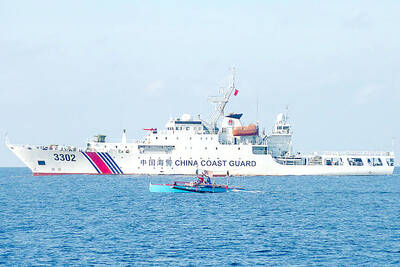
EXPANSIONIST: China deploys an average of 40 to 50 warships and coast guard vessels daily in the South China Sea, despite pledges not to militarize the region, an official said China is attempting to expand its influence across the First Island Chain and increase pressure on Japan by sending coast guard vessels into waters off of Taiwan under the pretext of maritime negotiations with Japan and the Philippines, a national security official said yesterday. China’s recent actions in the waters east of Taiwan and Japan and the Philippines’ exclusive economic zones (EEZ) are attempts to establish dominance in First Island Chain waters, said the official who declined to be named, adding that this is “expansion disguised as law enforcement.” Framing China’s actions solely as a cross-strait issue is a serious misjudgment that
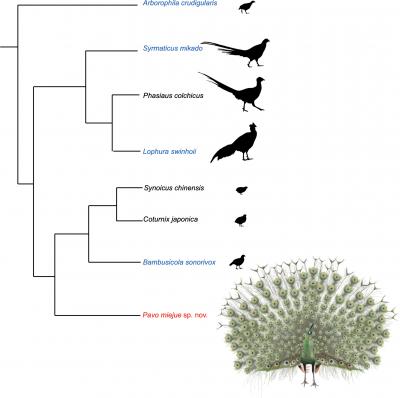
Through analyzing fossil evidence, a research team at National Taiwan University (NTU) discovered the largest endemic bird to have lived in Taiwan, naming it Pavo miejue, or extinct peafowl (滅絕孔雀). The Mikado pheasant, which is printed on the back of the NT$1,000 bank note, was previously believed to be the biggest endemic bird to Taiwan. The research team’s findings suggest that Pavo miejue lived during the Pleistocene epoch tens of thousands of years ago. It is the first endemic extinct bird species discovered and formally named in Taiwan. The study was coauthored by NTU Institute of Ecology and Evolutionary Biology professor Tsai Cheng-hsiu (蔡政修),
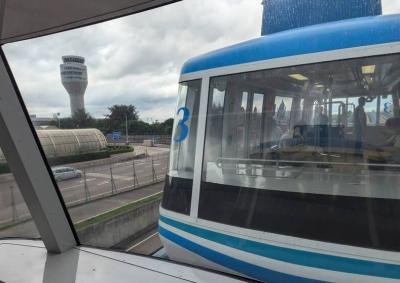
Taiwan Taoyuan International Airport is to suspend its automated Skytrain service connecting Terminal 1 and Terminal 2 starting on July 1 to facilitate connection works for the upcoming Terminal 3, the airport operator said today. Passengers and staff who need to travel between the two terminals after the suspension can instead use the Taoyuan MRT or the airport's 24-hour shuttle bus service, Taoyuan International Airport Corp said. The Taoyuan MRT Airport Line directly links the two terminals, while the shuttle buses are to operate around the clock, the company added. The Skytrain provides free transportation between the airport’s two terminals for travelers and
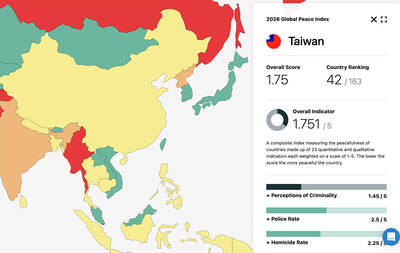
Taiwan ranked 42nd in terms of peacefulness among 163 countries, down five places from last year, according to this year’s Global Peace Index. With an overall score of 1.751, Taiwan dropped from 37th last year, the report published by the global Institute for Economics and Peace showed. The overall score measures a country’s level of peacefulness using 23 quantitative and qualitative indicators across three domains — ongoing domestic and international conflict, societal safety and security, and militarization. While Taiwan ranked 42nd worldwide, it was listed in ninth place among the 19 Asian-Pacific countries in the report, after New Zealand, Singapore, Japan, Malaysia,


 RSS
RSS