


State-owned Taiwan Power Co (Taipower) assured the public yesterday that the nation’s first and second nuclear power plants were safe, after Chinese-language media reports said northern Taiwan could be vulnerable to a major earthquake.
Taipower vice president Hsu Hwai-chiung (徐懷瓊) said that if a quake with a seismic intensity of seven — the highest on Taiwan’s seven-tier scale — struck the north, the power stations would still be intact.
“However, the priority now is to reinforce the piping system to ensure that water could be sent to the reactors within one hour of a disaster triggered by a large earthquake, so that they could both be shut down safely in time,” Hsu said.
He was responding to misgivings about the Sanchiao Fault on the northwestern part of the Taipei Basin, after a recent survey found it to be at least 80km — and possibly even 120km — long, compared with the previous estimate of 40km.
According to Chen Wen-shan (陳文山), a professor at National Taiwan University, if a complete dislocation of the fault occurred, it could result in a magnitude 7.5 to 7.8 earthquake.
Hsu said the piping lines at the Jinshan Nuclear Power Plant, located in Shihmen District (石門), New Taipei City (新北市), 7km away from the fault, were designed to withstand a “peak ground acceleration” of 0.5G.
If during an assessment on the piping system it is found that the piping cannot meet the standard, the pipes will be replaced or stronger supports will be used, he said.
The Guosheng Nuclear Power Plant in Wanli District (萬里), New Taipei City (新北市), is 5km away from the fault and has set a goal of withstanding a peak ground acceleration of between 0.5G and 0.6G, he said.
The highest level of seismic intensity on Taiwan’s seven-tier intensity scale generally covers peak ground accelerations greater than 0.4G.
The assessment report on strengthening the piping system would be completed by the end of the year and any necessary work to strengthen the lines would begin early next year, Hsu added.

AGING: While Japan has 22 submarines, Taiwan only operates four, two of which were commissioned by the US in 1945 and 1946, and transferred to Taiwan in 1973 Taiwan would need at least 12 submarines to reach modern fleet capabilities, CSBC Corp, Taiwan chairman Chen Cheng-hung (陳政宏) said in an interview broadcast on Friday, citing a US assessment. CSBC is testing the nation’s first indigenous defense submarine, the Hai Kun (海鯤, Narwhal), which is scheduled to be delivered to the navy next month or in July. The Hai Kun has completed torpedo-firing tests and is scheduled to undergo overnight sea trials, Chen said on an SET TV military affairs program. Taiwan would require at least 12 submarines to establish a modern submarine force after assessing the nation’s operational environment and defense

A white king snake that frightened passengers and caused a stir on a Taipei MRT train on Friday evening has been claimed by its owner, who would be fined, Taipei Rapid Transit Corp (TRTC) said yesterday. A person on Threads posted that he thought he was lucky to find an empty row of seats on Friday after boarding a train on the Bannan (Blue) Line, only to spot a white snake with black stripes after sitting down. Startled, he jumped up, he wrote, describing the encounter as “terrifying.” “Taipei’s rat control plan: Release snakes on the metro,” one person wrote in reply, referring

The coast guard today said that it had disrupted "illegal" operations by a Chinese research ship in waters close to the nation and driven it away, part of what Taipei sees a provocative pattern of China's stepped up maritime activities. The coast guard said that it on Thursday last week detected the Chinese ship Tongji (同濟號), which was commissioned only last year, 29 nautical miles (54km) southeast of the southern tip of Taiwan, although just outside restricted waters. The ship was observed lowering ropes into the water, suspected to be the deployment of scientific instruments for "illegal" survey operations, and the coast
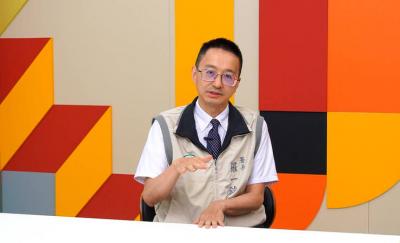
Taiwan’s two cases of hantavirus so far this year are on par with previous years’ case numbers, and the government is coordinating rat extermination work, so there should not be any outbreaks, Centers for Disease Control (CDC) Director-General Philip Lo (羅一鈞) said today in an interview with the Liberty Times (the Taipei Times’ sister newspaper). An increase in rat sightings in Taipei and New Taipei City has raised concerns about the spread of hantavirus, as rats can carry the disease. In January, a man in his 70s who lived in Taipei’s Daan District (大安) tested positive posthumously for hantavirus, Taiwan’s


 RSS
RSS