


The nation’s entrepreneurs are being invited to sample the services on offer at the Taiwan Taoyuan International Airport’s business traveler center, which is scheduled to begin trial operations next month.
State-run Taoyuan International Airport Corp (TIAC) said yesterday that many airports throughout Asia, including those in Singapore, Hong Kong, South Korea and Thailand, offer a paid service designed specifically for business travelers.
Based on this business model, TIAC said the soon-to-be-launched business travel center would be located between the airport’s first and second terminals, and the three-story facility would be equipped with its own passages to the terminals.
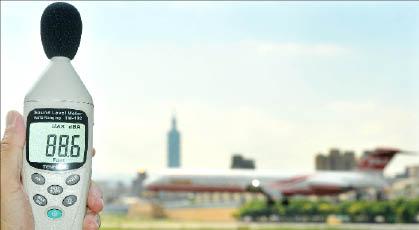
Photo: Chien Jung-fong, Taipei Times
While regular international flight passengers are told to arrive at the airport two hours before boarding to allow time to check in their luggage and go through security screening, TIAC said travelers paying to use the business travel center only need to be at the airport about 40 minutes before boarding.
They can drive directly into the airport’s restricted zone and park their vehicles right in front of the center.
A separate group of customs, inspection and quarantine officials will be stationed on the ground floor of the center to expedite the inspection process and customers will be assisted by a personal secretary, who will accompany them to the boarding gate.
The center has a multimedia conference room, as well as 16 segregated areas allowing business travelers to enjoy their meals without any disruption. It is also equipped with a spa, sauna and gymnasium. Those requesting massages or hair cuts and styling will have to pay an additional fee and make an appointment in advance.
TIAC said the one-time service charge is NT$8,000 once the center officially opens in October. Those wishing to use the services at the business travel center need to make appointments three days before departure.
Meanwhile, Taipei International Airport (Songshan) might finish construction of an independent terminal to service users of private jet services after the Lunar New Year holidays next year.
The airport said that entrepreneurs and businesspeople prefer to fly in private jets to Songshan because of its location in Taipei and its close proximity to Neihu Technology Park, therefore saving a lot of time for business travelers.
Statistics from the Taipei Aviation Office showed a total of 376 private jets landed and departed from the airport between January and last month, up 100 percent from the same time last year.
In addition to an independent customs facility and a multimedia conference room, the airport said the terminal would have its own airport ramp and aircraft depot.
In related news, construction of the Operations Control Center for the Airport Rail will soon begin after the equipment begins arriving in October, the Bureau of High Speed Rail said yesterday.
The bureau said the control center would be equipped with a supervisory control and data acquisition system, which help detects earthquakes and other forms of natural disasters.

FUKUOKA SITUATION: Japanese media reported that the pathogen is expected to be identified by the summer, while the CDC downplayed the idea that it was hMPV A “mysterious cold-like illness” reported in Japan’s Fukuoka Prefecture does not seem to be a new disease, but Japanese authorities have been asked about the situation, the Centers for Disease Control (CDC) said yesterday. The Fukuoka Prefectural Medical Association on Wednesday told a news conference that a “mystery cold” that has become a hot topic on social media is “highly likely to be caused by some kind of viral infection,” Japan’s KBC News reported. “Many people are experiencing symptoms starting with a sore throat, followed by a runny nose, phlegm and a severe cough,” KBC News reported, citing association officials. Health authorities are

Nvidia Corp CEO Jensen Huang (黃仁勳) arrived in Taiwan yesterday ahead of upcoming AI and technology events, saying he plans to meet with clients and Taiwan Semiconductor Manufacturing Co Chairman C.C. Wei (魏哲家) during his visit. After landing at Taipei Songshan Airport, Huang posed for photos with fans and handed out Yakult drinks to reporters and supporters waiting at the scene, saying he has “a lot to do” during the trip. Asked about reports that Nvidia’s planned headquarters site in Taipei’s Beitou Shilin Technology Park could break ground on May 27, Huang said that if the company holds an event, he would

The Ministry of Finance this afternoon announced the winning numbers for the March-April uniform invoice lottery. The winning number for the NT$10 million (US$318,060) special prize is 19531471, and the winning number for the NT$2 million grand prize is 85941329. Three numbers were drawn for the NT$200,000 first prize: 07225810, 20231230 and 83518781. Those with receipts matching the last seven digits of any of the first-prize numbers will win the NT$40,000 second prize, while those matching the last six digits will win the NT$10,000 third prize. Those whose receipts match the last five digits of the first-prize numbers can claim the NT$4,000 fourth prize,
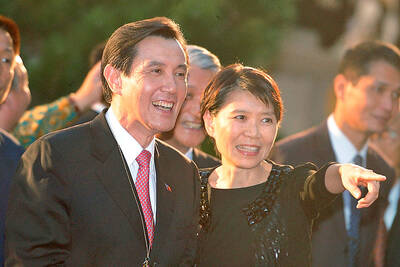
Former president Ma Ying-jeou (馬英九) yesterday expressed “shock and regret” over a statement issued by his wife without his consent, and rejected her assertion that his eldest sister, Ma Yi-nan (馬以南), would manage his medical care or act as his spokesperson amid an ongoing embezzlement probe into his foundation. Ma Ying-jeou in a statement said he was shocked by a statement by his wife, Chou Mei-ching (周美青), regarding his affairs. Ma Yi-nan “must not” be in charge of his healthcare and other personal affairs, nor can she be allowed to represent the Ma family, the former president said. He said he was also


 RSS
RSS