


The Democratic Progressive Party (DPP) is ready to turn around the nation’s miserable fiscal situation by cutting the deficit in half in four years if it regains power in January’s presidential election, DPP Chairperson Tsai Ing-wen (蔡英文) said yesterday, as she unveiled the first of four presentations of the party’s 10-year policy guidelines.
“In a globally connected world, every country is obligated to manage its fiscal balance,” Tsai told a news conference held to announce the DPP’s tax and finance policy.
The guidelines are an important step in Taiwan’s political reform and cover 18 topics ranging from national security, economy and China policy to labor, energy and environmental issues, she said.
Tsai, who initiated the guidelines in June 2009, said if she were elected, the new DPP administration would not repeat the mistakes of President Ma Ying-jeou (馬英九), whose spending spree has doubled Taiwan’s national debt from NT$1.2 trillion (US$41.4 billion), when the DPP left office in 2008, to NT$2.4 trillion after three years under Ma’s governance.
Her administration would prioritize government spending and raise administrative efficiency, as well as implement tax reforms — including making capital gains tax a major source of tax revenue — and improve local governments’ fiscal situation, she said.
Former minister of finance Lin Chuan (林全), head of Tsai’s finance team that drafted the policy guidelines, joined Tsai at the news conference, while denying rumors he may be Tsai’s running mate.
Lin said that when the DPP took over the government under then-president Chen Shui-bian (陳水扁) in 2000, the national deficit was at NT$250 billion, which was why Chen had listed fiscal balance as his administration’s primary goal.
The then-DPP government almost achieved this goal in 2007, falling short by about NT$10 billion, before the situation worsened after Ma took office, Lin said.
The primary goal of Tsai’s administration, if elected, is to stop the national debt-to-GDP ratio from soaring and to achieve “zero debt growth,” Lin said.
“We would like to cut the deficit in half in four years and achieve fiscal balance in eight years,” he said.
Lin said this would be a challenge because government spending on social welfare was expected to rise sharply as a result of a low birthrate, but the DPP was confident that the goal was achievable.
Tsai also plans to reverse the current tax revenue structure, wherein more than 70 percent of tax revenue comes from salaried workers, to one wherein capital gains tax would be the major source of revenue.
The first thing the DPP would do is to introduce a property transaction income tax based on real transaction prices rather than current-assessed property or land value.
The Tsai campaign also advocates replacing tax breaks with government subsidies, introducing a “green tax” as well as legalizing the allocation of government revenues and expenditures, the focal point of a long-running feud between the central and local governments.
Raising the debt ceiling as the Ma administration has done is a “lazy act,” because it could only stimulate economic activities in the short term, Lin said, adding that tax revenue growth would come naturally with a healthy economy.
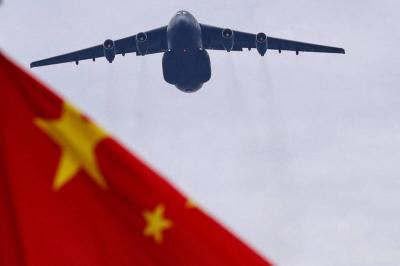
Beijing could eventually see a full amphibious invasion of Taiwan as the only "prudent" way to bring about unification, the US Department of Defense said in a newly released annual report to Congress. The Pentagon's "Annual Report to Congress: Military and Security Developments Involving the People's Republic of China 2025," was in many ways similar to last year’s report but reorganized the analysis of the options China has to take over Taiwan. Generally, according to the report, Chinese leaders view the People's Liberation Army's (PLA) capabilities for a Taiwan campaign as improving, but they remain uncertain about its readiness to successfully seize

Taiwan is getting a day off on Christmas for the first time in 25 years. The change comes after opposition parties passed a law earlier this year to add or restore five public holidays, including Constitution Day, which falls on today, Dec. 25. The day marks the 1947 adoption of the constitution of the Republic of China, as the government in Taipei is formally known. Back then the Chinese Nationalist Party (KMT) governed China from Nanjing. When the KMT, now an opposition party in Taiwan, passed the legislation on holidays, it said that they would help “commemorate the history of national development.” That

Taiwan has overtaken South Korea this year in per capita income for the first time in 23 years, IMF data showed. Per capita income is a nation’s GDP divided by the total population, used to compare average wealth levels across countries. Taiwan also beat Japan this year on per capita income, after surpassing it for the first time last year, US magazine Newsweek reported yesterday. Across Asia, Taiwan ranked fourth for per capita income at US$37,827 this year due to sustained economic growth, the report said. In the top three spots were Singapore, Macau and Hong Kong, it said. South

Snow fell on Yushan (Jade Mountain, 玉山) yesterday morning as a continental cold air mass sent temperatures below freezing on Taiwan’s tallest peak, the Central Weather Administration (CWA) said. Snowflakes were seen on Yushan’s north peak from 6:28am to 6:38am, but they did not fully cover the ground and no accumulation was recorded, the CWA said. As of 7:42am, the lowest temperature recorded across Taiwan was minus-5.5°C at Yushan’s Fengkou observatory and minus-4.7°C at the Yushan observatory, CWA data showed. On Hehuanshan (合歡山) in Nantou County, a low of 1.3°C was recorded at 6:39pm, when ice pellets fell at Songsyue Lodge (松雪樓), a


 RSS
RSS