


Taipei’s two leading mayoral candidates yesterday urged the public to come out and vote despite forecasts of low temperatures on Election Day this Saturday.
Taipei Mayor Hau Lung-bin (郝龍斌), who is running for re-election, said he expected cold weather would keep people at home, especially pan-blue supporters.
“I urge our supporters to come out and vote no matter what,” he said. “Your ballots will decide the political atmosphere in the future as well as Taipei City’s direction, cross-strait developments and the nation’s status.”
At a separate setting, Democratic Progressive Party (DPP) Taipei mayoral candidate Su Tseng-chang (蘇貞昌) also said that weather could play a role in Saturday’s turnout, and added that he hoped voters would have the passion to take action and vote.
Su, who has launched a drive to solicit 1,000 volunteers to each make 10 telephone calls to solicit votes, said that many might think Taipei has more pan-blue supporters than pan-green. However, he said as he was looking at the eyes of the people he shook hands with when he was canvassing for votes, he realized that people did not want to be categorized into any political camp or be bargaining chips for any political party.
“They want to be their own master,” Su said while visiting a market in Zhongshan District yesterday morning. “If they all come out and vote, they can help narrow the gap between the candidates and give us a chance to serve them. So, every ballot counts and the ballot in your hand spells your future for the next four years.”
Su said Taipei residents should use their ballots to tell the government whether they are satisfied with its performance over the past four years.
After talking to so many people and visiting so many areas, Su said he discovered that the city had not improved over the past four years and that residents had many complaints.
“I don’t have any burdens and I am good at solving problems, so why don’t you turn your anger into power and give me a chance to help you solve your problems?” Su asked.
Meanwhile, Hau’s spokespeople accused Su of not taking action when Taiwanese athletes were treated unfairly at international competitions when he was premier.
They were responding to accusations that the KMT government had failed to act in the controversial disqualification of taekwondo athlete Yang Shu-chun (楊淑君) at the Asian Games last week.
KMT Legislator Pan Wei-kang (潘維剛) said the DPP did not care about the rights and interests of athletes or make any effort to protect Taiwan’s dignity when it was in power.
KMT Legislator Alex Fai (費鴻泰) urged the DPP to propose better alternatives if it thought the administration had handled the matter badly.
KMT Legislator Hung Hsiu-chu (洪秀柱) said the DPP was a jealous opposition that criticizes anything it sees the KMT do right, adding that when the DPP sees the KMT make a mistake, it adds more blows to bring it down.
“Is dooming Taiwan and this country really what the DPP wants?” she asked.

Kenting National Park service technician Yang Jien-fon (楊政峰) won a silver award in World Grand Prix Photography Awards Spring Season for his photograph of two male rat snakes intertwined in combat. Yang’s colleagues at Kenting National Park said he is a master of nature photography who has been held back by his job in civil service. The awards accept entries in all four seasons across six categories: architectural and urban photography, black-and-white and fine art photography, commercial and fashion photography, documentary and people photography, nature and experimental photography, and mobile photography. Awards are ranked according to scores and divided into platinum, gold and
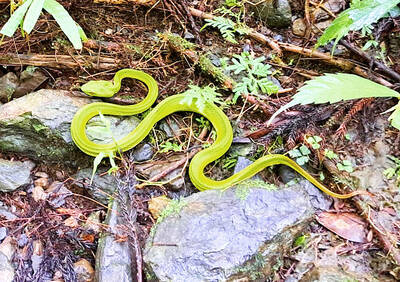
More than half of the bamboo vipers captured in Tainan in the past few years were found in the city’s Sinhua District (新化), while other districts had smaller catches or none at all. Every year, Tainan captures about 6,000 snakes which have made their way into people’s homes. Of the six major venomous snakes in Taiwan, the cobra, the many-banded krait, the brown-spotted pit viper and the bamboo viper are the most frequently captured. The high concentration of bamboo vipers captured in Sinhua District is puzzling. Tainan Agriculture Bureau Forestry and Nature Conservation Division head Chu Chien-ming (朱健明) earlier this week said that the
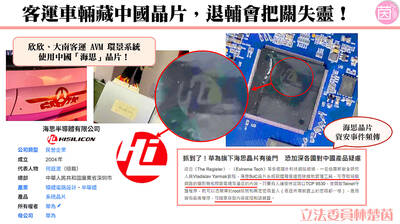
BREACH OF CONTRACT: The bus operators would seek compensation and have demanded that the manufacturer replace the chips with ones that meet regulations Two bus operators found to be using buses with China-made chips are to demand that the original manufacturers replace the systems and provide compensation for breach of contract, the Veterans Affairs Council said yesterday. Democratic Progressive Party Legislator Michelle Lin (林楚茵) yesterday said that Da Nan Bus Co and Shin-Shin Bus Co Ltd have fielded a total of 82 buses that are using Chinese chips. The bus models were made by Tron-E, while the systems provider was CYE Electronics, Lin said. Lin alleged that the buses were using chips manufactured by Huawei subsidiary HiSilicon Co, which presents a national security risk if the

The National Immigration Agency has banned two Chinese from returning to Taiwan, after they published social media content it described as disrespectful to national sovereignty. The agency imposed a two-month ban on a Chinese man surnamed Liang (梁) and a permanent ban on a woman surnamed Yang (楊), an influencer with 23 million followers, in October last year and last week respectively. Minister of the Interior Liu Shyh-fang (劉世芳) yesterday said on the sidelines of a legislative meeting that Chinese visitors to Taiwan are required to comply with the rules and regulations governing their entry permits. The government has handled the ban and


 RSS
RSS