


Formosa Betrayed, the first US-made movie devoted to a storyline set during the White Terror era, is scheduled for theatrical release in Taiwan by Sky Digi Entertainment Co this August, the film’s producer said.
“Since before the movie was completed, thousands of fans have wondered when it would be released in Taiwan. Now, we are excited to announce that the film is scheduled to be in Taiwanese theaters beginning the weekend of August 6, 2010,” Taiwanese-American filmmaker William Tiao (刁毓能) said in an open letter issued on Friday.
“Sky Digi is also actively seeking another city aside from Taipei to premiere the film so that as many Taiwanese can see the film,” the letter said, adding that “the theatrical release, premiere and other public activities are subject to the review of the Governmental Information Office.”
The movie is a political thriller that tells the fictional story of the murder of a Taiwanese-American professor on US soil. James Van Der Beek, of Dawson’s Creek fame, stars as an FBI agent investigating the murder.
Written and produced by Tiao, the film was inspired by actual events surrounding the death of Chen Wen-chen (陳文成), a professor at Carnegie Mellon University and critic of the Chinese Nationalist Party (KMT) government at the time, who died under suspicious circumstances during a visit to Taiwan in 1981, and that of Journalist Henry Liu (劉宜良), who was killed by gangsters allegedly working for the Taiwanese government in Daly City, California, in 1984.
Liu had written an unflattering biography of then-president Chiang Ching-kuo (蔣經國), the son of dictator Chiang Kai-shek (蔣介石).
The film opened in the US on the weekend of Feb. 28 and has been screened in more than 30 selected cities including New York, Los Angeles, Washington, Miami, Atlanta, Seattle, and Honolulu.
This independent film was largely financed by the Taiwanese-American community.
“The story of the Taiwanese people’s struggle for identity, justice and independence has never been told in a Hollywood film,” Tiao said earlier this year.
“Our hope was that the film would be a springboard for discussion about the issues surrounding Taiwan’s status and the Taiwanese people’s desire for democracy and recognition,” he said.

Yangmingshan National Park authorities yesterday urged visitors to respect public spaces and obey the law after a couple was caught on a camera livestream having sex at the park’s Qingtiangang (擎天崗) earlier in the day. The Shilin Police Precinct in Taipei said it has identified a suspect and his vehicle registration number, and would summon him for questioning. The case would be handled in accordance with public indecency charges, it added. The couple entered the park at about 11pm on Thursday and began fooling around by 1am yesterday, the police said, adding that the two were unaware of the park’s all-day live

Yangmingshan National Park’s Qingtiangang (擎天崗) nature area has gone viral after a park livestream camera observed a couple in the throes of intimate congress, which was broadcast live on YouTube, drawing large late-night crowds and sparking a backlash over noise, bright lights and disruption to wildlife habitat. The area’s livestream footage appeared to show a couple engaging in sexual activity on a picnic table in the park on Friday last week, with the uncensored footage streamed publicly online. The footage quickly spread across social media, prompting a tide of visitors to travel to the site to “check in” and recreate the

Minister of Digital Affairs Lin Yi-ching (林宜敬) yesterday cited regulatory issues and national security concerns as an expert said that Taiwan is among the few Asian regions without Starlink. Lin made the remarks on Facebook after funP Innovation Group chief executive officer Nathan Chiu (邱繼弘) on Friday said Taiwan and four other countries in Asia — China, North Korea, Afghanistan and Syria — have no access to Starlink. Starlink has become available in 166 countries worldwide, including Ukraine, Malaysia, the Philippines and Vietnam, in the six years since it became commercial, he said. While China and North Korea block Starlink, Syria is not
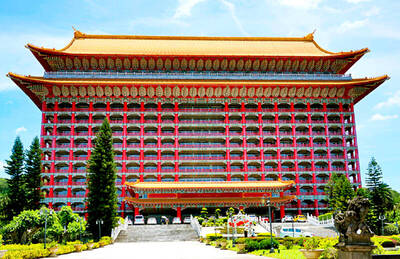
The Grand Hotel Taipei has rejected media reports claiming that the hotel had prevented CBS from broadcasting coverage of the Beijing summit between U.S. President Donald Trump and Chinese President Xi Jinping (習近平) on its premises. Media reports alleging that the hotel owner, dissatisfied with CBS’s coverage, prohibited the network from broadcasting political content on the hotel premises, are not true, the hotel said in a statement issued last night. The reports were “inconsistent with how the hotel actually handled the matter,” it said. The hotel said it received a refund request from a


 RSS
RSS