


Starting on Monday, people will be able to determine the quality of their cellphone services at any location using a new Web site from the National Communications Commission.
The Web site, called Information System of the Mobile Communication Service (行動通信電臺服務資訊系統), has a map showing information on the coverage and reception for both second-generation (2G) and third-generation (3G) cellular network services for all five telecom carriers in Taiwan proper.
The information, however, will not be available for Kinmen, Matsu and Penghu.
COLOR-CODED
The quality of reception will be represented by colors: green for “excellent,” yellow for “good,” orange for “fair” and white for “poor.”
Meanwhile, users can target a certain location and check the reception there.
They can also see if the 3.5G wireless service is available in that location.
The commission said there were many white spots for the 3G service because the 3G infrastructure has yet to be established in several areas.
The information on the map will be updated every six months.
The NCC said the system was created to provide useful information to consumers.
The telecoms carriers — Chunghwa Telecom, Taiwan Mobile, Far Eastone Telecommunications, Vibo Telecom and Asia Pacific Telecom — first provided maps of service coverage, which were simulated with software that could integrate coverage data with the corresponding geographical information.
The carriers then conducted tests to reconfirm the paths of the signal transmission, which helped them adjust the information shown on the map.
OTHER FACTORS
However, the commission, warned consumers that the actual quality of mobile phone services could be affected by various factors, such as the sensitivity of a user’s mobile phone and the number of users sharing the network simultaneously.
Reception may also be bad if the transmission of signals is interrupted by buildings or large vehicles, the commission said.
The commission also emphasized that any communications could take place only when the cellphones and base stations can receive the signals transmitted by each and when the intensity of the signals are stronger than the sensitivity of the cellphones.
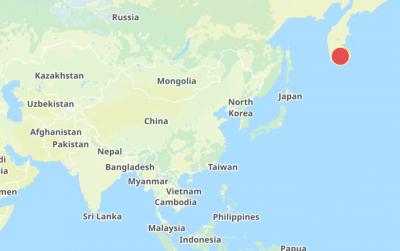
The Central Weather Administration (CWA) today issued a "tsunami watch" alert after a magnitude 8.7 earthquake struck off the Kamchatka Peninsula in northeastern Russia earlier in the morning. The quake struck off the east coast of the Kamchatka Peninsula at 7:25am (Taiwan time) at a depth of about 19km, the CWA said, citing figures from the Pacific Tsunami Warning Center. The CWA's Seismological Center said preliminary assessments indicate that a tsunami could reach Taiwan's coastal areas by 1:18pm today. The CWA urged residents along the coast to stay alert and take necessary precautions as waves as high as 1m could hit the southeastern

The National Museum of Taiwan Literature is next month to hold an exhibition in Osaka, Japan, showcasing the rich and unique history of Taiwanese folklore and literature. The exhibition, which is to run from Aug. 10 to Aug. 20 at the city’s Central Public Hall, is part of the “We Taiwan” at Expo 2025 series, highlighting Taiwan’s cultural ties with the international community, National Museum of Taiwan Literature director Chen Ying-fang (陳瑩芳) said. Folklore and literature, among Taiwan’s richest cultural heritages, naturally deserve a central place in the global dialogue, Chen said. Taiwan’s folklore would be immediately apparent at the entrance of the

Speeding and badly maintained roads were the main causes of a school bus accident on a rainy day in Taipei last year that severely injured two people and left 22 with minor injuries, the Taiwan Transportation and Safety Board said. On March 11 last year, a Kang Chiao International School bus overturned inside the Wenshan Tunnel (文山隧道) on the northbound lane of the Xinyi Expressway. The tour bus, owned by Long Lai Co, exceeded the speed limit after entering the tunnel, the board’s investigation found. Sensing that the rear of the vehicle was swaying, the driver attempted to use the service and exhaust
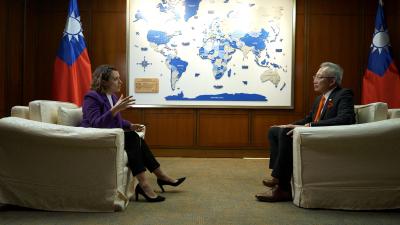
“China is preparing to invade Taiwan,” Deputy Minister of Foreign Affairs Francois Wu (吳志中) said in an exclusive interview with British media channel Sky News for a special report titled, “Is Taiwan ready for a Chinese invasion?” the Ministry of Foreign Affairs said today in a statement. The 25-minute-long special report by Helen Ann-Smith released yesterday saw Sky News travel to Penghu, Taoyuan and Taipei to discuss the possibility of a Chinese invasion and how Taiwan is preparing for an attack. The film observed emergency response drills, interviewed baseball fans at the Taipei Dome on their views of US President


 RSS
RSS