


Nearly 70 percent of respondents to a recent poll expressed approval of institutional cross-strait negotiations, saying they are helpful to forging peace and stability between Taiwan and China.
The survey, conducted by the poll center of the Taipei Municipal University of Education and commissioned by the Mainland Affairs Council, found that 65 percent of respondents agreed that the establishment of communication channels between government agencies will help solve problems resulting from increased cross-strait exchanges.
On a proposed agreement on the avoidance of double taxation that was not signed as scheduled in the latest round of cross-strait talks that concluded last week, 58 percent of those polled said they supported the government’s decision to postpone the signing of the pact.
With regard to the agenda for the next round of talks — scheduled for the first half of next year in China — 73 percent of those surveyed said the issue of intellectual property rights protection should be included, while 55 percent said they favored discussion on the proposed cross-strait economic cooperation framework agreement (ECFA).
The survey also found that after the latest talks, there was no apparent change in the percentage of people who categorically support either Taiwan’s unification with or independence from China.
Those who were broadly classified as supportive of maintaining the “status quo” — including those who favor maintaining the status quo forever and those who would prefer maintaining the status quo now and then moving toward either unification or independence — accounted for 88 percent of respondents, with those who support the “status quo” forever increasing slightly to 30 percent.
The percentage of those who are broadly classified as favoring unification — including the “status quo” and then unification — and those broadly classified as favoring independence — including the “status quo” and then independence — remained unchanged at 10 percent and 20 percent respectively, the survey found.
The survey, conducted between Friday and Sunday with 1,092 valid samples collected, has a margin of error of 3 percentage points.
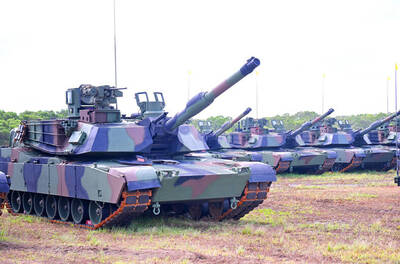
The manufacture of the remaining 28 M1A2T Abrams tanks Taiwan purchased from the US has recently been completed, and they are expected to be delivered within the next one to two months, a source said yesterday. The Ministry of National Defense is arranging cargo ships to transport the tanks to Taiwan as soon as possible, said the source, who is familiar with the matter. The estimated arrival time ranges from late this month to early next month, the source said. The 28 Abrams tanks make up the third and final batch of a total of 108 tanks, valued at about NT$40.5 billion

Travel agencies in Taiwan are working to secure alternative flights for travelers bound for New Zealand for the Lunar New Year holiday, as Air New Zealand workers are set to strike next week. The airline said that it has confirmed that the planned industrial action by its international wide-body cabin crew would go ahead on Thursday and Friday next week. While the Auckland-based carrier pledged to take reasonable measures to mitigate the impact of the workers’ strike, an Air New Zealand flight arriving at Taipei from Auckland on Thursday and another flight departing from Taipei for Auckland on Saturday would have to
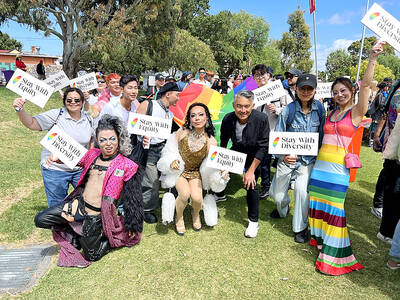
A group from the Taiwanese Designers in Australia association yesterday represented Taiwan at the Midsumma Pride March in Melbourne. The march, held in the St. Kilda suburb, is the city’s largest LGBTQIA+ parade and the flagship event of the annual Midsumma Festival. It attracted more than 45,000 spectators who supported the 400 groups and 10,000 marchers that participated this year, the association said. Taiwanese Designers said they organized a team to march for Taiwan this year, joining politicians, government agencies, professionals and community organizations in showing support for LGBTQIA+ people and diverse communities. As the first country in Asia to legalize same-sex
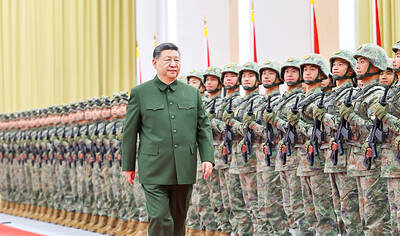
MOTIVES QUESTIONED The PLA considers Xi’s policies toward Taiwan to be driven by personal considerations rather than military assessment, the Epoch Times reports Chinese President Xi Jinping’s (習近平) latest purge of the Chinese People’s Liberation Army (PLA) leadership might have been prompted by the military’s opposition to plans of invading Taiwan, the Epoch Times said. The Chinese military opposes waging war against Taiwan by a large consensus, putting it at odds with Xi’s vision, the Falun Gong-affiliated daily said in a report on Thursday, citing anonymous sources with insight into the PLA’s inner workings. The opposition is not the opinion of a few generals, but a widely shared view among the PLA cadre, the Epoch Times cited them as saying. “Chinese forces know full well that


 RSS
RSS