


Less than 10 percent of people are fully aware of how swine flu spreads, a survey released by Common Health magazine showed on Friday.
The telephone survey, conducted between July 9 and July 11, found that 6.84 percent of respondents correctly identified the two means by which the swine flu virus can be transmitted: Through contact with infected pigs or environments contaminated by the virus, and through contact with a person carrying the virus.
In cases of human-to-human transmission, the virus is spread through droplets emitted by coughing or sneezing rather than through airborne transmission.
The survey collected 1,112 valid samples, with a 95 percent confidence level and a margin of error of plus or minus 2.9 percent.
More than 32 percent of respondents mistakenly believed that swine flu can be spread through airborne transmission.
The survey also found that only one-third of respondents would stay at home if they contracted swine flu, with the rest saying they would still go to school or to the office.
Men were more likely than women to continue going to work if they contracted the virus and the higher the education level, the more likely the respondents were to go to school or to work, the survey showed.
It also found that 90 percent of respondents would see a doctor if they contracted the virus.
If their children came down with the virus, 60 percent of respondents said they would not let them go to school, but 20 percent said it would depend on the situation.
Commenting on the survey, former Department of Health minister Chen Chien-jen (陳建仁), who is also a researcher at Academia Sinica, said the ratio of people with appropriate knowledge of the swine flu was lower than he expected.
“This is worrisome because wrong perceptions of the disease could lead to public health risks,” Chen said.
He called on the government to increase public awareness as part of its strategy to combat the epidemic.

The Chinese Communist Party (CCP) is pushing for residents of Kinmen and Lienchiang counties to acquire Chinese ID cards in a bid to “blur national identities,” a source said. The efforts are part of China’s promotion of a “Kinmen-Xiamen twin-city living sphere, including a cross-strait integration pilot zone in China’s Fujian Province,” the source said. “The CCP is already treating residents of these outlying islands as Chinese citizens. It has also intensified its ‘united front’ efforts and infiltration of those islands,” the source said. “There is increasing evidence of espionage in Kinmen, particularly of Taiwanese military personnel being recruited by the
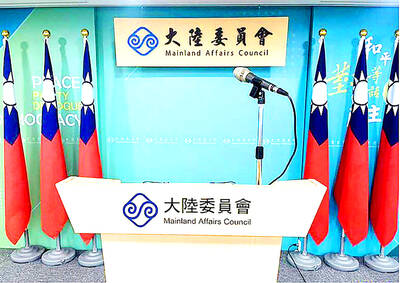
ENTERTAINERS IN CHINA: Taiwanese generally back the government being firm on infiltration and ‘united front’ work,’ the Asia-Pacific Elite Interchange Association said Most people support the government probing Taiwanese entertainers for allegedly “amplifying” the Chinese Communist Party’s propaganda, a survey conducted by the Asia-Pacific Elite Interchange Association showed on Friday. Public support stood at 56.4 percent for action by the Mainland Affairs Council and the Ministry of Culture to enhance scrutiny on Taiwanese performers and artists who have developed careers in China while allegedly adhering to the narrative of Beijing’s propaganda that denigrates or harms Taiwanese sovereignty, the poll showed. Thirty-three percent did not support the action, it showed. The poll showed that 51.5 percent of respondents supported the government’s investigation into Taiwanese who have

South Korean K-pop girl group Blackpink are to make Kaohsiung the first stop on their Asia tour when they perform at Kaohsiung National Stadium on Oct. 18 and 19, the event organizer said yesterday. The upcoming performances will also make Blackpink the first girl group ever to perform twice at the stadium. It will be the group’s third visit to Taiwan to stage a concert. The last time Blackpink held a concert in the city was in March 2023. Their first concert in Taiwan was on March 3, 2019, at NTSU Arena (Linkou Arena). The group’s 2022-2023 “Born Pink” tour set a

A Philippine official has denied allegations of mistreatment of crew members during Philippine authorities’ boarding of a Taiwanese fishing vessel on Monday. Philippine Bureau of Fisheries and Aquatic Resources (BFAR) spokesman Nazario Briguera on Friday said that BFAR law enforcement officers “observed the proper boarding protocols” when they boarded the Taiwanese vessel Sheng Yu Feng (昇漁豐號) and towed it to Basco Port in the Philippines. Briguera’s comments came a day after the Taiwanese captain of the Sheng Yu Feng, Chen Tsung-tun (陳宗頓), held a news conference in Pingtung County and accused the Philippine authorities of mistreatment during the boarding of


 RSS
RSS