


Three Democratic Progressive Party (DPP) Taipei City councilors risked jail time after climbing onto the roof of the East Gate in Taipei City yesterday and slapping white paint over the Chinese Nationalist Party (KMT) emblem in protest against what they said was a “symbol of dictatorship.”
Chuang Ruei-hsiung (莊瑞雄), Liu Yao-ren (劉耀仁) and Huang Hsiang-chun (黃向群) accused Taipei City’s Department of Cultural Affairs last week of taking advantage of repair work on the East Gate — also known as Jingfu Men — and three other historical gates to paint the KMT’s emblem.
They climbed the scaffolding yesterday morning to paint over the white-and-blue emblem.

PHOTO: CNA
“The KMT emblem did not appear on the gate during the Qing Dynasty. What we are doing today is restoring the monument to its original appearance ... Goodbye to the KMT emblem,” Chuang said.
Huang criticized the city government and President Ma Ying-jeou’s (馬英九) administration for seeking to restore dictatorship and one-party rule.
The councilors later showed the “tools” they used for the operation, including white paint, brushes and white protest banners, and ridiculed the police department for failing to protect the monument and to stop them.
“We didn’t know how much time we would have to paint out the emblem, but as it turns out no police were there to stop us, so we took our time to complete our restoration work,” Huang said.
The Department of Cultural Affairs began restoration work on the East Gate, the South Gate, the Little South Gate and the North Gate earlier this year with a budget of NT$7 million (US$215,000).
Department of Cultural Affairs Commissioner Lee Yong-ping (李永萍) said the KMT emblems were first carved and painted in 1955 when the KMT modified the Qing Dynasty gates.
Taipei Mayor Hau Lung-bin (郝龍斌) accused the DPP councilors of damaging the historical monument and said the city government would bring them to justice.
“We must all be humble before national monuments. Even as a mayor, I cannot order the department to make the emblem disappear. DPP councilors had no right to express their views in such a manner,” Hau said after presiding over a municipal meeting.
Lee said the councilors violated Article 21 of the Culture Heritage Preservation Act (文化資產保存法), which stipulates that any restoration work on national monuments should be done according to their original appearance.
The three could face up to five years in jail or fines up to NT$1 million.
It would be inappropriate to paint the KMT emblem on the gates if the symbol was not there originally, Hau said. As such, the city government invited all city councilors and experts to discuss the matter in a public hearing today, he said.
The three DPP councilors should express their opinion at the public hearing rather than by defacing monuments, he said.
The city government will take the results of the public hearings and share them with the Council of Cultural Affairs, which will make a final decision on the matter, Hau said.
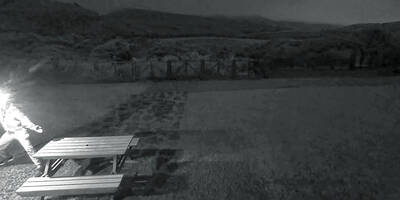
Yangmingshan National Park authorities yesterday urged visitors to respect public spaces and obey the law after a couple was caught on a camera livestream having sex at the park’s Qingtiangang (擎天崗) earlier in the day. The Shilin Police Precinct in Taipei said it has identified a suspect and his vehicle registration number, and would summon him for questioning. The case would be handled in accordance with public indecency charges, it added. The couple entered the park at about 11pm on Thursday and began fooling around by 1am yesterday, the police said, adding that the two were unaware of the park’s all-day live
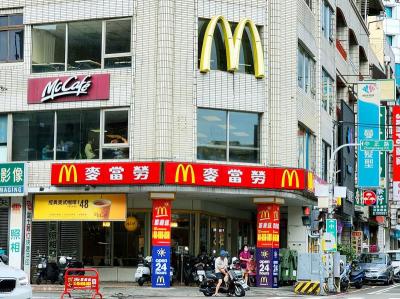
Fast food chain McDonald's is to raise prices by up to NT$5 on some products at its restaurants across Taiwan, starting on Wednesday next week, the company announced today. The prices of all extra value meals and sharing boxes are to increase by NT$5, while breakfast combos and creamy corn soup would go up by NT$3, the company said in a statement. The price of the main items of those meals, if ordered individually, would remain the same. Meanwhile, the price of a medium-sized lemon iced tea and hot cappuccino would rise by NT$3, extra dipping sauces for chicken nuggets would go up
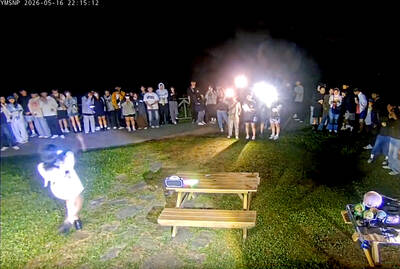
Yangmingshan National Park’s Qingtiangang (擎天崗) nature area has gone viral after a park livestream camera observed a couple in the throes of intimate congress, which was broadcast live on YouTube, drawing large late-night crowds and sparking a backlash over noise, bright lights and disruption to wildlife habitat. The area’s livestream footage appeared to show a couple engaging in sexual activity on a picnic table in the park on Friday last week, with the uncensored footage streamed publicly online. The footage quickly spread across social media, prompting a tide of visitors to travel to the site to “check in” and recreate the

Minister of Digital Affairs Lin Yi-ching (林宜敬) yesterday cited regulatory issues and national security concerns as an expert said that Taiwan is among the few Asian regions without Starlink. Lin made the remarks on Facebook after funP Innovation Group chief executive officer Nathan Chiu (邱繼弘) on Friday said Taiwan and four other countries in Asia — China, North Korea, Afghanistan and Syria — have no access to Starlink. Starlink has become available in 166 countries worldwide, including Ukraine, Malaysia, the Philippines and Vietnam, in the six years since it became commercial, he said. While China and North Korea block Starlink, Syria is not


 RSS
RSS