


President Ma Ying-jeou (馬英九) on Tuesday broke his silence on former Toronto-based Government Information Office (GIO) official Kuo Kuan-ying (郭冠英) after 14 days, condemning his online articles smearing Taiwan and Taiwanese.
Ma at the time said he hoped the controversy would end, but analysts who believe the president’s comment was too little, too late said the controversy was unlikely to end anytime soon.
After repeated denials, Kuo last week admitted that he had written the controversial articles under the pen name Fan Lan-chin (范蘭欽). The articles say, among other things, that “[China] should spend many years suppressing [people in Taiwan] instead of granting any political freedom [to them] once it has taken Taiwan by force.”
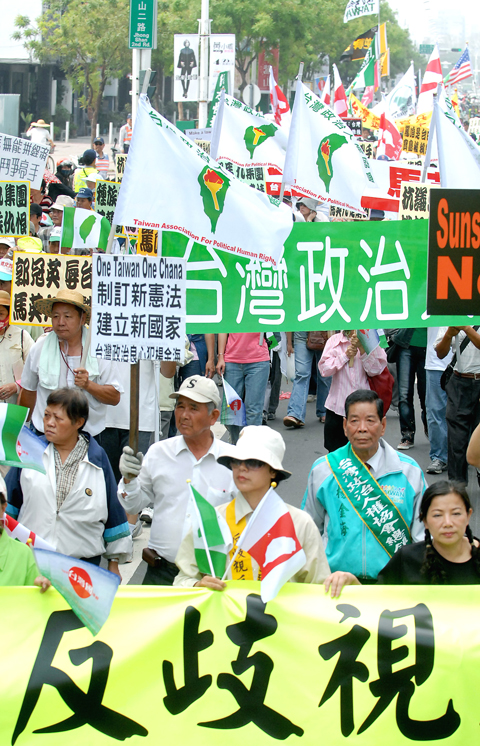
PHOTO: HUANG CHIH-YUAN, TAIPEI TIMES
Presidential Office Spokesman Wang Yu-chi (王郁琦) said a person whose remarks incited ethnic hatred should be condemned, but emphasized that Kuo’s articles had been published between 2005 and 2007, when the Democratic Progressive Party (DPP) was in power.
He also said that the controversy over Kuo’s remarks was the result of “provocation by some politicians.”
Criticizing Wang as “arrogant,” Hawang Shiow-duan (黃秀端), a political science professor at Soochow University, said Wang was implying the DPP was to blame for the articles.
Hawang said she believed there were more government officials like Kuo who have not “come out of the political closet.”
Hawang said the legislative by-election in Taipei City’s Da-an District had been among the factors contributing to Ma’s decision to come forward.
“Ma might have seen that the matter has gotten out of hand and that it was necessary for him to come out and say something,” Hawang said.
While Ma said he would like to see the controversy end here, Hawang said that whether it would end would hinge on Kuo’s attitude, pointing out that Kuo had continued to make contentious remarks in Toronto, as in an interview with ETTV on Wednesday in which he called himself a “hero.”
Chao Yung-mao (趙永茂), a political science professor at National Taiwan University, agreed that yesterday’s Da-an by-election “more or less” played a role in Ma’s comments.
Following the KMT’s defeat in a legislative by-election in Miaoli, it sought to court centrist voters and KMT sympathizers, Chao said.
The controversy over Kuo’s articles was not over, he said, because the issue would be mentioned repeatedly in elections and the investigation into the matter was not finished.
Career civil servants must remain politically neutral, Chao said, adding that Kuo would have had full freedom of speech had he not been a civil servant.
Joseph Tsai (蔡榮祥), a political science professor at National Chung Cheng University, said Ma’s decision to denounce Kuo had more to do with his own sliding approval rating.
“Most politicians are selfish. They usually do whatever is best for them. His approval rating has dropped to 28 percent, so it would be a good idea for him to do a little bit of damage control here, or he will be held responsible if Kuo continues to stir up controversy,” Tsai said.
Tsai said he believed Kuo was not the only “Fan Lan-chin” in the government.
Although Kuo was free to advocate unification with China, racist remarks could not be tolerated, Tsai said.

STAY AWAY: An official said people should avoid disturbing snakes, as most do not actively attack humans, but would react defensively if threatened Taitung County authorities yesterday urged the public to stay vigilant and avoid disturbing snakes in the wild, following five reported snakebite cases in the county so far this year. Taitung County Fire Department secretary Lin Chien-cheng (林建誠) said two of the cases were in Donghe Township (東河) and involved the Taiwan habus, one person was bit by a Chinese pit viper near the South Link Railway and the remaining two were caused by unidentified snakes. He advised residents near fields to be cautious of snakes hiding in shady indoor areas, especially when entering or leaving their homes at night. In case of a
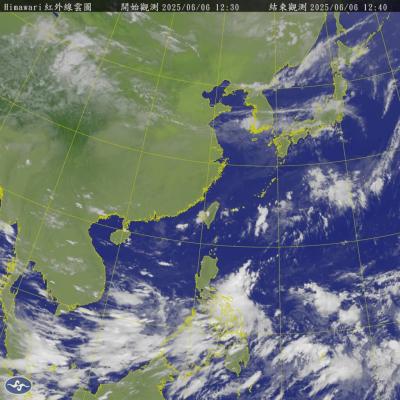
A tropical disturbance off the southeastern coast of the Philippines might become the first typhoon of the western Pacific typhoon season, the Central Weather Administration (CWA) said. The system lacks a visible center and how it would develop is only likely to become clear on Sunday or Monday, the CWA said, adding that it was not yet possible to forecast the potential typhoon's effect on Taiwan. The American Meteorological Society defines a tropical disturbance as a system made up of showers and thunderstorms that lasts for at least 24 hours and does not have closed wind circulation.

ENERGY RESILIENCE: Although Alaska is open for investments, Taiwan is sourcing its gas from the Middle East, and the sea routes carry risks, Ho Cheng-hui said US government officials’ high-profile reception of a Taiwanese representative at the Alaska Sustainable Energy Conference indicated the emergence of an Indo-Pacific energy resilience alliance, an academic said. Presidential Office Secretary-General Pan Men-an (潘孟安) attended the conference in Alaska on Thursday last week at the invitation of the US government. Pan visited oil and gas facilities with senior US officials, including US Secretary of the Interior Doug Burgum, US Secretary of Energy Chris Wright, Alaska Governor Mike Dunleavy and US Senator Daniel Sullivan. Pan attending the conference on behalf of President William Lai (賴清德) shows a significant elevation in diplomatic representation,

Credit departments of farmers’ and fishers’ associations blocked a total of more than NT$180 million (US$6.01 million) from being lost to scams last year, National Police Agency (NPA) data showed. The Agricultural Finance Agency (AFA) said last week that staff of farmers’ and fishers’ associations’ credit departments are required to implement fraud prevention measures when they serve clients at the counter. They would ask clients about personal financial management activities whenever they suspect there might be a fraud situation, and would immediately report the incident to local authorities, which would send police officers to the site to help, it said. NPA data showed


 RSS
RSS