


Lifting the country’s competitiveness ranking to the top 10 in the world was part of the reason behind the government’s proposal to streamline the Executive Yuan, said Research, Development and Evaluation Commission (RDEC) Chairman Jiang Yi-huah (江宜樺) yesterday.
Taiwan has ranked between No. 11 and No. 18 in the past five years in the global competitiveness index rankings compiled by the Switzerland-based International Institute for Management Development, while its ranking in terms of government efficiency fell between No. 16 and No. 23 during the same period.
“Downsizing the Executive Yuan’s agencies won’t guarantee a better ranking, but it surely will help promote the nation’s competitiveness,” Jiang said while unveiling a government plan for institutional reform at a forum organized by National Chengchi University’s Center for Public and Business Administration Education.
The initiative for reconstructing the Executive Yuan dates back to 1988, when a taskforce was set up by then premier Yu Kuo-hwa (�?�).
Twenty-two years and 11 premiers later, five separate plans have been sent to the legislature for approval. All have been turned down.
“The Executive Yuan created many new agencies in the past 22 years, but not one unit was deactivated … which has resulted in overlap in functions between agencies, higher costs for policy coordination and public confusion over who’s in charge,” Jiang said.
The RDEC said the Executive Yuan has 39 agencies, more than twice the number in Japan, South Korea and Finland.
Jiang said the RDEC’s initial proposal, to be finalized by the end of this month, seeks to see the number of agencies cut by one-third by 2011.
Under the proposal, the Council for Cultural Affairs, the Environmental Protection Administration, the Department of Health, the Council of Agriculture and the Council of Labor Affairs would be upgraded to ministry status.
The proposal also suggests that agencies with similar functions be merged. As a result, the Ministry of Transportation and Communications would be merged with the Public Construction Commission, the Ministry of Education would be merged with the Sports Affairs Council and the Council of Economic and Development would be merged with the RDEC.
The proposal also suggests abolishing the Government Information Office and moving some of its work to the cultural ministry, merging the Mongolian and Tibetan Affairs Commission with the Mainland Affairs Council and subsuming the Atomic Energy Council into the National Science Council.
The RDEC also proposed the creation of a new council to address marine issues.
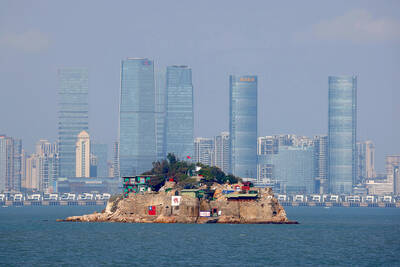
The Chinese Communist Party (CCP) is pushing for residents of Kinmen and Lienchiang counties to acquire Chinese ID cards in a bid to “blur national identities,” a source said. The efforts are part of China’s promotion of a “Kinmen-Xiamen twin-city living sphere, including a cross-strait integration pilot zone in China’s Fujian Province,” the source said. “The CCP is already treating residents of these outlying islands as Chinese citizens. It has also intensified its ‘united front’ efforts and infiltration of those islands,” the source said. “There is increasing evidence of espionage in Kinmen, particularly of Taiwanese military personnel being recruited by the
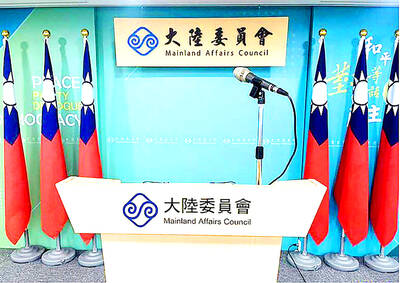
ENTERTAINERS IN CHINA: Taiwanese generally back the government being firm on infiltration and ‘united front’ work,’ the Asia-Pacific Elite Interchange Association said Most people support the government probing Taiwanese entertainers for allegedly “amplifying” the Chinese Communist Party’s propaganda, a survey conducted by the Asia-Pacific Elite Interchange Association showed on Friday. Public support stood at 56.4 percent for action by the Mainland Affairs Council and the Ministry of Culture to enhance scrutiny on Taiwanese performers and artists who have developed careers in China while allegedly adhering to the narrative of Beijing’s propaganda that denigrates or harms Taiwanese sovereignty, the poll showed. Thirty-three percent did not support the action, it showed. The poll showed that 51.5 percent of respondents supported the government’s investigation into Taiwanese who have

South Korean K-pop girl group Blackpink are to make Kaohsiung the first stop on their Asia tour when they perform at Kaohsiung National Stadium on Oct. 18 and 19, the event organizer said yesterday. The upcoming performances will also make Blackpink the first girl group ever to perform twice at the stadium. It will be the group’s third visit to Taiwan to stage a concert. The last time Blackpink held a concert in the city was in March 2023. Their first concert in Taiwan was on March 3, 2019, at NTSU Arena (Linkou Arena). The group’s 2022-2023 “Born Pink” tour set a
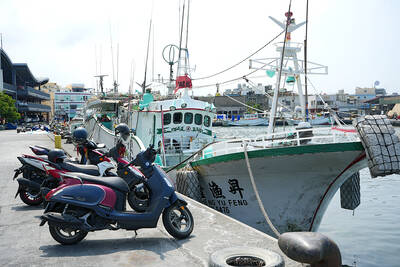
A Philippine official has denied allegations of mistreatment of crew members during Philippine authorities’ boarding of a Taiwanese fishing vessel on Monday. Philippine Bureau of Fisheries and Aquatic Resources (BFAR) spokesman Nazario Briguera on Friday said that BFAR law enforcement officers “observed the proper boarding protocols” when they boarded the Taiwanese vessel Sheng Yu Feng (昇漁豐號) and towed it to Basco Port in the Philippines. Briguera’s comments came a day after the Taiwanese captain of the Sheng Yu Feng, Chen Tsung-tun (陳宗頓), held a news conference in Pingtung County and accused the Philippine authorities of mistreatment during the boarding of


 RSS
RSS