


Lawmakers on the legislature’s Transportation Committee yesterday asked the Ministry of Transportation and Communications (MOTC) to halt a layoff plan for staff at the Grand Hotel in Kaohsiung (高雄圓山飯店) after more than 100 employees were asked to take early retirement or redundancy.
The employees were promised a place on a priority list for re-employment in March.
Dissatisfied with the deals offered, employees demanded a better severance package.
The dispute came to the attention of legislators at the Transportation Committee, who asked the MOTC to delay the layoff plan.
“The hotel chose to do this before the Lunar New Year holidays, which is very bad timing,” said Chinese Nationalist Party (KMT) Legislator Huang Chao-shun (黃昭順).
KMT Legislator Chen Ken-te (陳根德) suggested that the MOTC consider privatizing the Grand Hotel, following models adopted by Chunghua Telecom (中華電信) and Taiwan Tobacco and Liquor Corp (台灣菸酒).
KMT Legislator Hou Tsai-feng (侯彩鳳) pointed out that both employer and employees had agreed in a hearing two weeks ago to several conditions.
These included setting the severance pay based on the Labor Standards Act (勞動基準法) and rehiring former employees on at least 70 percent of their original salaries.
Hou said, however, the employer sent the notices before some of the details were finalized.
MOTC Vice Minister Oliver Yu (游芳來) said personnel costs accounted for 87 percent of the hotel’s expenditure.
The hotel may have problems sustaining operations if it did not make job cuts, he said.
Grand Hotel chairman Chang Shuo-lao (張學勞) said on Sunday that the hotel would last less than three years if it failed to address financial woes, local media reported yesterday.
Chang said that, although the hotel’s assets totaled NT$4.3 billion (US$130 million), only NT$2.2 billion were available for use.
Some NT$900 million of which was reserved as retirement funds for its 1,100-member workforce.
The Grand Hotel’s club would be need to return deposits to members if they cancelled their memberships, which would leave the hotel with just NT$450 million.
ADDITIONAL REPORTING BY STAFF WRITER

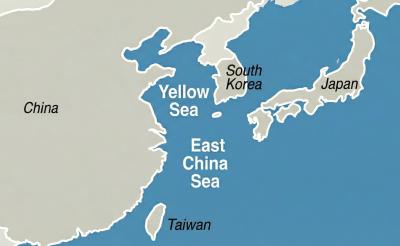
China has reserved offshore airspace in the Yellow Sea and East China Sea from March 27 to May 6, issuing alerts usually used to warn of military exercises, although no such exercises have been announced, the Wall Street Journal (WSJ) reported yesterday. Reserving such a large area for 40 days without explanation is an “unusual step,” as military exercises normally only last a few days, the paper said. These alerts, known as Notice to Air Missions (Notams), “are intended to inform pilots and aviation authorities of temporary airspace hazards or restrictions,” the article said. The airspace reserved in the alert is
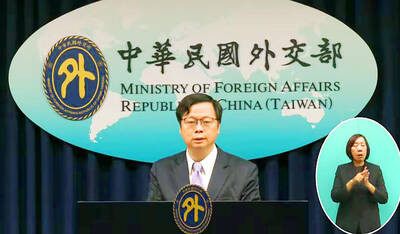
NAMING SPAT: The foreign ministry called on Denmark to propose an acceptable solution to the erroneous nationality used for Taiwanese on residence permits Taiwan has revoked some privileges for Danish diplomatic staff over a Danish permit that lists “Taiwan” as “China,” Eric Huang (黃鈞耀), head of the Ministry of Foreign Affairs’ Department of European Affairs, told a news conference in Taipei yesterday. Reporters asked Huang whether the Danish government had responded to the ministry’s request that it correct the nationality on Danish residence permits of Taiwanese, which has been listed as “China” since 2024. Taiwan’s representative office in Denmark continues to communicate with the Danish government, and the ministry has revoked some privileges previously granted to Danish representatives in Taiwan and would continue to review

More than 6,000 Taiwanese students have participated in exchange programs in China over the past two years, despite the Mainland Affairs Council’s (MAC) “orange light” travel advisory, government records showed. The MAC’s publicly available registry showed that Taiwanese college and university students who went on exchange programs across the Strait numbered 3,592 and 2,966 people respectively. The National Immigration Agency data revealed that 2,296 and 2,551 Chinese students visited Taiwan for study in the same two years. A review of the Web sites of publicly-run universities and colleges showed that Taiwanese higher education institutions continued to recruit students for Chinese educational programs without

A bipartisan group of US senators has introduced a bill to enhance cooperation with Taiwan on drone development and to reduce reliance on supply chains linked to China. The proposed Blue Skies for Taiwan Act of 2026 was introduced by Republican US senators Ted Cruz and John Curtis, and Democratic US senators Jeff Merkley and Andy Kim. The legislation seeks to ease constraints on Taiwan-US cooperation in uncrewed aerial systems (UAS), including dependence on China-sourced components, limited access to capital and regulatory barriers under US export controls, a news release issued by Cruz on Wednesday said. The bill would establish a "Blue UAS


 RSS
RSS