

Highway bus drivers will be fined NT$90,000 and have their drivers’ license suspended if they are responsible for accidents in which more than 10 passengers are injured or that lead to the death of more than three passengers, the Department of Railways and Highways said yesterday.
Aside from bus drivers, the department said that the bus company would also be held liable for the accidents.
The administrative authority of highways could impose a penalty of between NT$9,000 and NT$90,000.
Depending on the severity of the infraction, a bus company could also be forced to suspend all its operations.
The department said it had set specific standards to determine the penalties for various types of accidents, as the administrative authority has had problems delivering consistent rulings.
DIFFERENTIATED
It has differentiated between general traffic accidents and major traffic accidents.
In each category, the penalty is set based on the number of deaths and injuries in each accident and the driver’s record of violations.
First-time offenders, for example, will be required to pay NT$10,000 if the accident results in injuries to two passengers.
The department said that these standards were administrative orders, which can be executed without getting the approval of the Legislative Yuan.
AMENDMENT
In related news, the department has also drafted an amendment to the Railway Law (鐵路法), which would substantially increase the penalty for misbehavior by passengers.
Dangerous behavior such as jumping off a train before it comes to a complete stop would now be punishable with a fine of NT$7,500, up from NT$1,500.
Passengers bringing pets on board without securing prior approval or following any specific regulation, smoking in non-smoking sections, or littering could be fined between NT$1,500 and NT$7,500.
In the past, fines were between NT$300 and NT$3,000.
The new penalties will have to be approved by the Legislative Yuan before they can come into force.
REJECTED
Yesterday, the department also rejected a proposal by the Taiwan High Speed Rail Corp (THSRC) that suggested setting a different rate for passengers who choose to share a cab departing from THSRC stations.
The company said the proposal was meant to encourage more service operators to dispatch more taxis to the THSRC stations to help transport passengers.
The department, however, said the cab fare should not be different because of the carpool system.

A Hualien pomelo farmer refused to sell to China after the country announced it would permit more Taiwanese pomelo imports, prompting widespread support from Taiwanese consumers, who rallied to buy his fruit. China’s Taiwan Affairs Office last month said that China’s General Administration of Customs registered an additional 79 Taiwanese pomelo orchards and packing facilities in Hualien County, allowing more Taiwanese producers to export pomelos to China. “I am a Hualien fruit farmer and I refuse to sell to China,” Liu Tzu-hao (劉子豪) from Ruisui Township (瑞穗) said in an online post. Liu is a well-known farmer in the community and has served
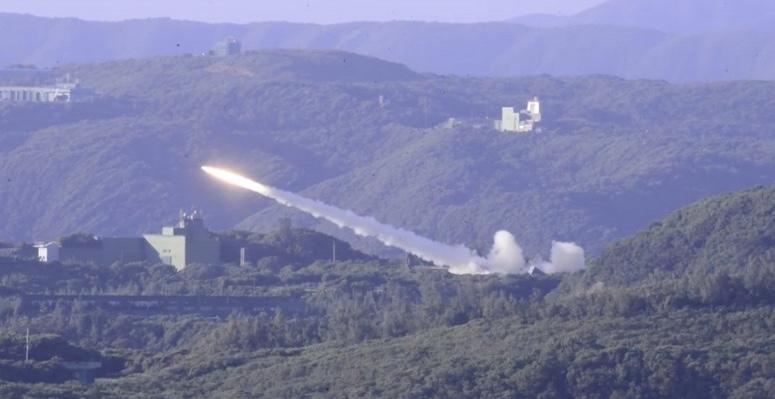
A Chinese military drone was spotted conducting reconnaissance off Taitung County as President William Lai (賴清德) visited Pingtung County this morning to inspect a drill of the armed forces’ precision-strike capabilities, prompting the military to closely monitor its actions. Today was the final day of a three-day military exercise at Jioupeng Base (九鵬基地) to test the joint combat capabilities of the armed forces and coast guard. The exercise began on Wednesday simulating air defense interception and yesterday tested long-range strike capabilities and new air defense weapons. This morning, the military conducted a final exercise involving air defense, anti-ship and drone operations. Military sources said

OCT. 31: The antiviral drugs Tamiflu and Eraflu have been distributed to about 4,000 medical facilities nationwide for people in seven groups who develop flu-like symptoms As the domestic influenza epidemic enters its peak season and continues to escalate, the Centers for Disease Control (CDC) yesterday announced that publicly funded influenza antiviral drugs for seven eligible groups have been extended to Oct. 31, allowing those who develop flu-like symptoms to receive the medication without undergoing a rapid influenza test. The CDC has extended the expanded use of flu antiviral drugs to seven groups: healthcare and influenza-prevention personnel; residents and staff at nursing homes, long-term care facilities and similar institutions; kindergarten and daycare workers and home-based caregivers; students from kindergarten through high school, vocational high school and the

Taiwanese Tsai Chin-shu (蔡金樹), who had been imprisoned in China for engaging in activity that “endangers national security,” said on Facebook on Friday that he has returned to Taiwan. Tsai, chairman of the Southern Taiwan Union of Cross-strait Relations Associations, had traveled frequently between Taiwan and China for years, and at one time ran a trading company in China’s Pingtan. In July 2018, he traveled to Quanzhou, Fujian Province, to attend a cross-strait food trade fair and stayed at a hotel in Xiamen. He checked out the following day and then disappeared. His family had made repeated appeals to the authorities


 RSS
RSS