


Worried about melamine contamination and dissatisfied with the Department of Health, a group of social activist bloggers calling themselves “Happy Mobs” are pushing for more corporate and government transparency.
“It’s been weeks since the melamine scare first broke and the government has changed the tolerable limit for melamine quite a few times. But they never explained to us why the changes were made, why we decided to follow the EU standard or the Hong Kong standards and how everything was decided,” Cheng Kuo-wei (鄭國威), initiator of the campaign, told the Taipei Times in a telephone interview.
“We want safe food and we want to know how the government makes decisions,” he said.
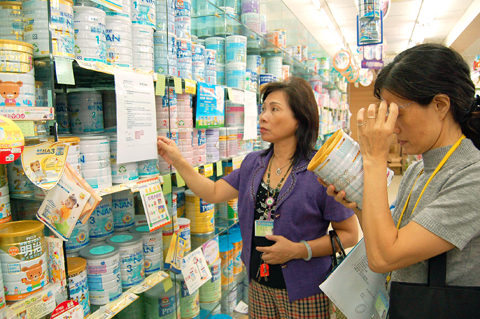
PHOTO: WU HSING-HUA, TAIPEI TIMES
“Although there’s a Government Information Disclosure Act [政府資訊公開法], it’s poorly executed,” he said. “I think the melamine scare is a good opportunity to push for more transparency.”
In a statement released by Happy Mobs, it asked the government to release “complete and clear records of all expert meetings — where the numbers came from and why some numbers were chosen but not others.”
“We would like to urge the government to come up with a set of standard food testing procedures, not an ambiguous ‘non-detectable’ standard,” it said. “We would also like to ask the government to allow concerned civic groups to participate in meetings and the policy-making process.”
Meanwhile, Tseng Chao-ming (曾昭明), founder of Corporate Social Responsibility Taiwan, called on food companies to fulfill their responsibilities by making public detailed information about their products, including where all the raw materials come from.
However, unlike more conventional civic groups, members of Happy Mobs do not meet face-to-face to discuss issues — many of them do not even know who their peers are.
Instead, they use a forum-like online platform to plan actions or compose common statements.
Each member posts the statements on their own blogs or forwards them to friends via e-mail.
So far, 657 blogs are participating in the campaign against melamine, which is just the latest issue Happy Mobs has taken on.
“We are a group of bloggers who are concerned about public issues. We’ve actually initiated other campaigns for the preservation of Losheng Sanatorium and environmental issues, and advocated support for the Green Party Taiwan [in the legislative elections],” said Daphne Hu (胡慕情), one of the bloggers.
“The advantage of an online campaign is that it is not limited by place or time and is a good way for those who may not have other channels to express their thoughts,” Hu said.
“I don’t expect the government to respond to us right now, but we want to accumulate enough sway to show the government what the public is thinking,” she said. “And if the government doesn’t want to listen to us, we may just have to solve that with a change of government.”
Happy Mobs discussions are open to the public and accessible by joining groups.google.com.tw/group/happymobs.

Taiwanese can file complaints with the Tourism Administration to report travel agencies if their activities caused termination of a person’s citizenship, Mainland Affairs Council Minister Chiu Chui-cheng (邱垂正) said yesterday, after a podcaster highlighted a case in which a person’s citizenship was canceled for receiving a single-use Chinese passport to enter Russia. The council is aware of incidents in which people who signed up through Chinese travel agencies for tours of Russia were told they could obtain Russian visas and fast-track border clearance, Chiu told reporters on the sidelines of an event in Taipei. However, the travel agencies actually applied

New measures aimed at making Taiwan more attractive to foreign professionals came into effect this month, the National Development Council said yesterday. Among the changes, international students at Taiwanese universities would be able to work in Taiwan without a work permit in the two years after they graduate, explainer materials provided by the council said. In addition, foreign nationals who graduated from one of the world’s top 200 universities within the past five years can also apply for a two-year open work permit. Previously, those graduates would have needed to apply for a work permit using point-based criteria or have a Taiwanese company
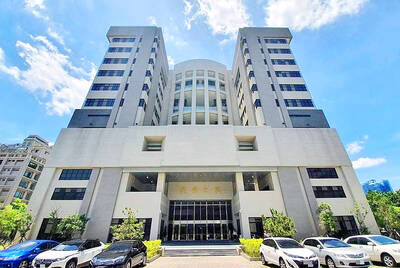
The Shilin District Prosecutors’ Office yesterday indicted two Taiwanese and issued a wanted notice for Pete Liu (劉作虎), founder of Shenzhen-based smartphone manufacturer OnePlus Technology Co (萬普拉斯科技), for allegedly contravening the Act Governing Relations Between the People of the Taiwan Area and the Mainland Area (臺灣地區與大陸地區人民關係條例) by poaching 70 engineers in Taiwan. Liu allegedly traveled to Taiwan at the end of 2014 and met with a Taiwanese man surnamed Lin (林) to discuss establishing a mobile software research and development (R&D) team in Taiwan, prosecutors said. Without approval from the government, Lin, following Liu’s instructions, recruited more than 70 software
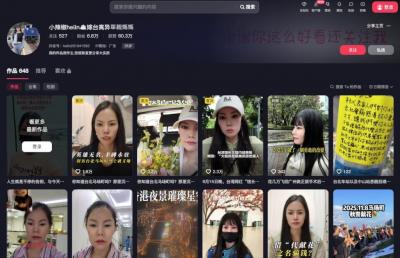
Chinese spouse and influencer Guan Guan’s (關關) residency permit has been revoked for repeatedly posting pro-China videos that threaten national security, the National Immigration Agency confirmed today. Guan Guan has said many controversial statements in her videos posted to Douyin (抖音), including “the red flag will soon be painted all over Taiwan” and “Taiwan is an inseparable part of China,” and expressing hope for expedited reunification. The agency last year received multiple reports alleging that Guan Guan had advocated for armed reunification. After verifying the reports, the agency last month issued a notice requiring her to appear and explain her actions. Guan


 RSS
RSS