


The Taipei International Medical Assistance Team (Taipei IMAT) will leave for Mongolia to provide free health checks and other medical services to herders, the Taipei City Hospital said yesterday.
Taiwanese pharmaceutical companies will also donate 100 blood sugar test kits and different types of drugs to Mongolia, the hospital said.
Ho Hsiao-feng, chief of the International Cooperation Section of the Taipei City Hospital, who is also a member of Taipei IMAT, said the team would mainly provide services in the suburbs of the Mongolian capital, Ulan Bator, and in the Khovd Province located in western Mongolia where the majority of the herders live.

PHOTO: FU CHAO-PIAO, TAIPEI TIMES
“In Mongolia, the most prevalent illnesses are chronic diseases, such as high blood pressure and hepatitis,” she said.
The local health department has attributed these chronic diseases to dietary habits and the sharing of syringe needles, she said.
Chen Jun-chiu, the Taipei City Hospital’s deputy superintendent, said that about 54 percent of Mongolian herders suffer from high blood pressure, due to heavy drinking and the high sodium and fat content of their food.
Moreover, because of the long hours on horseback, herders often suffer from knee problems and sciatic nerve pain, the hospital said.
In developed countries, these problems usually only occur among the elderly, the hospital said, adding that due to a lack of medical resources and economic support, many herders cannot afford surgery or drugs.
“Mongolia is like Taiwan three or four decades ago, when the medical network and public health system were inadequate,” Ho said.
Taipei IMAT, consisting of 14 medical professionals and care workers, is slated to leave on a two-week trip to Ulan Bator on Monday, Ho said, adding that the group has been providing volunteer services in Mongolia every year since 2003.
It has also done volunteer medical work in southern India, Sao Tome and Principe and in some remote provinces of China, Ho said.
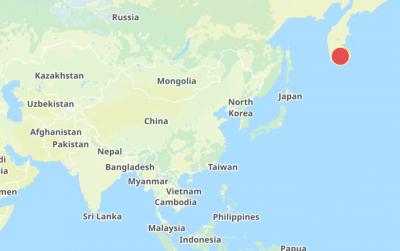
The Central Weather Administration (CWA) today issued a "tsunami watch" alert after a magnitude 8.7 earthquake struck off the Kamchatka Peninsula in northeastern Russia earlier in the morning. The quake struck off the east coast of the Kamchatka Peninsula at 7:25am (Taiwan time) at a depth of about 19km, the CWA said, citing figures from the Pacific Tsunami Warning Center. The CWA's Seismological Center said preliminary assessments indicate that a tsunami could reach Taiwan's coastal areas by 1:18pm today. The CWA urged residents along the coast to stay alert and take necessary precautions as waves as high as 1m could hit the southeastern

The National Museum of Taiwan Literature is next month to hold an exhibition in Osaka, Japan, showcasing the rich and unique history of Taiwanese folklore and literature. The exhibition, which is to run from Aug. 10 to Aug. 20 at the city’s Central Public Hall, is part of the “We Taiwan” at Expo 2025 series, highlighting Taiwan’s cultural ties with the international community, National Museum of Taiwan Literature director Chen Ying-fang (陳瑩芳) said. Folklore and literature, among Taiwan’s richest cultural heritages, naturally deserve a central place in the global dialogue, Chen said. Taiwan’s folklore would be immediately apparent at the entrance of the
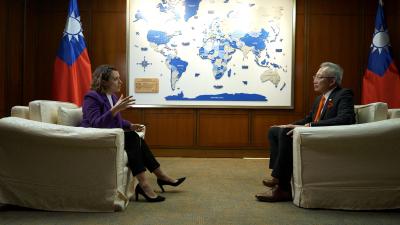
“China is preparing to invade Taiwan,” Deputy Minister of Foreign Affairs Francois Wu (吳志中) said in an exclusive interview with British media channel Sky News for a special report titled, “Is Taiwan ready for a Chinese invasion?” the Ministry of Foreign Affairs said today in a statement. The 25-minute-long special report by Helen Ann-Smith released yesterday saw Sky News travel to Penghu, Taoyuan and Taipei to discuss the possibility of a Chinese invasion and how Taiwan is preparing for an attack. The film observed emergency response drills, interviewed baseball fans at the Taipei Dome on their views of US President

Speeding and badly maintained roads were the main causes of a school bus accident on a rainy day in Taipei last year that severely injured two people and left 22 with minor injuries, the Taiwan Transportation and Safety Board said. On March 11 last year, a Kang Chiao International School bus overturned inside the Wenshan Tunnel (文山隧道) on the northbound lane of the Xinyi Expressway. The tour bus, owned by Long Lai Co, exceeded the speed limit after entering the tunnel, the board’s investigation found. Sensing that the rear of the vehicle was swaying, the driver attempted to use the service and exhaust


 RSS
RSS