

Youths and youth rights advocates called on Wednesday for improvements in road traffic safety, saying that road accidents result in the death of almost 1,000 children and young adults every year.
“Because of unsafe road traffic conditions, nearly 1,000 people under 24 years of age die in traffic accidents every year,” said Lin Yue-chin (林月琴), chief executive of the Jing Chuan Child Safety Foundation at a press conference.
“Traffic accidents are the major cause of death among children and teenagers in Taiwan,” Lin said.
She cited statistics showing that road accidents had been listed as the top cause of death among people aged under 24 for 14 consecutive years, while the mortality rate related to traffic accidents remained extremely high.
Nonetheless, the government allocates only a very small budget for traffic safety measures, Lin said, pointing out that it spent an average of just NT$17 a year per head on safety protection measures.
Lin urged the government to formulate new tougher regulations applicable to vehicles used to transport children to school.
As road traffic safety issues come under the jurisdiction of many different government agencies, Lin said, the Ministry of the Interior should coordinate and integrate government efforts to develop measures related to traffic safety for young people.
In a bid to promote traffic safety near schools, a university student group in Taichung City, which also attended the news conference, petitioned the Taichung City Government to bar large vehicles from traveling in school districts during school hours.
Tsai Ke-shi (蔡克斯), a representative of the group, said it was launched after five university students were hit by buses in the city in the space of six months.
He said that since the petition was launched in April it had collected more than 100,000 signatures. After two months of efforts, local governments in central Taiwan have promised to take measures to improve road safety, he said.
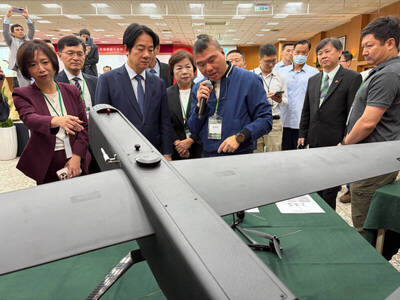
Two executives of drone supplier Jiin Ming Industry Co (錦明實業) have been detained and held incommunicado over the company's alleged use of prohibited China-made chips and camera lenses in drones supplied under recent military contracts, the Taoyuan District Prosecutors' Office said today. In a statement, prosecutors said they raided the offices of Jiin Ming — headquartered in Taoyuan — as well as those of its subsidiaries and its suppliers on Thursday last week. The raids followed a report that the company had breached its procurement contracts by putting the prohibited components into drones delivered to the military. During the raids, prosecutors summoned
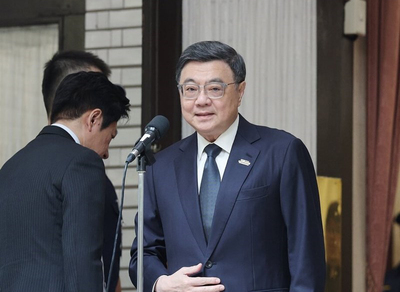
The government would continue monitoring online rumors that a pneumonic plague outbreak has spread from Russia into China and could enhance existing quarantine measures, Premier Cho Jung-tai (卓榮泰) said today. During a legislative meeting, Democratic Progressive Party Legislator Wang Ting-yu (王定宇) said rumors were circulating that the disease had spread across several Chinese provinces. He asked Cho whether the government was prepared to prevent the disease from spreading to Taiwan, given the frequent exchanges between Taiwan and China, and how concerned the government was about the alleged outbreak. The Ministry of Health and Welfare implemented border quarantine measures after briefing the Executive Yuan

South Korean boy band BigBang drew 120,000 fans to three concerts at Taipei Dome from Friday through yesterday, as the band thanked them for their support over their 20-year career. The Taipei Dome concerts were part of BigBang's "2026-2027 World Tour XX: Cosmos." Friday's concert was BigBang's first performance in Taiwan in 11 years. During the encore, group leader G-Dragon (GD) shouted "I love you" in Chinese and said he was especially happy to perform in Taiwan with bandmates Taeyang and Daesung. "Taipei, I'm very grateful to you all," GD said in Chinese, asking fans to wait for the band's return. Daesung thanked
A Chinese People's Liberation Army (PLA) Navy aircraft carrier group was being monitored after entering the western Pacific, the Ministry of National Defense said today, after Beijing yesterday criticized Taiwan for using a water cannon against a Chinese fishing boat near the Pratas Islands (Dongsha Islands, 東沙群島). A Chinese naval task group led by the aircraft carrier Liaoning (遼寧) yesterday sailed to the western Pacific for training, Chinese state-run Xinhua news agency quoted the PLA Navy as saying. “The drill is part of the annual routine training plan aimed at testing and improving the troops’ combat readiness and enhancing their ability to


 RSS
RSS