


Relations between Taiwan and St. Kitts and Nevis remain strong despite a delay in the sending of a congratulatory note to president-elect Ma Ying-jeou (馬英九), an official for the Caribbean island country said yesterday.
Kittian charge d’affaire to Taiwan Jasmine Huggins told the Central News Agency that Taiwan-St. Kitts ties remain firm and there was no reason to suspect any otherwise.
The Ministry of Foreign Affairs also echoed Huggins’ views, saying that Taiwan and St. Kitts enjoy a very healthy and close relationship and that all bilateral projects between the two countries are progressing as scheduled.
It was reported that the charge d’ affaire had to return home on the same day as the election because of a family emergency.
The rumor of shaky ties between the two countries started last week when Vice-President Annette Lu (呂秀蓮) said in a newspaper interview that the delay in the issuance of congratulatory notes from four of Taiwan’s allies, namely Burkina Faso, San Tome and Principe, Guatemala and St. Kitts and Nevis was a sign of deteriorating relations.
The ministry immediately refuted Lu’s remarks, saying that the nation’s friendships with these countries had not been affected and that the significance behind the delays should not be overly exaggerated.
The Ma camp received a congratulatory note from Basseterre last Friday.
The ministry said that the note was personally written by Kittian Prime Minister Denzil Douglas and said: “Taiwan has long been a faithful and close friend to St. Kitts for nearly 25 years and the government of St. Kitts and Nevis remains firmly committed to the growth of this friendship.”
The note also said the Kittian government hoped the Taiwan-St. Kitts relationship would continue to blossom under the incoming administration to “produce benefits of mutual advantage for both sides.”
Governor-General Sir Cuthbert Montraville Sebastian is expected to attend the inauguration ceremony on May 20, officials said.
Taiwan became the first diplomatic ally of Saint Kitts and Nevis after its independence when the two forged diplomatic ties in 1983. Douglas visited Taiwan in February to attend the opening ceremony of the country’s first embassy in Asia.

Yangmingshan National Park authorities yesterday urged visitors to respect public spaces and obey the law after a couple was caught on a camera livestream having sex at the park’s Qingtiangang (擎天崗) earlier in the day. The Shilin Police Precinct in Taipei said it has identified a suspect and his vehicle registration number, and would summon him for questioning. The case would be handled in accordance with public indecency charges, it added. The couple entered the park at about 11pm on Thursday and began fooling around by 1am yesterday, the police said, adding that the two were unaware of the park’s all-day live

A former soldier and an active-duty army officer were yesterday indicted for allegedly selling classified military training materials to a Chinese intelligence operative for a total of NT$79,440. The Taipei District Prosecutors’ Office indicted Chen Tai-yin (陳泰尹) and Lee Chun-ta (李俊達) for contravening the National Security Act (國家安全法) and the Anti-Corruption Act (貪污治罪條例). Chen left the military in September 2013 after serving alongside then-staff sergeant Lee, now an army lieutenant, at the 21st Artillery Command of the army’s Sixth Corps from 2011 to 2013, according to the indictment. Chen met a Chinese intelligence operative identified as “Wang” (王) through a friend in November

Minister of Digital Affairs Lin Yi-ching (林宜敬) yesterday cited regulatory issues and national security concerns as an expert said that Taiwan is among the few Asian regions without Starlink. Lin made the remarks on Facebook after funP Innovation Group chief executive officer Nathan Chiu (邱繼弘) on Friday said Taiwan and four other countries in Asia — China, North Korea, Afghanistan and Syria — have no access to Starlink. Starlink has become available in 166 countries worldwide, including Ukraine, Malaysia, the Philippines and Vietnam, in the six years since it became commercial, he said. While China and North Korea block Starlink, Syria is not
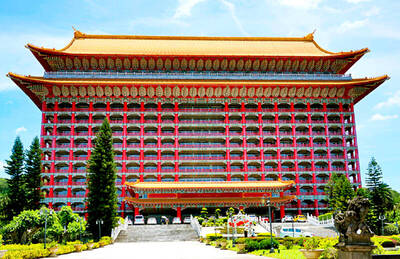
The Grand Hotel Taipei has rejected media reports claiming that the hotel had prevented CBS from broadcasting coverage of the Beijing summit between U.S. President Donald Trump and Chinese President Xi Jinping (習近平) on its premises. Media reports alleging that the hotel owner, dissatisfied with CBS’s coverage, prohibited the network from broadcasting political content on the hotel premises, are not true, the hotel said in a statement issued last night. The reports were “inconsistent with how the hotel actually handled the matter,” it said. The hotel said it received a refund request from a


 RSS
RSS