


The government must do more to ensure disabled people will be able to vote on Saturday, the Eden Social Welfare Foundation said.
As the January legislative elections showed, casting a ballot remains a challenge for physically handicapped people, despite improvements to polling stations in recent years, foundation spokeswoman Tsui Pin said in a recent interview.
Some polling stations have wheelchair ramps, but the lack of signs indicating the location of the ramps caused problems for some voters in January, Tsui said.
An elderly wheelchair-bound man's caretaker had to carry him up the stairs to a polling station because they had not been able to find the ramp, she said.
"Polling station workers only needed to make a poster indicating where the ramp is," Tsui said. "Just one poster could turn the entire environment into a friendly one for disabled voters."
That is just one of the problems that need to be fixed in order to make voting less of a hassle for wheelchair users and other disabled people, she said.
A survey conducted by the foundation in January found that although many polling stations have barrier-free facilities, they were not clearly marked, the ramps were too steep or located too far from the entrance.
There are an estimated 1 million disabled voters, Tsui said.
The foundation told the Central Election Commission (CEC) of the problems that disabled voters faced in the January elections and called for improvements to ensure that polling stations nationwide are barrier-free.
During a meeting with members of the foundation and other activist groups on Jan. 30, Central Election Commission Secretary-General Teng Tien-yu (鄧天佑) promised the CEC would earmark NT$20 million (US$651,000) to ensure the voting rights of disabled people.
The CEC will buy larger curtains for voting booths to protect the privacy of disabled voters, many of whom have to be assisted in and out of the booths by family members or polling station workers, the official said.
The CEC had earlier committed NT$4,500 to each polling station to make them barrier-free.
But Tsai said efforts to educate polling station workers about the rights of disabled voters' have often proven ineffective.
She said she called some local election commissions to ask about their barrier-free facilities and some staff did not know what the term meant.
Tsui said workers at one polling station had also refused to allow a disabled voter to use wheelchair ramp because the ramp had been locked for "security" reasons. After the man protested, he was allowed access to the ramp, Tsui said.
"Sometimes, it is not a question of money, but whether polling station workers actually care about the voting rights of the disabled," she said.
The foundation has launched a drive to encourage disabled voters to check to see if these problems have been resolved -- as the CEC promised -- by Saturday.
A barrier-free environment does not just benefit disabled people, Tsui said.
"As Taiwan moves toward an aging society, many elderly people are also wheelchair-bound," she said. "Whether they go to vote, or go out to do other things, they will face the same problems that disabled citizens face."

POLAM KOPITIAM CASE: Of the two people still in hospital, one has undergone a liver transplant and is improving, while the other is being evaluated for a liver transplant A fourth person has died from bongkrek acid poisoning linked to the Polam Kopitiam (寶林茶室) restaurant in Taipei’s Far Eastern Sogo Xinyi A13 Department Store, the Ministry of Health and Welfare said yesterday, as two other people remain seriously ill in hospital. The first death was reported on March 24. The man had been 39 years old and had eaten at the restaurant on March 22. As more cases of suspected food poisoning involving people who had eaten at the restaurant were reported by hospitals on March 26, the ministry and the Taipei Department of Health launched an investigation. The Food and

The long-awaited Taichung aquarium is expected to open next year after more than a decade of development. The building in Cingshui District (清水) is to feature a large ocean aquarium on the first floor, coral display area on the second floor, a jellyfish tank and Dajia River (大甲溪) basin display on the third, a river estuary display and restaurant on the fourth, and a cafe and garden on the fifth. As it is near Wuci Fishing Port (梧棲漁港), many are expecting the opening of the aquarium to bring more tourism to the harbor. Speaking at the city council on Monday, Taichung City Councilor
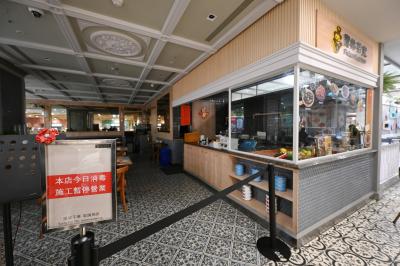
A fourth person has died in a food poisoning outbreak linked to the Xinyi (信義) branch of Malaysian restaurant chain Polam Kopitiam (寶林茶室) in Taipei, Deputy Minister of Health and Welfare Victor Wang (王必勝) said on Monday. It was the second fatality in three days, after another was announced on Saturday. The 40-year-old woman experienced multiple organ failure in the early hours on Monday, and the family decided not to undergo emergency resuscitation, Wang said. She initially showed signs of improvement after seeking medical treatment for nausea, vomiting and diarrhea, but her condition worsened due to an infection, he said. Two others who

Taiwanese should be mindful when visiting China, as Beijing in July is likely to tighten the implementation of policies on national security following the introduction of two regulations, a researcher said on Saturday. China on Friday unveiled the regulations governing the law enforcement and judicial activities of national security agencies. They would help crack down on “illegal” and “criminal” activities that Beijing considers to be endangering national security, according to reports by China’s state media. The definition of what constitutes a national security threat in China is vague, Taiwan Thinktank researcher Wu Se-chih (吳瑟致) said. The two procedural regulations are to provide Chinese


 RSS
RSS