


Democratic Progressive Party (DPP) presidential candidate Frank Hsieh (
"It has way too many flaws," Hsieh said. "Instead of explaining it more clearly, Ma ducks the questions and denies he ever proposed it."
Hsieh has proposed putting the common market proposal to a referendum and said that voters who supported the concept should vote for Ma and those opposing it should vote for him.
Hsieh made the remarks while discussing the common market concept with former DPP legislator Lin Cho-shui (
Hsieh said he is opposed to the "cross-strait common market" because a free flow of capital, labor and technology between Taiwan and China would undermine the local economy.
Hsieh said Ma asked Vincent Siew (
"Will the economy be better if Ma is president?" Hsieh asked.
Hsieh said that he did not think Ma knew how to tackle the problem of utility fees, while Hsieh said he acquired a full knowledge of it during his stint as premier.
Hsieh said he was against using further development and the investment of public funds to boost the economic growth rate because it would drive up commodity prices.
He is also against allowing Chinese investment in residential property because it would sabotage the supply and demand chain, he said. The country would pay a dear price if 10,000 Chinese tourists were allowed to visit Taiwan daily, he said.
To improve the economy, Hsieh said local industries must upgrade their technology and diversify their investments. His concept of economic prosperity would allocate resources more fairly, establish social justice and maintain the sustainable development of the environment, he said.
He would like to see the unemployed get jobs, commodity prices remain stable, less debt and lower housing costs. He also proposed cutting taxes, reducing inheritance and gift taxes and decreasing the corporate income tax rate.
To lure Chinese investment back, Hsieh said he proposed granting an amnesty to China-based Taiwanese businesspeople so that they could transfer their capital back home.

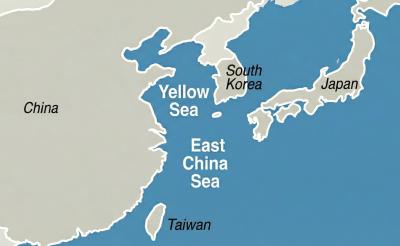
China has reserved offshore airspace in the Yellow Sea and East China Sea from March 27 to May 6, issuing alerts usually used to warn of military exercises, although no such exercises have been announced, the Wall Street Journal (WSJ) reported yesterday. Reserving such a large area for 40 days without explanation is an “unusual step,” as military exercises normally only last a few days, the paper said. These alerts, known as Notice to Air Missions (Notams), “are intended to inform pilots and aviation authorities of temporary airspace hazards or restrictions,” the article said. The airspace reserved in the alert is

South Korea is planning to revise its controversial electronic arrival card, a step Taiwanese officials said prompted them to hold off on planned retaliatory measures, a South Korean media report said yesterday. A Yonhap News Agency report said that the South Korean Ministry of Foreign Affairs is planning to remove the “previous departure place” and “next destination” fields from its e-arrival card system. The plan, reached after interagency consultations, is under review and aims to simplify entry procedures and align the electronic form with the paper version, a South Korean ministry official said. The fields — which appeared only on the electronic form
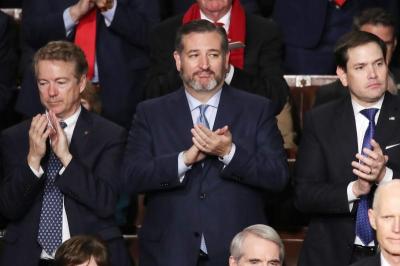
A bipartisan group of US senators has introduced a bill to enhance cooperation with Taiwan on drone development and to reduce reliance on supply chains linked to China. The proposed Blue Skies for Taiwan Act of 2026 was introduced by Republican US senators Ted Cruz and John Curtis, and Democratic US senators Jeff Merkley and Andy Kim. The legislation seeks to ease constraints on Taiwan-US cooperation in uncrewed aerial systems (UAS), including dependence on China-sourced components, limited access to capital and regulatory barriers under US export controls, a news release issued by Cruz on Wednesday said. The bill would establish a "Blue UAS
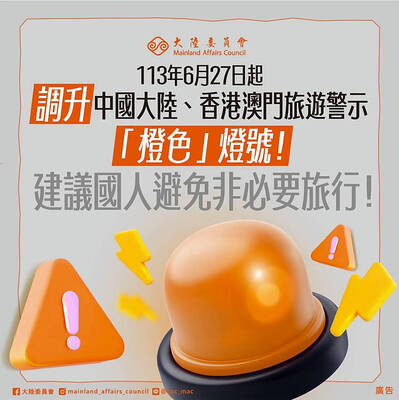
More than 6,000 Taiwanese students have participated in exchange programs in China over the past two years, despite the Mainland Affairs Council’s (MAC) “orange light” travel advisory, government records showed. The MAC’s publicly available registry showed that Taiwanese college and university students who went on exchange programs across the Strait numbered 3,592 and 2,966 people respectively. The National Immigration Agency data revealed that 2,296 and 2,551 Chinese students visited Taiwan for study in the same two years. A review of the Web sites of publicly-run universities and colleges showed that Taiwanese higher education institutions continued to recruit students for Chinese educational programs without


 RSS
RSS