


The Ministry of Transportation and Communications plans stricter standards and penalties to crack down on drunk driving.
Under new regulations, driving with a blood-alcohol content of 0.03 percent -- or 0.15mg per liter in a breathalyzer test -- will constitute drunk driving. The current legal limit for blood-alcohol content is 0.05 percent, or 0.25mg per liter in a breathalyzer test.
The policy is scheduled to be implemented in June and will apply to drivers of all motor vehicles.
The decision was reached on Friday, when ministry officials met other government agencies.
The new standards will mean that drivers shouldn't assume that having a few beers before getting behind the wheel is okay, Department of Railways and Highways Deputy Director-General Chen Yen-po (
Chen said the regulation change was in response to a rise in cases involving drunk driving in the past five years.
Under the new regulations, drunk driving will carry a heavier fine for certain categories of drivers, he said. Those who have held a driver's license for less than two years will be fined an additional NT$15,000; those without a license will be fined an additional NT$18,000. In addition, drivers of large-size motor vehicles carrying passengers or hazardous cargo will be fined an extra NT$25,000.
The ministry is also proposing to amend the Statute Governing the Punishment of Violation of Road Traffic Regulations (道路交通管理處罰條例) by raising the base fine for drunk driving from NT$60,000 to NT$90,000.
The amendment must be approved by the Legislative Yuan before taking effect.
The amendment would also set a penalty for drivers who refuse to undergo an alcohol test. In addition to a NT$90,000 fine, those who refuse an alcohol test will have their licenses revoked permanently.

Kenting National Park service technician Yang Jien-fon (楊政峰) won a silver award in World Grand Prix Photography Awards Spring Season for his photograph of two male rat snakes intertwined in combat. Yang’s colleagues at Kenting National Park said he is a master of nature photography who has been held back by his job in civil service. The awards accept entries in all four seasons across six categories: architectural and urban photography, black-and-white and fine art photography, commercial and fashion photography, documentary and people photography, nature and experimental photography, and mobile photography. Awards are ranked according to scores and divided into platinum, gold and

More than half of the bamboo vipers captured in Tainan in the past few years were found in the city’s Sinhua District (新化), while other districts had smaller catches or none at all. Every year, Tainan captures about 6,000 snakes which have made their way into people’s homes. Of the six major venomous snakes in Taiwan, the cobra, the many-banded krait, the brown-spotted pit viper and the bamboo viper are the most frequently captured. The high concentration of bamboo vipers captured in Sinhua District is puzzling. Tainan Agriculture Bureau Forestry and Nature Conservation Division head Chu Chien-ming (朱健明) earlier this week said that the
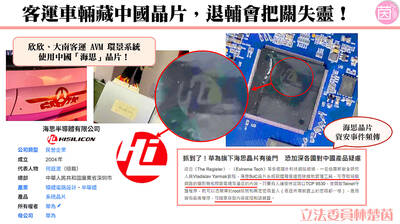
BREACH OF CONTRACT: The bus operators would seek compensation and have demanded that the manufacturer replace the chips with ones that meet regulations Two bus operators found to be using buses with China-made chips are to demand that the original manufacturers replace the systems and provide compensation for breach of contract, the Veterans Affairs Council said yesterday. Democratic Progressive Party Legislator Michelle Lin (林楚茵) yesterday said that Da Nan Bus Co and Shin-Shin Bus Co Ltd have fielded a total of 82 buses that are using Chinese chips. The bus models were made by Tron-E, while the systems provider was CYE Electronics, Lin said. Lin alleged that the buses were using chips manufactured by Huawei subsidiary HiSilicon Co, which presents a national security risk if the

The National Immigration Agency has banned two Chinese from returning to Taiwan, after they published social media content it described as disrespectful to national sovereignty. The agency imposed a two-month ban on a Chinese man surnamed Liang (梁) and a permanent ban on a woman surnamed Yang (楊), an influencer with 23 million followers, in October last year and last week respectively. Minister of the Interior Liu Shyh-fang (劉世芳) yesterday said on the sidelines of a legislative meeting that Chinese visitors to Taiwan are required to comply with the rules and regulations governing their entry permits. The government has handled the ban and


 RSS
RSS