


Former Democratic Progressive Party (DPP) lawmaker Lin Cho-shui (
The KMT claims the economy has been in decline since the transfer of power in 2000.
Lin said the purpose of his pamphlet was to "deconstruct the myth" that a return to power by the KMT in the March 22 presidential election would bring the nation back to the "golden days" from the 1960s to the 1980s under the former KMT government.
"KMT vice presidential candidate Vincent Siew (蕭萬長) is seen as an important helmsman of the nation's economic development, but in fact it was when Siew started to map out the nation's economic route that the economy began to deteriorate," Lin said.
The DPP sympathizes with people who have been feeling the pinch of an economic slowdown, an increase in the unemployment rate and a widening gap between rich and poor in recent years, but the three trends actually emerged in the late 1980s, he said.
"The numbers talk. The former KMT government didn't perform as well as the DPP government has in dealing with these issues," Lin said.
He said the economic growth rate started a decline to 8 percent in the late 1980s, slowing further to an annual average of 5.6 percent between 1998 and 2000, a sharp drop from the annual average of 9.55 percent that had been maintained for about 20 years since the 1960s.
The unemployment rate rose from 1.8 percent in the early 1990s to 2.99 percent in 2000, he said.
Lin said Taiwan faced the same challenges in the late 1980s as any other developing country that had experienced the transition to developed country status.
However, he said, it was regrettable that the former KMT government adopted mistaken policies along the way.
"In the past, the KMT government just sat by and watched traditional industries move offshore. It thought highly of high-tech industries, but what it had boosted was original equipment manufacturing, leading up to a lack of innovation capabilities among high-tech industries," Lin said.
He said Siew, who had been praised by many for playing a major role in Taiwan mostly escaping the 1997 Asian financial crisis, had created a shaky financial and capital market.
"It was not until 2002, when the DPP government started to implement the first stage of its financial reforms, that the ratio of nonperforming loans at financial institutions was lowered to less than 5 percent and capital adequacy ratios were raised to above 8 percent in two years," Lin said.
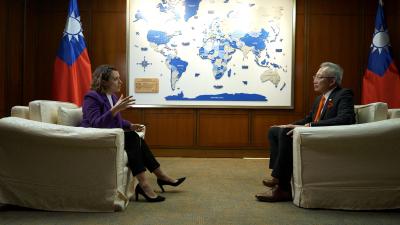
“China is preparing to invade Taiwan,” Deputy Minister of Foreign Affairs Francois Wu (吳志中) said in an exclusive interview with British media channel Sky News for a special report titled, “Is Taiwan ready for a Chinese invasion?” the Ministry of Foreign Affairs said today in a statement. The 25-minute-long special report by Helen Ann-Smith released yesterday saw Sky News travel to Penghu, Taoyuan and Taipei to discuss the possibility of a Chinese invasion and how Taiwan is preparing for an attack. The film observed emergency response drills, interviewed baseball fans at the Taipei Dome on their views of US President
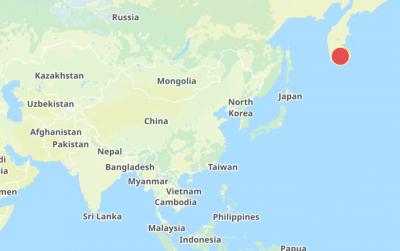
The Central Weather Administration (CWA) today issued a "tsunami watch" alert after a magnitude 8.7 earthquake struck off the Kamchatka Peninsula in northeastern Russia earlier in the morning. The quake struck off the east coast of the Kamchatka Peninsula at 7:25am (Taiwan time) at a depth of about 19km, the CWA said, citing figures from the Pacific Tsunami Warning Center. The CWA's Seismological Center said preliminary assessments indicate that a tsunami could reach Taiwan's coastal areas by 1:18pm today. The CWA urged residents along the coast to stay alert and take necessary precautions as waves as high as 1m could hit the southeastern

ECONOMIC BENEFITS: The imports from Belize would replace those from Honduras, whose shrimp exports have dropped 67 percent since cutting ties in 2023 Maintaining ties with Taiwan has economic benefits, Ministry of Foreign Affairs officials said yesterday, citing the approval of frozen whiteleg shrimp imports from Belize by the Food and Drug Administration (FDA) as an example. The FDA on Wednesday approved the tariff-free imports from Belize after the whiteleg shrimp passed the Systematic Inspection of Imported Food, which would continue to boost mutual trade, the ministry said. Taiwan’s annual consumption of whiteleg shrimps stands at 30,000 tonnes, far exceeding domestic production, the ministry said. Taiwan used to fill the gap by importing shrimps from Honduras, but purchases slumped after Tegucigalpa severed diplomatic ties with Taiwan
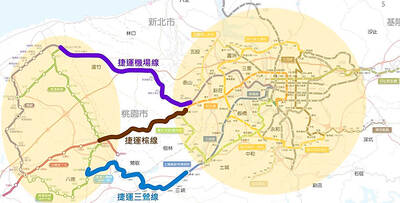
The Executive Yuan yesterday approved a southwestern extension of the Sanying MRT Line from New Taipei to Bade District (八德) in Taoyuan, with a goal of starting construction by late 2026. The 4.03-kilometer extension, featuring three new stations, will run from the current terminus at Yingtao Fude Station (LB12) in New Taipei City to Dannan Station (LB14), where it will connect with Taoyuan’s Green Line, New Taipei City Metro Corp said in a statement. This extension will follow the completion of core Sanying Line, a 14.29-kilometer medium-capacity system linking Tucheng (土城), Sansia (三峽)


 RSS
RSS