


Eighteen farming communities were commended yesterday for their outstanding transformation into farm villages of the 21st century, bringing better employment opportunities and profit conditions thanks to training and support from the Soil and Water Conservation Bureau.
The bureau introduced the "Charming Farms, Happy Roots" program in 2004, rural division section chief Ko Yung-chuan (
At an award ceremony in Taipei yesterday, representatives of these communities brought the cream of their crops and displayed photographs of their rejuvenated neighborhoods.
The program provides training at four levels: beginner, intermediate, advanced and specialized.
Courses are from six to 24 hours in length and are customized to fully address the needs of the farming communities. Computer training, how to improve produce quality, soil and water conservation and domestic and international marketing strategies are among the courses offered, Ko said.
So far, 203 classes in 184 farm communities have been held throughout the nation, he said, adding that 399 students had obtained a "specialist" certification.
The program also encourages a shift from farmers' traditional roles as "followers of governmental policies," Ko said.
"It is important that farmers identify with their community, remain aware of the resources and limitations and have a sense of direction as to how the community can develop in view of social changes and new demands," he said.
Several concepts that reflect contemporary trends were introduced to the farmers, Ko said, including "eco-tourism, which gives people a chance to experience nature and organic farming."
Fifty-year-old Lin Hsiu-chun (林秀春) from Kuohsing Township's (國姓) Nangang community (南港) in Nantou County told the Taipei Times that although her community was badly affected by the 1999 earthquake, the training program had brought new hope and a sense of direction to the village. Lin was among the more than 80 community members who obtained computer training and advice on soil conservation techniques.
"Given how the village looks now ... and with our newfound knowledge and skills, we feel we can make a new start," she said.
"Community members now have a broader vision and know what is going on in the outside world. Our next goal is to develop orange-orchard tourism," she said.
In Yunlin County's (雲林) Gukeng Township (古坑), where coffee is a staple of the economy, Hopao (荷苞) community secretary-general Wang Tien-chao (王添超) said employment opportunities and the value of their coffee had increased.
"The program advisors worked with us to develop coffee pies, meals and other secondary products. Our herbal eco-garden should open its doors at the end of this year, which we expect will bring more tourism revenue," he said.

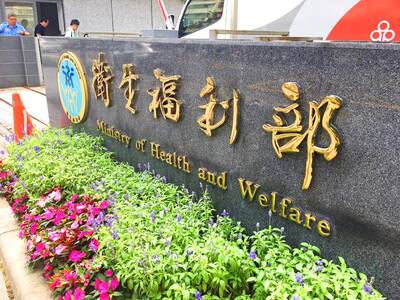
POLAM KOPITIAM CASE: Of the two people still in hospital, one has undergone a liver transplant and is improving, while the other is being evaluated for a liver transplant A fourth person has died from bongkrek acid poisoning linked to the Polam Kopitiam (寶林茶室) restaurant in Taipei’s Far Eastern Sogo Xinyi A13 Department Store, the Ministry of Health and Welfare said yesterday, as two other people remain seriously ill in hospital. The first death was reported on March 24. The man had been 39 years old and had eaten at the restaurant on March 22. As more cases of suspected food poisoning involving people who had eaten at the restaurant were reported by hospitals on March 26, the ministry and the Taipei Department of Health launched an investigation. The Food and

A fourth person has died in a food poisoning outbreak linked to the Xinyi (信義) branch of Malaysian restaurant chain Polam Kopitiam (寶林茶室) in Taipei, Deputy Minister of Health and Welfare Victor Wang (王必勝) said on Monday. It was the second fatality in three days, after another was announced on Saturday. The 40-year-old woman experienced multiple organ failure in the early hours on Monday, and the family decided not to undergo emergency resuscitation, Wang said. She initially showed signs of improvement after seeking medical treatment for nausea, vomiting and diarrhea, but her condition worsened due to an infection, he said. Two others who
MEDICAL: The bills would also upgrade the status of the Ethical Guidelines Governing the Research of Human Embryos and Embryonic Stem Cell Research to law The Executive Yuan yesterday approved two bills to govern regenerative medicine that aim to boost development of the field. Taiwan would reach an important milestone in regenerative medicine development with passage of the regenerative medicine act and the regenerative medicine preparations ordinance, which would allow studies to proceed and treatments to be developed, Deputy Minister of Health and Welfare Victor Wang (王必勝) told reporters at a news conference after a Cabinet meeting. Regenerative treatments have been used for several conditions, including cancer — by regenerating blood cells — and restoring joint function in soft tissue, Wang said. The draft legislation requires regenerative treatments

Taiwanese should be mindful when visiting China, as Beijing in July is likely to tighten the implementation of policies on national security following the introduction of two regulations, a researcher said on Saturday. China on Friday unveiled the regulations governing the law enforcement and judicial activities of national security agencies. They would help crack down on “illegal” and “criminal” activities that Beijing considers to be endangering national security, according to reports by China’s state media. The definition of what constitutes a national security threat in China is vague, Taiwan Thinktank researcher Wu Se-chih (吳瑟致) said. The two procedural regulations are to provide Chinese


 RSS
RSS