


People's legal rights could soon be enhanced thanks to two new measures allowing attorneys to play a greater role during prosecution.
The Ministry of Justice said earlier this month that prison security guards would no longer tape or film meetings between attorneys and their clients while in custody.
The new measure would maintain a suspect's privacy and human rights, the ministry said.
Director of the ministry's Department of Prosecutorial Affairs Chiang Hui-ming (
The Legal Aid Foundation began its "First Criminal Interrogation Accompanied by Legal Aid Attorney" program in September to provide a channel for individuals requiring attorneys. The program was expanded last month.
Under the program, low income individuals or those with mental disabilities who are questioned as suspects in 15 district police offices nationwide can apply to receive pro bono representation by attorneys from the Legal Aid Foundation.
The foundation said it was promoting a law allowing all individuals to request the presence of an attorney during interrogation by police and prosecutors, in keeping with the spirit of the presumption of innocence and egalitarianism under the Code of Criminal Procedure (刑事訴訟法).
Legal Aid Foundation chairwoman Ku Den-mei (古登美) said that because the first step in the interrogation of a suspect is administered by police -- and therefore before the suspect has been brought to a prosecutors' office for further questioning and possible detention -- the initial interrogation plays a crucial role in the process of a criminal investigation.
As a result, if attorneys were able to accompany a suspect during interrogation at a police station, the suspects' rights would be protected and it would make it easier for prosecutors to uncover the facts.
As interrogation is a decisive factor in indictment and subsequent legal procedures, certain longstanding cases have been bogged down because of debate concerning the courtroom admissibility of interrogation records, she said. Not only is this a waste of legal and social resources, she said, but it also leads to a loss of public confidence in the validity of court verdicts.
Meanwhile, Judicial Reform Foundation president Lin Feng-jeng (
Lin said that in the 1980s an amendment to the Code of Criminal Procedure allowed a defendant to hire an attorney during an investigation by prosecutors rather than only in a courtroom. This marked the first wave in efforts to prevent the abuse of suspects.
The second leg of reform, in 1997, occurred when another amendment to the Code was made, which stipulated that police and prosecutorial interrogation must be audio or video-recorded.
The third leg of reform is the promotion of a law whereby police, prosecutorial and court interrogations are all conducted in the presence of a defense attorney, which would provide better protection to suspects, he said.
However, some investigators believe the presence of a defense attorney during police interrogation could have a negative impact on an investigation.
Chang Hsueh-ming (
Yeh Ming-ter (葉銘德), a senior Kaohsiung police officer, said that while abuse of suspects during interrogation was rampant in the 1990s, police officers had since become more aware of human rights standards and that abuse had become rare, especially after interrogations started being recorded.
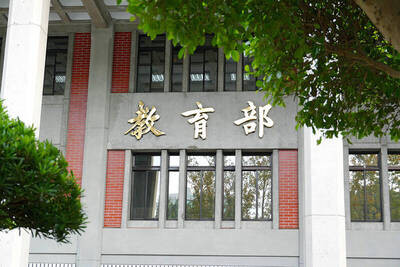
The Ministry of Education (MOE) is to launch a new program to encourage international students to stay in Taiwan and explore job opportunities here after graduation, Deputy Minister of Education Yeh Ping-cheng (葉丙成) said on Friday. The government would provide full scholarships for international students to further their studies for two years in Taiwan, so those who want to pursue a master’s degree can consider applying for the program, he said. The fields included are science, technology, engineering, mathematics, semiconductors and finance, Yeh added. The program, called “Intense 2+2,” would also assist international students who completed the two years of further studies in

The brilliant blue waters, thick foliage and bucolic atmosphere on this seemingly idyllic archipelago deep in the Pacific Ocean belie the key role it now plays in a titanic geopolitical struggle. Palau is again on the front line as China, and the US and its allies prepare their forces in an intensifying contest for control over the Asia-Pacific region. The democratic nation of just 17,000 people hosts US-controlled airstrips and soon-to-be-completed radar installations that the US military describes as “critical” to monitoring vast swathes of water and airspace. It is also a key piece of the second island chain, a string of

Former president Tsai Ing-wen (蔡英文) departed for Europe on Friday night, with planned stops in Lithuania and Denmark. Tsai arrived at Taiwan Taoyuan International Airport on Friday night, but did not speak to reporters before departing. Tsai wrote on social media later that the purpose of the trip was to reaffirm the commitment of Taiwanese to working with democratic allies to promote regional security and stability, upholding freedom and democracy, and defending their homeland. She also expressed hope that through joint efforts, Taiwan and Europe would continue to be partners building up economic resilience on the global stage. The former president was to first

Taiwan will now have four additional national holidays after the Legislative Yuan passed an amendment today, which also made Labor Day a national holiday for all sectors. The Chinese Nationalist Party (KMT) and Taiwan People’s Party (TPP) used their majority in the Legislative Yuan to pass the amendment to the Act on Implementing Memorial Days and State Holidays (紀念日及節日實施辦法), which the parties jointly proposed, in its third and final reading today. The legislature passed the bill to amend the act, which is currently enforced administratively, raising it to the legal level. The new legislation recognizes Confucius’ birthday on Sept. 28, the


 RSS
RSS