


Institute of Occupational Safety and Health researchers said yesterday that the results of a recent survey showed that hospitals and medical professionals need to improve hygiene and safety procedures.
In addition to showing that clinical medical staff are more likely to suffer from infectious disease across the board compared with administrative medical staff, the surveyed revealed some lapses in hygiene that might surprise some.
The institute, which operates under the Council of Labor Affairs (CLA), got serious about the risk biohazards pose to medical professionals in the wake of the SARS epidemic in 2003, said Chen Chiou-jung (
The results found that 1.1 percent of clinical professionals such as doctors and nurses, said they had become infected with tuberculosis in their career, almost three times the percentage of administrators who said the same, 0.4 percent.
Clinical professionals are also more likely to contract a host of infectious diseases from hepatitis B to pneumonia to dermatitis, the survey showed.
Accidental contamination from used needles may also be a source of infection, said the researchers, as 71.5 percent of nursing staff said they had been accidentally pricked by sharp medical implements, most often when putting protective covers back on needles.
Although the institute study was designed with safeguarding the health of medical professionals in mind, some findings in the study had ramifications for hospital-goers as well.
Only 2.7 percent of doctors said they put on a clean white robe every day.
While most doctors said they washed their robes at least once a week, 13.5 percent of doctors say they didn't launder their robes more than once a month and 29.5 percent said they washed their robes once every two or three weeks.
"Doctors wear their robes all day long. They see patients. They eat lunch," Chen said. "But because it goes over their street clothes they somehow don't think of it as getting dirty."
"Instead, they take off the robe at the end of the day and hang it on a hook until tomorrow," he said.
Chen said that bigger hospitals are no better than smaller clinics when it comes to making sure doctors wear clean robes.
"It's all down to management, and often smaller places are easier to manage," said Chen.
The deputy director of the Center for Disease Control (CDC), Lin Ting (
"We don't go into the details, like how often robes are washed," he said, "although maintaining good hygiene should be the basic responsibility of any hospital."
However, the center measures other criteria such as the number of drug-resistant bacteria strains present in the hospital or whether the hospital provides adequate hand-washing facilities.
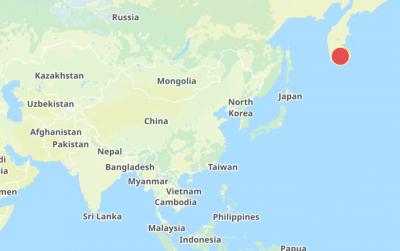
The Central Weather Administration (CWA) today issued a "tsunami watch" alert after a magnitude 8.7 earthquake struck off the Kamchatka Peninsula in northeastern Russia earlier in the morning. The quake struck off the east coast of the Kamchatka Peninsula at 7:25am (Taiwan time) at a depth of about 19km, the CWA said, citing figures from the Pacific Tsunami Warning Center. The CWA's Seismological Center said preliminary assessments indicate that a tsunami could reach Taiwan's coastal areas by 1:18pm today. The CWA urged residents along the coast to stay alert and take necessary precautions as waves as high as 1m could hit the southeastern

The National Museum of Taiwan Literature is next month to hold an exhibition in Osaka, Japan, showcasing the rich and unique history of Taiwanese folklore and literature. The exhibition, which is to run from Aug. 10 to Aug. 20 at the city’s Central Public Hall, is part of the “We Taiwan” at Expo 2025 series, highlighting Taiwan’s cultural ties with the international community, National Museum of Taiwan Literature director Chen Ying-fang (陳瑩芳) said. Folklore and literature, among Taiwan’s richest cultural heritages, naturally deserve a central place in the global dialogue, Chen said. Taiwan’s folklore would be immediately apparent at the entrance of the
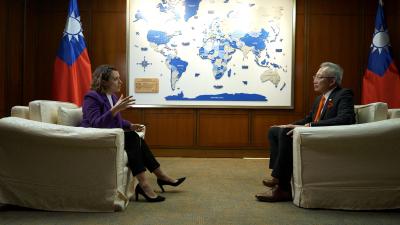
“China is preparing to invade Taiwan,” Deputy Minister of Foreign Affairs Francois Wu (吳志中) said in an exclusive interview with British media channel Sky News for a special report titled, “Is Taiwan ready for a Chinese invasion?” the Ministry of Foreign Affairs said today in a statement. The 25-minute-long special report by Helen Ann-Smith released yesterday saw Sky News travel to Penghu, Taoyuan and Taipei to discuss the possibility of a Chinese invasion and how Taiwan is preparing for an attack. The film observed emergency response drills, interviewed baseball fans at the Taipei Dome on their views of US President
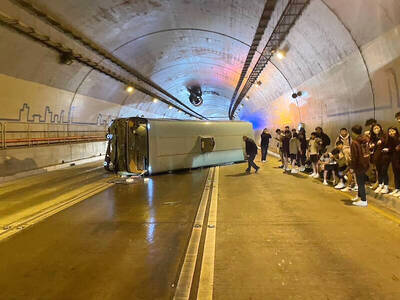
Speeding and badly maintained roads were the main causes of a school bus accident on a rainy day in Taipei last year that severely injured two people and left 22 with minor injuries, the Taiwan Transportation and Safety Board said. On March 11 last year, a Kang Chiao International School bus overturned inside the Wenshan Tunnel (文山隧道) on the northbound lane of the Xinyi Expressway. The tour bus, owned by Long Lai Co, exceeded the speed limit after entering the tunnel, the board’s investigation found. Sensing that the rear of the vehicle was swaying, the driver attempted to use the service and exhaust


 RSS
RSS