


Democratic Progressive Party (DPP) presidential candidate Frank Hsieh (
His remarks were "clear discrimination and the worst humiliation possible to indigenous people," Hsieh said. "How can anybody say such a thing to another human being? It was either a slip of the tongue or he is simply prejudiced."
Hsieh made the remarks in response to a comment made by Ma on Dec. 8 in Sindian City (
At a campaigning event, a Sijhou Community woman (溪洲部落) called on Ma to have an embankment built to prevent her community from being relocated.
In response, Ma told the woman: "If you come into the city, you are a Taipei citizen; I see you as a human being ... I will educate you well."
"Aborigines should adjust their mentality -- if you come into the city you have to play by its rules," he said.
TRUE COLORS
Hsieh said Ma had insulted Aborigines and that his comments were similar to telling a gibbon staying at somebody's home that you will treat it as a human being. By saying so, a person is in fact showing they see their guest as a gibbon.
Ma's comments in Sindian drew national attention after an anonymous source sent video footage of the campaign event to the Chinese-language Liberty Times (the Taipei Times' sister paper) on Saturday.
Hsieh yesterday said the issue highlighted the importance of holding a debate with the two presidential candidates, adding that issues concerning Aborigines should be included in the debate.
Hsieh said his view on minority rights is that issues concerning minority groups should not be decided by majority groups alone because the minority will always be the loser when its interests conflict with the majority ethnic group.
Hsieh said his ultimate goal was to amend the Constitution to grant Aborigines autonomy.
Hsieh said he had worked toward that goal during his term as premier, when the Aboriginal Basic Law (
"I have utmost respect for the earliest settlers of this land," he said. "I don't just say it, I take action."
Meanwhile, Hsieh said that although Ma was touting a position on Taiwan's status similar to the DPP's Resolution on Taiwan's Future (
MA TALKS BACK
Ma yesterday denied that his comments about Aborigines were discriminatory and accused the media of distorting his remarks.
"This is apparently a distortion of my remarks. I said that I treated the Aborigines as `our people,'" Ma said yesterday in Miaoli County.
Ma's spokesman Lo Chih-chiang (羅智強) later issued a press release with Ma's Dec. 8 comments in full and said Ma is not prejudiced against Aborigines.
Lo said Ma had told the Sjizhou Community resident that the community should move to a safer place with no threat of flooding and that he promised to take care of the community's members if elected president.
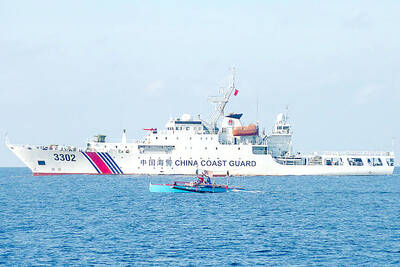
EXPANSIONIST: China deploys an average of 40 to 50 warships and coast guard vessels daily in the South China Sea, despite pledges not to militarize the region, an official said China is attempting to expand its influence across the First Island Chain and increase pressure on Japan by sending coast guard vessels into waters off of Taiwan under the pretext of maritime negotiations with Japan and the Philippines, a national security official said yesterday. China’s recent actions in the waters east of Taiwan and Japan and the Philippines’ exclusive economic zones (EEZ) are attempts to establish dominance in First Island Chain waters, said the official who declined to be named, adding that this is “expansion disguised as law enforcement.” Framing China’s actions solely as a cross-strait issue is a serious misjudgment that
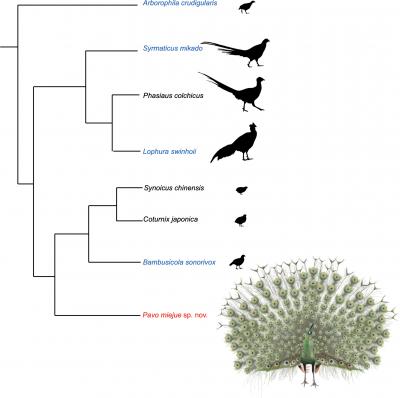
Through analyzing fossil evidence, a research team at National Taiwan University (NTU) discovered the largest endemic bird to have lived in Taiwan, naming it Pavo miejue, or extinct peafowl (滅絕孔雀). The Mikado pheasant, which is printed on the back of the NT$1,000 bank note, was previously believed to be the biggest endemic bird to Taiwan. The research team’s findings suggest that Pavo miejue lived during the Pleistocene epoch tens of thousands of years ago. It is the first endemic extinct bird species discovered and formally named in Taiwan. The study was coauthored by NTU Institute of Ecology and Evolutionary Biology professor Tsai Cheng-hsiu (蔡政修),
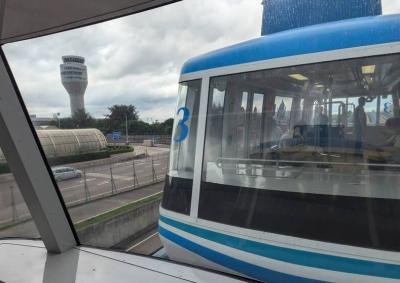
Taiwan Taoyuan International Airport is to suspend its automated Skytrain service connecting Terminal 1 and Terminal 2 starting on July 1 to facilitate connection works for the upcoming Terminal 3, the airport operator said today. Passengers and staff who need to travel between the two terminals after the suspension can instead use the Taoyuan MRT or the airport's 24-hour shuttle bus service, Taoyuan International Airport Corp said. The Taoyuan MRT Airport Line directly links the two terminals, while the shuttle buses are to operate around the clock, the company added. The Skytrain provides free transportation between the airport’s two terminals for travelers and
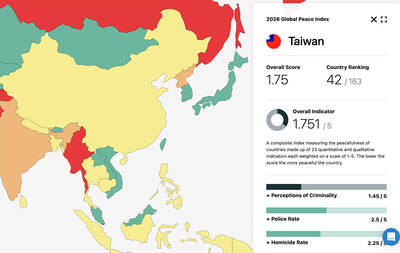
Taiwan ranked 42nd in terms of peacefulness among 163 countries, down five places from last year, according to this year’s Global Peace Index. With an overall score of 1.751, Taiwan dropped from 37th last year, the report published by the global Institute for Economics and Peace showed. The overall score measures a country’s level of peacefulness using 23 quantitative and qualitative indicators across three domains — ongoing domestic and international conflict, societal safety and security, and militarization. While Taiwan ranked 42nd worldwide, it was listed in ninth place among the 19 Asian-Pacific countries in the report, after New Zealand, Singapore, Japan, Malaysia,


 RSS
RSS