


Microbiologists at two universities in Kaohsiung City have discovered a bacteria capable of breaking down the poisonous substance dioxin efficiently and are trying to apply the species to a mass purging process to save on the time and cost involved in removing the pollutant, academic sources said.
National Sun Yat-sen University (NSYSU) and Cheng Shiu University (CSU) started the project with the aim of remedying the aftermath of dioxin pollution incidents, which at present cost millions of dollars to clean up and require the replacement of contaminated soil with clean soil.
Under the present method of treatment "the polluted soil still presents a health threat to humans and animals as there is no effective way of decomposing the substance," said Chang Chien Guo-pin (張簡國平), director of the CSU's Super Micro Mass Research and Technology Center.
Dioxin, a general term for a group of hundreds of highly persistent chemicals, is a by-product emitted in the production of herbicides, disinfectants and other agents. Dioxin has been proven to cause cancer and other diseases in humans.
The project was first initiated when a CSU team found that hundreds of bacterium species can survive and prosper in dioxin-laced soil, indicating that some of them must have the ability to "digest" and live off the chemical.
Later, Chang Chien said, they decided to cooperate with microbiologists from NSYSU to differentiate the various species -- among the several candidate bacteria, only one can break down the chemical with great efficiency, while the others work too slowly to attain economies of scale.
The bacterium -- which Chang Chien declined to identify as the patent application for the cultivation and purging process is still undergoing review -- is under intense scrutiny by the researchers to determine if it can also work at the same efficacy and efficiency outside the laboratory.
"Once the method proves workable, it will save billions of dollars that would otherwise have to be spent on removing polluted soil," Chang Chien said.
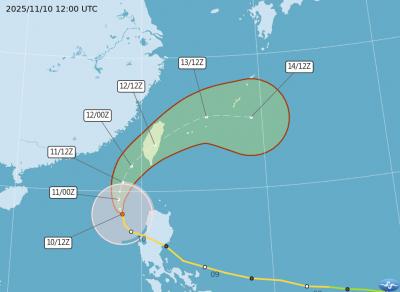
The Central Weather Administration (CWA) today issued a sea warning for Typhoon Fung-wong effective from 5:30pm, while local governments canceled school and work for tomorrow. A land warning is expected to be issued tomorrow morning before it is expected to make landfall on Wednesday, the agency said. Taoyuan, and well as Yilan, Hualien and Penghu counties canceled work and school for tomorrow, as well as mountainous district of Taipei and New Taipei City. For updated information on closures, please visit the Directorate-General of Personnel Administration Web site. As of 5pm today, Fung-wong was about 490km south-southwest of Oluanpi (鵝鑾鼻), Taiwan's southernmost point.
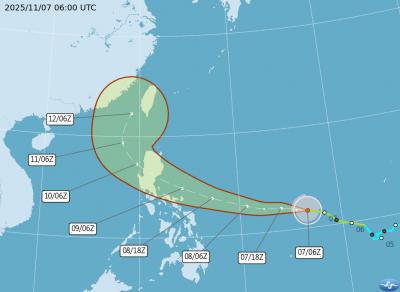
Tropical Storm Fung-Wong would likely strengthen into a typhoon later today as it continues moving westward across the Pacific before heading in Taiwan’s direction next week, the Central Weather Administration (CWA) said. As of 8am, Fung-Wong was about 2,190km east-southeast of Cape Oluanpi (鵝鑾鼻), Taiwan’s southernmost point, moving westward at 25kph and possibly accelerating to 31kph, CWA data showed. The tropical storm is currently over waters east of the Philippines and still far from Taiwan, CWA forecaster Tseng Chao-cheng (曾昭誠) said, adding that it could likely strengthen into a typhoon later in the day. It is forecast to reach the South China Sea

Almost a quarter of volunteer soldiers who signed up from 2021 to last year have sought early discharge, the Legislative Yuan’s Budget Center said in a report. The report said that 12,884 of 52,674 people who volunteered in the period had sought an early exit from the military, returning NT$895.96 million (US$28.86 million) to the government. In 2021, there was a 105.34 percent rise in the volunteer recruitment rate, but the number has steadily declined since then, missing recruitment targets, the Chinese-language United Daily News said, citing the report. In 2021, only 521 volunteers dropped out of the military, the report said, citing

Nearly 5 million people have signed up to receive the government’s NT$10,000 (US$322) universal cash handout since registration opened on Wednesday last week, with deposits expected to begin tomorrow, the Ministry of Finance said yesterday. After a staggered sign-up last week — based on the final digit of the applicant’s national ID or Alien Resident Certificate number — online registration is open to all eligible Taiwanese nationals, foreign permanent residents and spouses of Taiwanese nationals. Banks are expected to start issuing deposits from 6pm today, the ministry said. Those who completed registration by yesterday are expected to receive their NT$10,000 tomorrow, National Treasury


 RSS
RSS