


An amendment to the debt inheritance regulation in the Civil Code (民法) passed its third reading in the legislature yesterday. The regulation is aimed at protecting minors from heavy debt inherited from deceased family members.
Under the amendment, people who inherited debt as minors only have to pay off debt up to the amount of the assets they inherited.
The regulation will apply retroactively without a time limit. However, those who inherited debt cannot ask creditors to return money they already paid before the amendment was passed.
The amendment does not apply to those who conceal inherited assets, produce fake lists of the assets they inherited or attempt to deceive creditors.
The amendment is designed to benefit minors who are seriously in debt because of the burden left behind by their deceased family members.
A survey by the Taiwan Fund for Children and Families last month found that of 1,700 households, 24.6 percent of minors were burdened with inherited debt.
The amendment also stipulates that people of any age who inherit debt because family members served as guarantors for others would only be required to pay off debt up to the amount of the assets they inherit.
The amendment also eases the requirements for applying for cancellation of the excess debt.
Under the new regulation, people should send an application form to the court within three months of "learning of" the debt instead of within two months as stipulated in the original regulation.
"The passage of the amendment to the Civil Code will solve the problems of a number of minors who are seriously in debt and relieve them of their suffering," said Democratic Progressive Party Legislator William Lai (
Chinese Nationalist Party (KMT) Legislator Shyu Jong-shyoung (徐中雄), one of the legislators advocating the amendment, said the amendment is a "redemption" for minors in debt and upholds "social justice."
Shyu, however, said he found it regrettable that the new regulation cannot be applied retroactively in cases where deceased family members served as guarantors.
"Social justice should not be confined by a time limit," he said, adding that the new legislature should take up the issue next year.
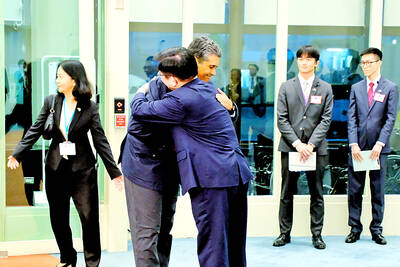
Palauan President Surangel Whipps Jr arrived in Taiwan last night to kick off his first visit to the country since beginning his second term earlier this year. After arriving at Taoyuan International Airport at around 6:30 pm, Whipps and his delegation were welcomed by Minister of Foreign Affairs Lin Chia-lung (林佳龍). Speaking to gathered media, the Palauan leader said he was excited and honored to be back in Taiwan on his first state visit to Taiwan since he was sworn in this January. Among those traveling with Whipps is Minister of State Gustav N. Aitaro, Public Infrastructure
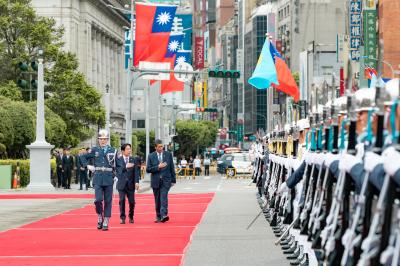
President William Lai (賴清德) yesterday thanked Palau for its continued support of Taiwan's international participation, as Taipei was once again excluded from the World Health Assembly (WHA) currently taking place in Switzerland. "Palau has never stopped voicing support for Taiwan" in the UN General Assembly, the WHO and other UN-affiliated agencies, Lai said during a bilateral meeting with visiting Palau President Surangel Whipps Jr. "We have been profoundly touched by these endorsements," Lai said, praising the Pacific island nation's firm support as "courageous." Lai's remarks came as Taiwan was excluded for the ninth consecutive year from the WHA, which is being held in
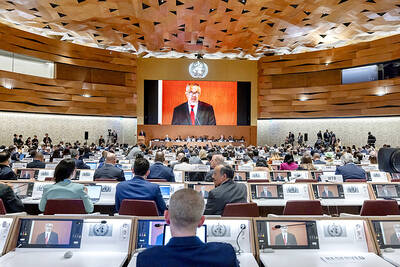
RESOLUTIONS DEBATE: Taiwan’s allies said that UN and WHA resolutions cited by China and other nations ‘do not determine Taiwan’s participation in WHO activities’ A proposal to invite Taiwan to this year’s World Health Assembly (WHA) was rejected on Monday, resulting in Taipei’s absence from the annual meeting for a ninth consecutive year, although partners spoke up for Taiwan’s participation at the first day of the meeting. The first agenda item after the opening was a “two-on-two debate” on a proposal to invite Taiwan to participate at the WHA as an observer. Similar to previous years, two countries made statements in favor of the proposal, while two others expressed their opposition. Philippine Secretary of Health Teodoro Herbosa, president of the 78th WHA, accepted the WHA General Committee’s
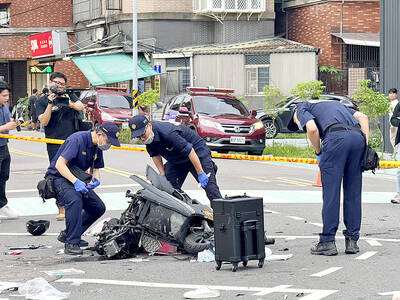
At least three people died and more than a dozen were injured yesterday afternoon when a vehicle struck a group of pedestrians in New Taipei City’s Sansia District (三峽). The incident happened at about 4pm when a car rammed into pedestrians at an intersection near Bei Da Elementary School. Witnesses said the sedan, being driven at a high speed, ran a red light, knocking scooters out of the way and hitting students crossing the road before careening into a median near the intersection of Guocheng and Guoguang streets. The incident resulted in three deaths and 13 injuries, including the driver, a 78-year-old man


 RSS
RSS