


The Sports Affairs Council (SAC) announced yesterday that it published a guidebook documenting the 50 most noteworthy bicycle routes around the nation.
The book, titled Let's Bike: Carefree Tour Biking (
In addition to maps, the guidebook includes photos of tourist attractions that can be seen along the routes. The guidebook also provides information on bicycle rental shops and hostels near each route.
The book's chief editor Anita Lai (
While similar publications have been previously available, Lai said none of them could likely match the resources and time spent on this project.
Lai emphasized that there are more than 50 bike routes in Taiwan. The ones introduced by the book are absolutely safe for regular bikers, she said.
When asked how editors chose 50 out of so many other bike trails, Lai said they all are bike routes highly recommended by county governments.
The book includes some of the most popular bike routes as well as the most challenging ones, including the route along the riverbanks in Taipei County and the one in Baguashan (八卦山), Changhua County.
SAC minister Yang Chung-ho (楊忠和) told a press conference yesterday that in the past five years the council has been executing the Executive Yuan's project to build a nationwide bike route 1,000km long. He said that 70 percent of the construction is completed.
Yang said he hoped the book would help foster a new biking culture in Taiwan.
The hardcopy edition of the book can be purchased at the Government Bookstore on Bade Rd in Taipei and Wunan Books in Taichung City. It can also be downloaded from the council's Web site at www.sac.gov.tw.
In related news, the legislative Finance Committee yesterday rejected an amendment proposed by the council to allow a portion of the profits generated from Sports Lotteries to be used for sports development.
The current regulation says the profits earned from the sports lotteries must be used to fund the operations of the National Pension Program, National Health Insurance and other social welfare expenses.
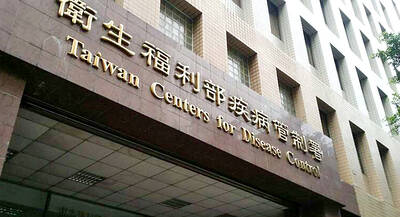
FUKUOKA SITUATION: Japanese media reported that the pathogen is expected to be identified by the summer, while the CDC downplayed the idea that it was hMPV A “mysterious cold-like illness” reported in Japan’s Fukuoka Prefecture does not seem to be a new disease, but Japanese authorities have been asked about the situation, the Centers for Disease Control (CDC) said yesterday. The Fukuoka Prefectural Medical Association on Wednesday told a news conference that a “mystery cold” that has become a hot topic on social media is “highly likely to be caused by some kind of viral infection,” Japan’s KBC News reported. “Many people are experiencing symptoms starting with a sore throat, followed by a runny nose, phlegm and a severe cough,” KBC News reported, citing association officials. Health authorities are

Nvidia Corp CEO Jensen Huang (黃仁勳) arrived in Taiwan yesterday ahead of upcoming AI and technology events, saying he plans to meet with clients and Taiwan Semiconductor Manufacturing Co Chairman C.C. Wei (魏哲家) during his visit. After landing at Taipei Songshan Airport, Huang posed for photos with fans and handed out Yakult drinks to reporters and supporters waiting at the scene, saying he has “a lot to do” during the trip. Asked about reports that Nvidia’s planned headquarters site in Taipei’s Beitou Shilin Technology Park could break ground on May 27, Huang said that if the company holds an event, he would
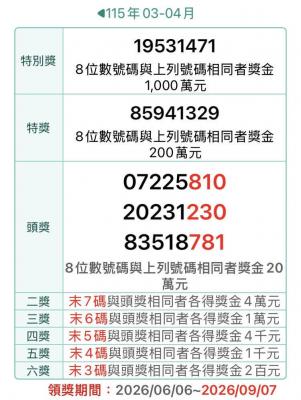
The Ministry of Finance this afternoon announced the winning numbers for the March-April uniform invoice lottery. The winning number for the NT$10 million (US$318,060) special prize is 19531471, and the winning number for the NT$2 million grand prize is 85941329. Three numbers were drawn for the NT$200,000 first prize: 07225810, 20231230 and 83518781. Those with receipts matching the last seven digits of any of the first-prize numbers will win the NT$40,000 second prize, while those matching the last six digits will win the NT$10,000 third prize. Those whose receipts match the last five digits of the first-prize numbers can claim the NT$4,000 fourth prize,

SIX SUBSIDIES: The monthly allowance for older farmers is to increase to NT$10,000, and NT$5,000 is to be given to homemakers under the national pension system, Lai said The government is to implement major welfare policies for disadvantaged groups, including raising the monthly allowance for older farmers to NT$10,000 and providing homemakers with NT$5,000 per month, President William Lai (賴清德) said yesterday. Lai made the remarks during a visit to Wangling Temple in Chiayi County, saying that the planned increases were being introduced amid economic growth and an increase in tax revenue. Touting a policy, in which the government plans to provide a monthly allowance of NT$5,000 for every child under the age of 18 in a bid to address Taiwan’s low birthrate, Lai said that if received for the


 RSS
RSS