

Nervous but excited, immigrant spouses from nine countries shared their lives in Taiwan through a two-day speech and composition contest that began yesterday.
The competition is sponsored by the Rotary International District 3520 in cooperation with several organizations.
"We hope to facilitate immigrant spouses' integration into mainstream society by helping them improve their Mandarin writing and speaking skills," said Lina Wang (王麗娜), a Rotary official.
Seventy-five immigrant spouses from Vietnam, Indonesia, Thailand, Malaysia, Cambodia, the Philippines, Myanmar, Japan and China participated in the contest, Wang said.
Life in Taiwan is the theme for both the oral and written competitions. First-place winners are entitled to a prize of NT$20,000, while second and third place winners will receive NT$10,000 and NT$5,000 respectively.
Tina Huynh, a Vietnamese who has been married to a Taiwanese for five years, said she signed up for the contest because she wanted to give her speaking and writing abilities a try.
"I'm nervous, but I'm confident that I'll win a prize -- probably not the first place, but I'll win a prize," she said after finishing the composition contest.
Huynh said that communication was the most difficult part of adjusting to life in Taiwan.
"I couldn't understand Mandarin when I first got here, so I couldn't communicate with others," Huynh said. "Gradually, I became proficient in Mandarin, but there was still a problem because my mother-in-law speaks Hoklo [commonly known as Taiwanese]."
Eventually, Huynh learned to speak Hoklo.
"My life in Taiwan is like a learning process, and learning is not only helpful for myself, but also for my children and husband," she said.
Riny Sutiono, from Indonesia, recounted the story of how she came to Taiwan with a laugh.
"I took refuge in Taiwan when a riot broke out in Indonesia in 1998," Sutiono said. "Then , after I arrived here, I `accidentally' met my husband and married him."
To improve her communication skills, she registered for high school night classes but faced open discrimination from school officials.
"They questioned my ability to handle high-school-level materials and said that immigrant spouses are always loud in class," Sutiono said, adding that she did not give up and proved herself by successfully completing high school.
Now a naturalized Taiwanese citizen, she also goes by her Chinese name, Chang Hsiao-hui (張小慧).
Winners of the contest will be honored in an award ceremony next month.
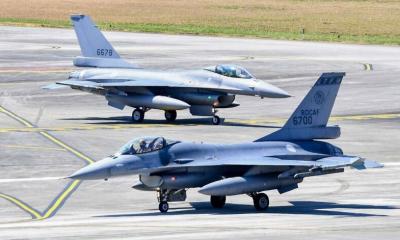
The first two F-16V Block 70 jets Taiwan purchased from the US were spotted unexpectedly turning back after departing from Hawaii yesterday, potentially further delaying delivery of the aircraft. Taiwan has purchased 66 of the F-16 C/D Block 70 jets to be deployed at Chihhang Air Base (志航基地) in Taitung County and operated by the air force's 7th Tactical Fighter Wing to defend Taiwan’s eastern region. Two single-seat jets, bearing serial No. 6727 and 6728, were spotted taking off from Hickam Field in Hawaii yesterday, observers said. Based on the precedent set during the delivery of Taiwan's older F-16 Block 20s, the new
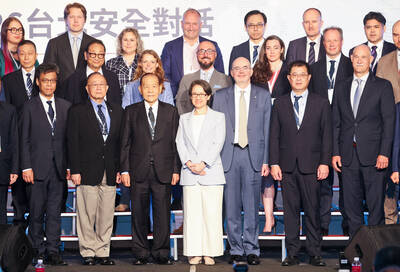
Taiwan’s growing defense preparations might be sending a stronger signal to the US than to Beijing, highlighting the need for Taipei to tailor its deterrence efforts to different audiences, a US security academic said yesterday. Stanford University Freeman Spogli Institute for International Studies fellow Oriana Skylar Mastro made the comment during a Taipei Security Dialogue panel examining lessons Taiwan could draw from the wars in Ukraine and the Middle East. Mastro said she was impressed by Taiwan’s increased defense spending, emphasis on asymmetric capabilities and efforts to prepare society for conflict, but questioned whom those initiatives were influencing. She said when she asked
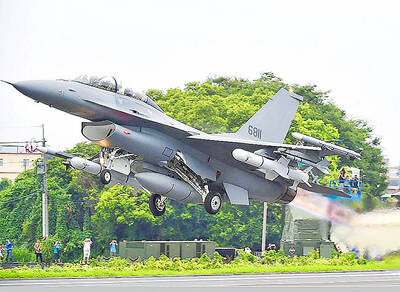
A sharp rise in compensation to be paid by air force officers who leave before completing their required service could indicate an increase in pilots leaving the military early, an analyst said on Friday, warning that the trend could worsen a shortage of experienced personnel. Chieh Chung (揭仲), a researcher at the Association for Strategic Foresight, issued the warning even though the number of volunteer military personnel is expected to increase next year. The planned headcount for volunteer military personnel, covering officers, noncommissioned officers (NCO) and enlisted soldiers, is 158,223 for next year, up 4,258 from 153,965 this year, Chieh said. The increase
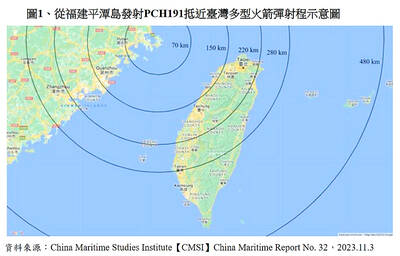
Potential improvements to munitions used by China’s long-range rocket-artillery units could extend their range to cover the entire Miyako Strait, which might give the Chinese People’s Liberation Army (PLA) the ability to secure the strategic waterway, the Mainland Affairs Council (MAC) said in a report. The PLA’s long-range rocket-artillery units deployed along the Taiwan Strait are concentrated along the coast of Fujian Province, including Changle, Pingtan and Shishi, the quarterly report on China said. The artillery brigades of the PLA’s 71st, 72nd and 73rd group armies have been deployed, with preparations for potential battlefield operations under way since August 2022, the report


 RSS
RSS