


President Chen Shui-bian (陳水扁) said on Tuesday that Taiwan and the US should strengthen communications, proposing a direct dialogue between Taipei and Washington to resolve issues such as Taiwan's UN bid and US travel for Taiwan's leaders.
Chen, while in Anchorage en route to Central America, told American Institute in Taiwan honorary chairman William Brown that he would like to see Taiwan and the US spend more time communicating with each other to find common ground.
"Taiwan is the US government's loyal partner and ally in values," he said. "If willing, the US Department of State or Defense Department can consider sending delegations of representatives to directly talk to us."
Brown that said he would convey Chen's proposal to the US government.
Commenting on US opposition to Taiwan's UN bid, Chen said that a majority of Taiwanese people are in favor of UN membership and both the ruling and opposition parties have a high consensus over the issue. It is not something that he can sway or stop, he said.
Taiwan's UN bid conforms to US interests, Chen said, because it is conducive to unifying the Taiwanese and bringing peace and stability to the Taiwan Strait.
The UN bid does not violate the "four noes" pledge nor will it change the status quo in the Taiwan Strait as the US government fears but instead will ensure the status quo, he said.
Saying that a referendum is direct democracy and democracy is a universal value that cannot be compromised, Chen emphasized that the Taiwanese people are entitled to 100 percent democracy.
"The Taiwanese people will never accept someone drawing a red line for our democracy," he said.
Meanwhile, the State Department on Tuesday refused to reply to Chen's complaint about his Alaska transit, saying only that the arrangements are "in keeping with long-standing policy and in strict accord with existing criteria."
A department official repeated that the stops in Alaska are solely for transit purposes.
The official also would not comment on the idea that Chen's limited transit was meant to convey US disapproval of Chen's plan for an election-day referendum on entry into the UN under the name "Taiwan."
While declining to discuss the issue, the official did note that the arrangements for this visit "fit in with our long standing practice and in accordance with our `one-China policy,' which is based on the three US-PRC communiques and the Taiwan Relations Act."
"We are prepared to facilitate on a case-by-case basis transits by senior Taiwan leaders in keeping with the criteria of safety, comfort, convenience and the dignity of the traveler," he said.
"The arrangements in this instance," the official stressed, "are intended only to facilitate transit."
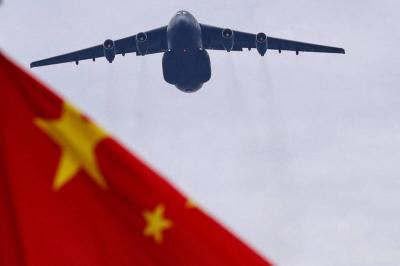
Beijing could eventually see a full amphibious invasion of Taiwan as the only "prudent" way to bring about unification, the US Department of Defense said in a newly released annual report to Congress. The Pentagon's "Annual Report to Congress: Military and Security Developments Involving the People's Republic of China 2025," was in many ways similar to last year’s report but reorganized the analysis of the options China has to take over Taiwan. Generally, according to the report, Chinese leaders view the People's Liberation Army's (PLA) capabilities for a Taiwan campaign as improving, but they remain uncertain about its readiness to successfully seize

Taiwan is getting a day off on Christmas for the first time in 25 years. The change comes after opposition parties passed a law earlier this year to add or restore five public holidays, including Constitution Day, which falls on today, Dec. 25. The day marks the 1947 adoption of the constitution of the Republic of China, as the government in Taipei is formally known. Back then the Chinese Nationalist Party (KMT) governed China from Nanjing. When the KMT, now an opposition party in Taiwan, passed the legislation on holidays, it said that they would help “commemorate the history of national development.” That
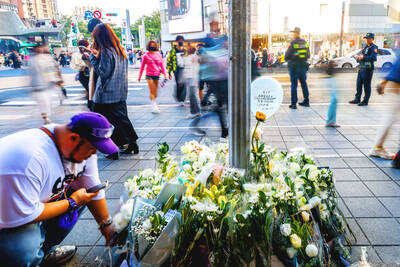
HORROR STORIES: One victim recounted not realizing they had been stabbed and seeing people bleeding, while another recalled breaking down in tears after fleeing A man on Friday died after he tried to fight the knife-wielding suspect who went on a stabbing spree near two of Taipei’s busiest metro stations, Taipei Mayor Chiang Wan-an (蔣萬安) said. The 57-year-old man, identified by his family name, Yu (余), encountered the suspect at Exit M7 of Taipei Main Station and immediately tried to stop him, but was fatally wounded and later died, Chiang said, calling the incident “heartbreaking.” Yu’s family would receive at least NT$5 million (US$158,584) in compensation through the Taipei Rapid Transit Corp’s (TRTC) insurance coverage, he said after convening an emergency security response meeting yesterday morning. National

Taiwan has overtaken South Korea this year in per capita income for the first time in 23 years, IMF data showed. Per capita income is a nation’s GDP divided by the total population, used to compare average wealth levels across countries. Taiwan also beat Japan this year on per capita income, after surpassing it for the first time last year, US magazine Newsweek reported yesterday. Across Asia, Taiwan ranked fourth for per capita income at US$37,827 this year due to sustained economic growth, the report said. In the top three spots were Singapore, Macau and Hong Kong, it said. South


 RSS
RSS