


An exhibit detailing Taiwan's scientific and technological achievements over the past 100 years opened to the public in the Statue Hall of National Taiwan Democracy Memorial Hall yesterday.
The exhibit, titled "Taiwan's Amazing Transformation in Science and Technology," traces the nation's technological rise from the Japanese colonial era to the present -- a century of achievements spanning the country's shift from the "edge of empires to the forefront of manufacturing."
Sponsored by the National Science Council and organized by the hall and tertiary education institutions, the exhibit features high-tech interactive displays explaining the history behind Taiwan's technological rise, from its first engineering projects executed by Japanese engineers to its current position as a global high-tech manufacturing powerhouse.
"Over the past 50 years, the scientific expertise and hard work of our people ... have not only fostered an extraordinary manufacturing ability and competitiveness, but led to our creating many technological `miracles,'" President Chen Shui-bian (
Taiwan should continue to work toward the goal of becoming a "technological innovator," after the country's industrial structure has been transformed from a labor-intensive one into a knowledge-intensive one, Chen said.
Chen noted that Taiwan's innovative competitiveness was rated second in Asia by the UK-based Economist Intelligence Unit.
Meanwhile, 14 Taiwanese-run businesses were included on a list released on July 2 by the US-based BusinessWeek of the world's top 100 performers in the information technology industry, Chen said.
Chen, Premier Chang Chun-hsiung (張俊雄) and other officials toured the meandering exhibit, reading some of the displays and trying the interactive exhibits.
For all its technological displays, the exhibit that seemed to grab the most attention, especially from the dignitaries, was a poster of a man's swollen genitals.
Guests did double-takes, peering quizzically at the large blown-up shot of what appeared to be grossly enlarged testicles, in the medical science section of the exhibit.
The shocking exhibit showcased Taiwan's apparent medical know-how in diagnosing and treating rare medical conditions.
Free and open to the public 9am to 6pm daily, the exhibit runs until Sept. 23.
ADDITIONAL REPORTING BY CNA

Fast food chain McDonald's is to raise prices by up to NT$5 on some products at its restaurants across Taiwan, starting on Wednesday next week, the company announced today. The prices of all extra value meals and sharing boxes are to increase by NT$5, while breakfast combos and creamy corn soup would go up by NT$3, the company said in a statement. The price of the main items of those meals, if ordered individually, would remain the same. Meanwhile, the price of a medium-sized lemon iced tea and hot cappuccino would rise by NT$3, extra dipping sauces for chicken nuggets would go up

Yangmingshan National Park’s Qingtiangang (擎天崗) nature area has gone viral after a park livestream camera observed a couple in the throes of intimate congress, which was broadcast live on YouTube, drawing large late-night crowds and sparking a backlash over noise, bright lights and disruption to wildlife habitat. The area’s livestream footage appeared to show a couple engaging in sexual activity on a picnic table in the park on Friday last week, with the uncensored footage streamed publicly online. The footage quickly spread across social media, prompting a tide of visitors to travel to the site to “check in” and recreate the

Minister of Digital Affairs Lin Yi-ching (林宜敬) yesterday cited regulatory issues and national security concerns as an expert said that Taiwan is among the few Asian regions without Starlink. Lin made the remarks on Facebook after funP Innovation Group chief executive officer Nathan Chiu (邱繼弘) on Friday said Taiwan and four other countries in Asia — China, North Korea, Afghanistan and Syria — have no access to Starlink. Starlink has become available in 166 countries worldwide, including Ukraine, Malaysia, the Philippines and Vietnam, in the six years since it became commercial, he said. While China and North Korea block Starlink, Syria is not
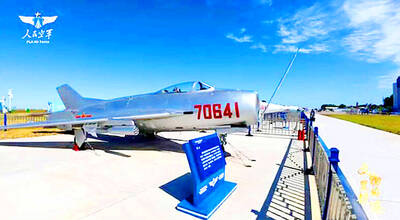
GROUNDED: A KMT lawmaker proposed eliminating drone development programs and freezing funding for counterdrone systems, despite China’s adoption of the technology China has deployed attack drones at air bases near the Taiwan Strait in a strategy aimed at overwhelming Taiwan’s air defense systems through saturation attacks, the Mainland Affairs Council (MAC) said. The council’s latest quarterly report on China said that satellite imagery and open-source intelligence indicate that the Chinese People’s Liberation Army (PLA) had converted retired J-6 fighter jets into J-6W drones, which the PLA has stationed at six air bases near Taiwan, five in China’s Fujian Province and one in Guangdong Province. The report cited J. Michael Dahm, a senior fellow at the US-based Mitchell Institute, as saying that China has


 RSS
RSS