

Democratic Progressive Party (DPP) Chairman Yu Shyi-kun yesterday defended the party's decision to choose its legislative candidates through opinion polls, urging the Taiwan Solidarity Union (TSU) to cooperate with it for a pan-green victory.
President Chen Shui-bian (
"The pan-blue camp has already integrated itself, and the pan-green camp will lose the elections if we don't cooperate with each other," Yu said in Taipei.
"It's our responsibility to unite the pan-green camp, and the DPP will show its sincerity," he said.
TSU policy committee director Chou Mei-li (
"I hope the DPP will respect the TSU's political strength, and won't field candidates based on poll results unless necessary," she told a press conference at the TSU's headquarters.
The TSU is not opposed to holding opinion polls, but it preferred to negotiate with the DPP first about the distribution of the seats, Chou said.
She said party officials would talk to TSU legislators who are opposed to fielding candidates based on opinion polls. While TSU was willing to cooperate with the DPP, Chou said it would not follow the pan-blue camp's example and merge with its larger ally.
When asked to comment on the pan-green camp's cooperation plan, Chinese Nationalist Party (KMT) Chairman Wu Poh-hsiung (吳伯雄) said his party and the People First Party have been making a great effort to negotiate on the seats in next year's elections, and their process was going more smoothly that that of the pan-green camp.

The donation of offshore patrol vessel Kinmen to the Philippines includes provisions that protect Taiwanese fishers and facilitate security cooperation across the First Island Chain, officials said yesterday. The comment was made during the Cabinet’s comprehensive administrative report at the legislature after Chinese Nationalist Party (KMT) Legislator Hsu Yu-chen (許宇甄) expressed concerns about the decision to give a ship to a country whose coast guard had in 2013 fired on a Taiwanese trawler and killed its captain without provocation. The Cabinet should lay out the safeguards that have been established to prevent the Philippine government from using the Kinmen to harass, expel
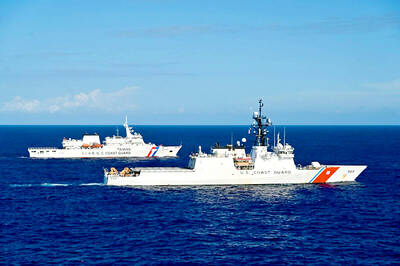
GROWING TIES: The CGA is planning a goodwill mission to the Philippines, in what would be the first time since 1975 a Taiwanese paramilitary vessel has visited the country The Coast Guard Administration (CGA) plans to significantly expand its participation in international security cooperative frameworks and its operational capabilities, a budget proposal for next year showed. The budget indicates a transformation of the CGA from a maritime law enforcement arm into a national defense and intelligence gathering entity capable of tackling larger regional security matters. The proposal showed that personnel from the coast guard’s Intelligence Division and Special Action Support Center are to participate in high-level national security talks with the US. As the CGA has dealt with China’s rising “gray zone” threats around Taiwan, it has become a valuable asset to

The National Police Agency’s Third Special Police Corps yesterday said that from May to July, it intercepted five smuggling operations from China, seizing more than 70,000 counterfeit Beyblades with an estimated infringement value of NT$34.45 million (US$1.08 million). It added that any bootleg unit that reached the local market could present hidden health hazards to players. Beyblades, a line of spinning toy tops used in competitive gaming and developed in Japan by toy company Takara Tomy, have become popular in Taiwan, making them a target for fraudsters. The Third Special Police Corps, dedicated to safeguarding maritime borders and trade lines,
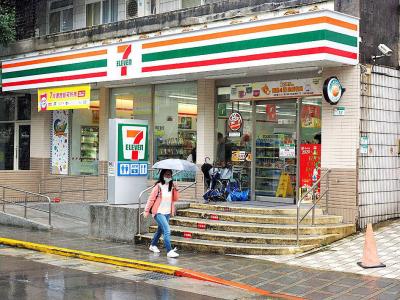
Five customers who made purchases at 7-Eleven stores across Taiwan won the top NT$10 million (US$313,716) special prize in the July-August uniform invoice lottery, including one who spent just NT$27 on photocopying, the convenience store chain said today. The five special prize winners made their purchases at stores in Taoyuan, Taipei, Taichung and Kaohsiung, 7-Eleven operator President Chain Store Corp said. The five winning purchases included NT$29 spent on snacks at a store in Taoyuan's Zhongli District (中壢), NT$27 on photocopying at a store in Taipei's Zhongzheng District (中正), NT$139 on City Cafe coffee and daily necessities at a store in Taipei's


 RSS
RSS