


A US Congressional action to urge the administration of US President George W. Bush to allow high-level meetings between Taipei and Washington could compel the administration to reverse its ban on such visits, Joseph Wu (
But such a policy shift will not happen any time soon, he said.
The lack of communication between the two countries resulting from the administration's ban on high-level meetings is provoking a negative view of statements by Taipei and actions by key US policymakers, Wu said.
Unlike the US, other democratic countries such as Australia and New Zealand, he noted, allow top foreign policy officials to visit Taiwan.
Wu made the comments in a presentation to a private meeting of academics and former administration officials at the Center for Strategic and International Studies and in a subsequent interview with the Taipei Times.
Wu described the lack of direct high-level communication as "one of the most difficult things" in US-Taiwan relations.
"There are many people, key decisionmakers in the United States who have a negative perception of certain Taiwanese decisionmakers, but do not have any opportunity to speak to them," Wu said.
While they can meet Taiwanese leaders as private citizens, "once they are in certain positions, they don't have any opportunity to talk to the key decisionmakers in Taiwan," he said.
"They are either prohibited from traveling to Taiwan or the key Taiwan decisionmakers are prohibited from traveling to Washington," he said
"Those rare few [in the US] who have had the opportunity to speak to the few key decisionmakers [in Taiwan] tend to develop a better understanding of Taiwan or [show] more sympathy for Taiwan," Wu said.
"This is something we need, and something that we hope the United States can think about," he said.
"Whenever there is a difference between Taiwan and the United States, the two countries should be required to engage in intense communications, so the two can have a better understanding of their positions with respect to each other," Wu told the Times.
The House Foreign Affairs Committee on Tuesday approved a bill that would urge the administration to end a longstanding ban on high-level visits between US and Taiwan foreign policy and strategic policy officials.
That bill, Wu said, would not have an impact on US administration policies in the near future, but he said "we hope that the United States can really, seriously consider the necessity of sending high-level foreign policy officials to talk to decision-makers directly."
"We certainly hope that the [House committee action] will have an effect," he said, calling the house vote a "very encouraging one."
The measure could also influence the treatment of Taiwanese leaders in transits through US cities.
"I think Taiwanese leaders should be respected and treated as genuine democratic leaders," Wu said.
"Right now, they are not able to have decent transit through the United States. They are not even able to visit the United States. I don't think that is in line with American foreign policy," he said.

POLAM KOPITIAM CASE: Of the two people still in hospital, one has undergone a liver transplant and is improving, while the other is being evaluated for a liver transplant A fourth person has died from bongkrek acid poisoning linked to the Polam Kopitiam (寶林茶室) restaurant in Taipei’s Far Eastern Sogo Xinyi A13 Department Store, the Ministry of Health and Welfare said yesterday, as two other people remain seriously ill in hospital. The first death was reported on March 24. The man had been 39 years old and had eaten at the restaurant on March 22. As more cases of suspected food poisoning involving people who had eaten at the restaurant were reported by hospitals on March 26, the ministry and the Taipei Department of Health launched an investigation. The Food and

The long-awaited Taichung aquarium is expected to open next year after more than a decade of development. The building in Cingshui District (清水) is to feature a large ocean aquarium on the first floor, coral display area on the second floor, a jellyfish tank and Dajia River (大甲溪) basin display on the third, a river estuary display and restaurant on the fourth, and a cafe and garden on the fifth. As it is near Wuci Fishing Port (梧棲漁港), many are expecting the opening of the aquarium to bring more tourism to the harbor. Speaking at the city council on Monday, Taichung City Councilor
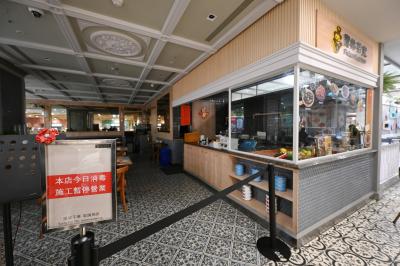
A fourth person has died in a food poisoning outbreak linked to the Xinyi (信義) branch of Malaysian restaurant chain Polam Kopitiam (寶林茶室) in Taipei, Deputy Minister of Health and Welfare Victor Wang (王必勝) said on Monday. It was the second fatality in three days, after another was announced on Saturday. The 40-year-old woman experienced multiple organ failure in the early hours on Monday, and the family decided not to undergo emergency resuscitation, Wang said. She initially showed signs of improvement after seeking medical treatment for nausea, vomiting and diarrhea, but her condition worsened due to an infection, he said. Two others who
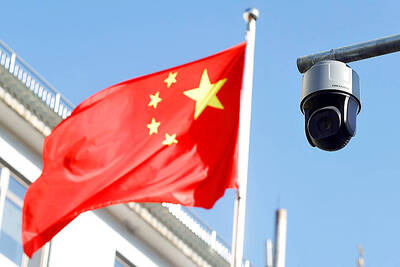
Taiwanese should be mindful when visiting China, as Beijing in July is likely to tighten the implementation of policies on national security following the introduction of two regulations, a researcher said on Saturday. China on Friday unveiled the regulations governing the law enforcement and judicial activities of national security agencies. They would help crack down on “illegal” and “criminal” activities that Beijing considers to be endangering national security, according to reports by China’s state media. The definition of what constitutes a national security threat in China is vague, Taiwan Thinktank researcher Wu Se-chih (吳瑟致) said. The two procedural regulations are to provide Chinese


 RSS
RSS