


Legal experts attending a forum yesterday were divided over the ruling of the Council of Grand Justices on presidential immunity and "state secret privileges" concerning President Chen Shui-bian's (
On "state secret privileges," the justices ruled on Friday that the president enjoys such prerogative of not divulging state secrets in the form of verbal testimony or material evidence.
The legislature must enact a special law regulating the president's right to refuse providing testimony and evidence concerning national security, national defense and foreign affairs. Before the legislation is implemented, the justices said, the president must explain whether the revelation of such information endangers the interests of the nation.
Regarding presidential immunity, the justices declared that the president is immune from criminal prosecution unless he or she is involved in treason or inciting internal disorder.
The presidential immunity, however, covers only the president and does not extend to his or her family members, the justices ruled, adding that the president "in principle" cannot abandon such privilege but prosecutors do not violate the Constitution if the president opts to forsake such prerogative and cooperate with prosecutors' investigation efforts. The president can resume such privilege at any time when he deems it to be necessary, the ruling said.
Any evidence gathering or interview with the president concerning a legal case must not confine the president's individual liberty nor impede the normal operation of the presidential duties, it said.
Prosecutors must not conduct the interview with the president at the prosecutor's office and the president can reject such a request and those for a search or detain.
Before a special decree is enacted to regulate the president's rights in this regard, all requests must be reviewed by a five-person special court composed of senior presiding judges of the High Court.
Except with the approval of the president, all search or detain orders cannot be conducted without the consent of the special court.
As for the defense lawyers' request for an injunction, the justices refused to take up the petition, saying the issued was addressed in the ruling.
Lin Ming-Hsin (林明昕), a law professor at National Taiwan University, said the ruling was "abstract" and failed to provide sufficient rationale and solid reasoning for the argument.
While the public had expected the justices to help rule on the particular problems, Lin said, it seemed they were afraid of using their power for fear of being criticized for meddling in court proceedings.
Lin said the justices' vague position was one of the longstanding problems with the country's constitutional system.
Their unwillingness to take a stand in controversial issues has resulted in more constitutional disputes, he said.
To deal with the situation, Lin called on the public to pressure the administration to amend the Constitution or write a new one, amend existing laws or enact new legislation.
Max Huang (
He expressed regret, however, that the interpretation was "abstract" and that they failed to specify how the case should proceed.
"I'm not sure whether it is fear or wisdom," he said.
Her Lai-jier (

POLAM KOPITIAM CASE: Of the two people still in hospital, one has undergone a liver transplant and is improving, while the other is being evaluated for a liver transplant A fourth person has died from bongkrek acid poisoning linked to the Polam Kopitiam (寶林茶室) restaurant in Taipei’s Far Eastern Sogo Xinyi A13 Department Store, the Ministry of Health and Welfare said yesterday, as two other people remain seriously ill in hospital. The first death was reported on March 24. The man had been 39 years old and had eaten at the restaurant on March 22. As more cases of suspected food poisoning involving people who had eaten at the restaurant were reported by hospitals on March 26, the ministry and the Taipei Department of Health launched an investigation. The Food and

The long-awaited Taichung aquarium is expected to open next year after more than a decade of development. The building in Cingshui District (清水) is to feature a large ocean aquarium on the first floor, coral display area on the second floor, a jellyfish tank and Dajia River (大甲溪) basin display on the third, a river estuary display and restaurant on the fourth, and a cafe and garden on the fifth. As it is near Wuci Fishing Port (梧棲漁港), many are expecting the opening of the aquarium to bring more tourism to the harbor. Speaking at the city council on Monday, Taichung City Councilor
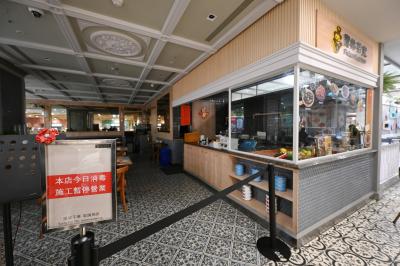
A fourth person has died in a food poisoning outbreak linked to the Xinyi (信義) branch of Malaysian restaurant chain Polam Kopitiam (寶林茶室) in Taipei, Deputy Minister of Health and Welfare Victor Wang (王必勝) said on Monday. It was the second fatality in three days, after another was announced on Saturday. The 40-year-old woman experienced multiple organ failure in the early hours on Monday, and the family decided not to undergo emergency resuscitation, Wang said. She initially showed signs of improvement after seeking medical treatment for nausea, vomiting and diarrhea, but her condition worsened due to an infection, he said. Two others who
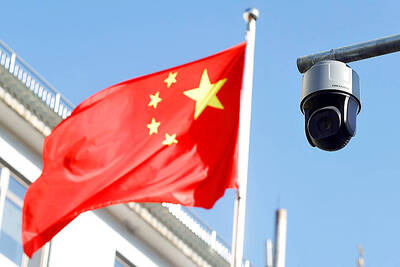
Taiwanese should be mindful when visiting China, as Beijing in July is likely to tighten the implementation of policies on national security following the introduction of two regulations, a researcher said on Saturday. China on Friday unveiled the regulations governing the law enforcement and judicial activities of national security agencies. They would help crack down on “illegal” and “criminal” activities that Beijing considers to be endangering national security, according to reports by China’s state media. The definition of what constitutes a national security threat in China is vague, Taiwan Thinktank researcher Wu Se-chih (吳瑟致) said. The two procedural regulations are to provide Chinese


 RSS
RSS