


Researchers said yesterday that they successfully tested 10 new sugar-fat compounds which they believe will inhibit the growth of cancer with limited side effects while prolonging the lives of patients.
The new compounds were created by a team led by Academia Sinica President Wong Chi-huey (
"This is an innovative strategy in cancer treatment. So far, most anti-cancer drugs are associated with side effects like nausea and hair loss," said Alice Yu (
The creations improve on a compound called a-Galcer, which was discovered in Japan in 1995.
At least 10 of the new compounds had proved effective in experiments with mice, Academia Sinica said.
The study showed that lung cancer-bearing mice treated with the new compound enjoyed a significantly prolonged survival time compared with those treated with a-Galcer, the research institute said in a statement.
The Japanese research did not proceed beyond the first phase because while A-Galcer was found to enhance immunity by helping some proteins, it also damaged other proteins, thus suppressing immune functions. Overall, the anti-cancer results were weak.
However, the Taiwanese experiments showed that mice treated with the new compounds for six weeks appeared to be in better health.
In breast cancer-bearing mice, treatment with the new compounds inhibited tumor growth in 75 percent of the subjects, compared with a 50 percent rate of inhibition for tumor growths in mice treated with a-Galcer.
Encouraged by the experiments, Chang Ya-jen (張雅貞), a researcher also involved in the study, said the new compounds could be used to manufacture drugs that would "provide an alternative therapeutic approach" to cancer management.
"They could signal a new ray of hope to cancer patients because such drugs could not only extend their survival time but also improve their quality of life while battling cancer," she said.
The study has been published on the Proceedings of the National Academy of Sciences Web site.
Yu said it could take up to 10 years to complete clinical experiments that would precede mass production of a new drug.
Academia Sinica has applied for patent rights for the compounds.
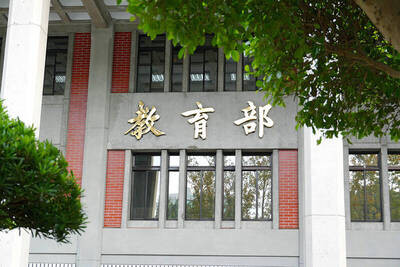
The Ministry of Education (MOE) is to launch a new program to encourage international students to stay in Taiwan and explore job opportunities here after graduation, Deputy Minister of Education Yeh Ping-cheng (葉丙成) said on Friday. The government would provide full scholarships for international students to further their studies for two years in Taiwan, so those who want to pursue a master’s degree can consider applying for the program, he said. The fields included are science, technology, engineering, mathematics, semiconductors and finance, Yeh added. The program, called “Intense 2+2,” would also assist international students who completed the two years of further studies in

Former president Tsai Ing-wen (蔡英文) departed for Europe on Friday night, with planned stops in Lithuania and Denmark. Tsai arrived at Taiwan Taoyuan International Airport on Friday night, but did not speak to reporters before departing. Tsai wrote on social media later that the purpose of the trip was to reaffirm the commitment of Taiwanese to working with democratic allies to promote regional security and stability, upholding freedom and democracy, and defending their homeland. She also expressed hope that through joint efforts, Taiwan and Europe would continue to be partners building up economic resilience on the global stage. The former president was to first

Taiwan will now have four additional national holidays after the Legislative Yuan passed an amendment today, which also made Labor Day a national holiday for all sectors. The Chinese Nationalist Party (KMT) and Taiwan People’s Party (TPP) used their majority in the Legislative Yuan to pass the amendment to the Act on Implementing Memorial Days and State Holidays (紀念日及節日實施辦法), which the parties jointly proposed, in its third and final reading today. The legislature passed the bill to amend the act, which is currently enforced administratively, raising it to the legal level. The new legislation recognizes Confucius’ birthday on Sept. 28, the
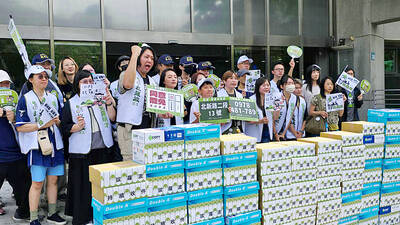
MORE NEEDED: Recall drives against legislators in Miaoli’s two districts and Hsinchu’s second district were still a few thousand signatures short of the second-stage threshold Campaigners aiming to recall Chinese Nationalist Party (KMT) legislators yesterday said they expect success in 30 out of 35 districts where drives have passed the second-stage threshold, which would mark a record number of recall votes held at once. Hsinchu County recall campaigners yesterday announced that they reached the second-stage threshold in the recall effort against Legislator Lin Szu-ming (林思銘). A total of 26,414 signatures have been gathered over the past two months, surpassing the 10 percent threshold of 23,287 in Hsinchu County’s second electoral district, chief campaigner Hsieh Ting-ting (謝婷婷) said. “Our target is to gather an additional 1,500 signatures to reach


 RSS
RSS