


The Council for Cultural Affairs rigged its bidding process for a project to restore Huashan Culture Park in Taipei in favor of one particular contractor and council chairman Chiu Kun-liang (邱坤良) has rented out buildings in the park at deflated prices, Democratic Progressive Party (DPP) legislators alleged yesterday.
Speaking to reporters at the DPP caucus' office in the legislature yesterday, DPP legislators Gao Jyh-peng (高志鵬), Charles Chiang (江昭儀) and Huang Chao-hui (黃昭輝) demanded that the council stop its bidding process for the park restoration project and submit to legislative oversight before beginning the process anew.
"There is strong evidence that the project is rigged through and through," Gao said.
Located on Bade Road, Taipei, the park is managed by the council and boasts a number of historic structures, including a winery and railway station dating back to the Qing Dynasty.
In recent years, the council has been renovating the buildings into a performing arts center, and plans to further renovate the park, according to its Web site.
Those plans, Huang said, are riddled with shady practices, not the least of which was the method of "public" announcement for the project to attract the best contractor. The council said late last year that the tender would begin in July of this year, but then "secretly" started the bidding process during the Lunar New Year holiday -- a time when most people were on vacation.
The bidding process is set to conclude on Monday, according to a press release from Gao's office.
"The council didn't want the news of the tender to get out. They wanted to catch outsiders off guard and ill-prepared to submit their bids," Huang added.
Other suspicious developments in the park include the council's setting outrageously low rents, Gao told reporters, saying that the historical buildings in the park, which are located amid prime real estate, are being rented out to local businesses "at prices scarcely above the total for land and income taxes for the buildings."
So far, three private organizations have submitted bids for the restoration project, the release said: The Association of Culture Environment Reform, Taiwan; the Creative Cultural Industry Association; and a local construction firm that apparently has neither a Web site nor an English name.
The council rebutted the claims of the legislators in a statement last night, saying that both its bidding process and the collection of rent have been conducted in a legal manner.
The council added that rent has been kept low to retain investors interested in the property as a base for their performing arts business after they had already invested NT$150 million (US$4.6 million) in its restoration.
Although the rent has been set low, the council added, its collection has been in line with the relevant laws.
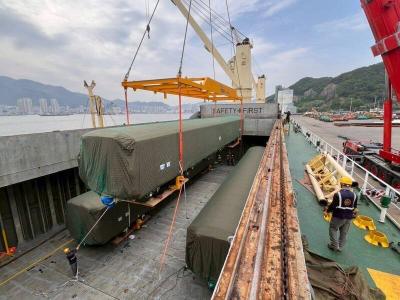
The first of 10 new high-capacity trains purchased from South Korea’s Hyundai Rotem arrived at the Port of Taipei yesterday to meet the demands of an expanding metro network, Taipei Rapid Transit Corp (TRTC) said yesterday. The train completed a three-day, 1,200km voyage from the Port of Masan in South Korea, the company said. Costing NT$590 million (US$18.79 million) each, the new six-carriage trains feature a redesigned interior based on "human-centric" transportation concepts, TRTC said. The design utilizes continuous longitudinal seating to widen the aisles and optimize passenger flow, while also upgrading passenger information displays and driving control systems for a more comfortable
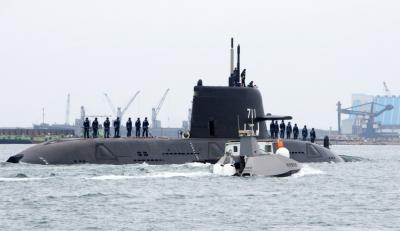
Taiwan's first indigenous defense submarine, the SS-711 Hai Kun (海鯤, or Narwhal), departed for its 13th sea trial at 7am today, marking its seventh submerged test, with delivery to the navy scheduled for July. The outing also marked its first sea deployment since President William Lai (賴清德) boarded the submarine for an inspection on March 19, drawing a crowd of military enthusiasts who gathered to show support. The submarine this morning departed port accompanied by CSBC Corp’s Endeavor Manta (奮進魔鬼魚號) uncrewed surface vessel and a navy M109 assault boat. Amid public interest in key milestones such as torpedo-launching operations and overnight submerged trials,
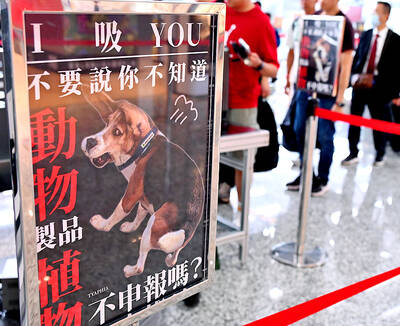
Quarantine awareness posters at Taiwan Taoyuan International Airport have gone viral for their use of wordplay. Issued by the airport branch of the Animal and Plant Health Inspection Agency, the posters feature sniffer dogs making a range of facial expressions, paired with advisory messages built around homophones. “We update the messages for holidays and campaign needs, periodically refreshing materials to attract people’s attention,” quarantine officials said. “The aim is to use the dogs’ appeal to draw focus to quarantine regulations.” A Japanese traveler visiting Taiwan has posted a photo on X of a poster showing a quarantine dog with a

SECURITY RISK: A university student sent a general alarm signal to THSRC’s control center on April 5, causing four operating trains to temporarily halt services The Ministry of Transportation and Communications yesterday pledged to submit a report on ways to harden the communication security of railway systems after a university student hacked into Taiwan High Speed Rail Corp’s (THSRC) radio communications system and disrupted operations of four high-speed rail trains last month. Investigation by the police and prosecutors found that the university student and radio enthusiast, surnamed Lin (林), first used a software-defined radio (SDR) filter to analyze THSRC signals, downloaded the data to a computer, cracked the parameters and then programmed the codes into his radio devices. Lin then sent a general alarm signal to


 RSS
RSS