


"It's over for red poodles," dog breeder and proprietor of the Master Dog salon Lin Chiu-li (
Even in the fickle pet market, the rise and decline of the red poodle was remarkable for its swiftness. Called "teddy dogs" because of the puffy hairstyle they are usually given, red poodles became fashionable when Taiwanese supermodel Lin Chi-ling's (
Lin Chiu-li, who is a breeder of mostly white poodles and maltese dogs, said the red poodle was "the" dog of 2005. Such puppies sold then at an average price of NT$60,000.
"Some dogs, sold as `mini' red poodles, were fetching even higher sums," Lin Chiu-li said. "We're talking about NT$100,000 and above."
"When demand explodes like that, reputable breeders can't keep up," she said. "Instead, there's a rush into the market to make a fast buck."
Less scrupulous pet dealers began to import or even smuggle adult and pregnant females from countries such as Thailand to satisfy the demand, she said.
"Large dogs, squat dogs ... as long as they were red, they took them all," she said.
"Puppy mill" operators flout the rules of dog breeding when they try to churn out as many puppies as possible -- as cheaply as possible -- before a breed becomes passe, she said.
"Since one male dog can impregnate many females, they would pair females of other breeds to the male they want, kill all the males of the resulting litter and breed the females to a male of the desired breed again," she said. "After two or three generations, they consider the puppies `pure' enough to sell."
Director of the Kaohsiung Concern Stray Animal Association Wang Chun-ching (
"We have been to facilities where dogs are living in pitiable conditions," Wang said. "The dogs all have their larynxes removed. They're caged and bred until they're dead."
Lin Chiu-li blames the uneven quality of dogs sold during the rush for the red poodle's equally swift decline in popularity.
"We started hearing complaints from people that their `mini poodles' were getting bigger," she said.
By the middle of last year, red poodle fever had already started to recede, she said.
Other fashionable dogs have fared even worse.
"Owners usually keep their red poodles or are able to give them away to another family," Lin Chiu-li said. "But many labradors, golden retrievers and other large dogs end up on the streets."
"We have more than 10 golden retrievers in our shelter right now. There are also many labradors and huskies," Wang said.
"Even smaller dogs can be abandoned if it becomes more obvious as a dog grows older that it is not purebred." she said.
"We need more regulation of the dog breeding industry in this country," she said.
"Any time a show or news item features a breed, it can quickly cause a fad," she said. "The Japanese movie Quill made labradors popular. A news item about a husky that supposedly saved a baby from drowning made that breed popular. With hormone shots, breeders can have puppies for sale within a few months."
Lunar New Year traditionally sees a boom in puppy sales, but this year was slower, Lin Chiu-li said.
"In previous years, individual stalls in a night market could move more than 100 puppies over the two-week spring holiday, but we did not see the same rush of orders this year," she said.
But a new trend is emerging nationwide. Gray poodles, called "koalas" are the next big thing.
"Another color variation and another gimmicky name," Lin Chiu-li said. "It's like the red poodle phenomenon all over again."

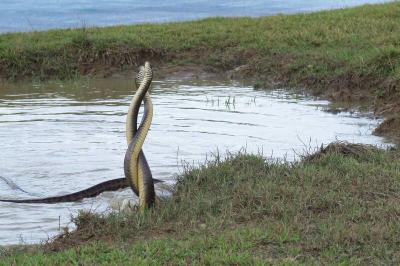
Kenting National Park service technician Yang Jien-fon (楊政峰) won a silver award in World Grand Prix Photography Awards Spring Season for his photograph of two male rat snakes intertwined in combat. Yang’s colleagues at Kenting National Park said he is a master of nature photography who has been held back by his job in civil service. The awards accept entries in all four seasons across six categories: architectural and urban photography, black-and-white and fine art photography, commercial and fashion photography, documentary and people photography, nature and experimental photography, and mobile photography. Awards are ranked according to scores and divided into platinum, gold and

More than half of the bamboo vipers captured in Tainan in the past few years were found in the city’s Sinhua District (新化), while other districts had smaller catches or none at all. Every year, Tainan captures about 6,000 snakes which have made their way into people’s homes. Of the six major venomous snakes in Taiwan, the cobra, the many-banded krait, the brown-spotted pit viper and the bamboo viper are the most frequently captured. The high concentration of bamboo vipers captured in Sinhua District is puzzling. Tainan Agriculture Bureau Forestry and Nature Conservation Division head Chu Chien-ming (朱健明) earlier this week said that the
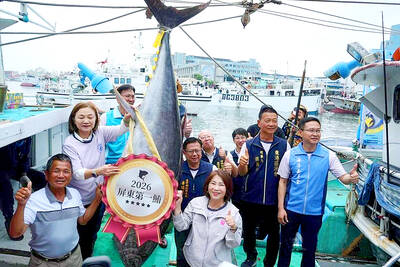
The first bluefin tuna of the season, brought to shore in Pingtung County and weighing 190kg, was yesterday auctioned for NT$10,600 (US$333.5) per kilogram, setting a record high for the local market. The auction was held at the fish market in Donggang Fishing Harbor, where the Siaoliouciou Island-registered fishing vessel Fu Yu Ching No. 2 delivered the “Pingtung First Tuna” it had caught for bidding. Bidding was intense, and the tuna was ultimately jointly purchased by a local restaurant and a local company for NT$10,600 per kilogram — NT$300 ,more than last year — for a total of NT$2.014 million. The 67-year-old skipper
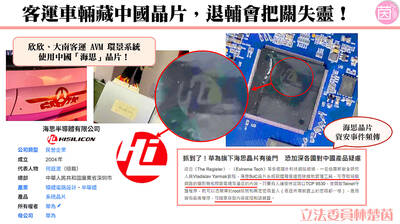
BREACH OF CONTRACT: The bus operators would seek compensation and have demanded that the manufacturer replace the chips with ones that meet regulations Two bus operators found to be using buses with China-made chips are to demand that the original manufacturers replace the systems and provide compensation for breach of contract, the Veterans Affairs Council said yesterday. Democratic Progressive Party Legislator Michelle Lin (林楚茵) yesterday said that Da Nan Bus Co and Shin-Shin Bus Co Ltd have fielded a total of 82 buses that are using Chinese chips. The bus models were made by Tron-E, while the systems provider was CYE Electronics, Lin said. Lin alleged that the buses were using chips manufactured by Huawei subsidiary HiSilicon Co, which presents a national security risk if the


 RSS
RSS