


The nation's birthrate has fallen for a fifth year in a row, the Directorate-General of Budget, Accounting and Statistics said.
Only 204,000 babies were born last year in Taiwan, down from 206,000 the previous year, the latest figures, released earlier this month, showed.
The Council of Economic Planning and Development's mid-2005 projections said that Taiwanese women have, on average, 1.16 children and the population was set to go into decline sometime during the next 10-to-15 years.
"We shut down our birthing rooms three years ago to concentrate on our in-vitro fertilization (IVF) clients," said Tsai Feng-po (
"People are waiting longer and longer to have kids," he said. "Sometimes, by the time they have the financial means to have children, their ability to conceive has dwindled."
"For most women, 22 to 28 is their period of peak fertility," said Chen Chao-wen (陳昭雯), who is married to Tsai and vice-superintendent of the clinic. "Thirty-eight is the watershed year -- beyond that age, fertility declines precipitously."
Even if a couple opts for IVF, chances of success decrease with the woman's age, she said.
A 2005 survey sponsored by the Ministry of the Interior showed that 45 percent of women who are reluctant to start a family or to have more children cite financial pressure as the reason.
Yet despite stagnant wages and economic uncertainty, Taiwan is far more prosperous now than it was 20 or 30 years ago, when birthrates were much higher.
"Families used to get by on one salary and thought nothing of having four or five children," Chen said. "But back in those days, it was not necessary to send your child to a buxiban or anything like that."
The nation is home to a bewildering array of buxiban, cram schools that teach everything from abacus to playing the xylophone. The extra-curricular learning can start very early as parents concentrate more resources onto a smaller number of children.
Eager to give their children the very best start in life, some parents are enrolling their toddlers in block play classes costing around NT$500 for a 50-minute session.
"We are teaching creativity through a structured, guided process," said "Hsiao-yu" (小魚), a professional block play teacher who declined to be identified by her real name. "It is very different from kids playing with blocks on their own."
She said there are 10 block-play centers in Taipei City and Taipei County alone.
"I've been doing this for eight years, but this activity really took off in the past two to three years," she said, adding that the popularity of the classes was not the cause, but the effect of the low birthrate.
"People want to make sure their kids are happy," she said. "Block play is not about test scores, it's the child's personal development. They get enormous satisfaction from the creative process."
While block play classes might still only be for the wealthy, classes for subjects such as English or mathematics outside school are increasingly considered essential.
A study of junior-high students released in 2004 by Zhang Ying-hua (
"When I was younger, the only people who studied outside school were rich kids who got piano lessons," Chen said. "But nowadays, people fear that their child will be left behind if they don't pay for all these different courses."
Tsai said the cost of education was a major concern for parents.
"I've had a couple that has been trying to have kids for 11 years. After many rounds of IVF, the woman finally became pregnant with triplets. But the husband said `I cannot afford the school fees for three kids' and requested that the embryos be trimmed."
The couple changed its mind before the procedure and the woman gave birth to triplets.

POLAM KOPITIAM CASE: Of the two people still in hospital, one has undergone a liver transplant and is improving, while the other is being evaluated for a liver transplant A fourth person has died from bongkrek acid poisoning linked to the Polam Kopitiam (寶林茶室) restaurant in Taipei’s Far Eastern Sogo Xinyi A13 Department Store, the Ministry of Health and Welfare said yesterday, as two other people remain seriously ill in hospital. The first death was reported on March 24. The man had been 39 years old and had eaten at the restaurant on March 22. As more cases of suspected food poisoning involving people who had eaten at the restaurant were reported by hospitals on March 26, the ministry and the Taipei Department of Health launched an investigation. The Food and
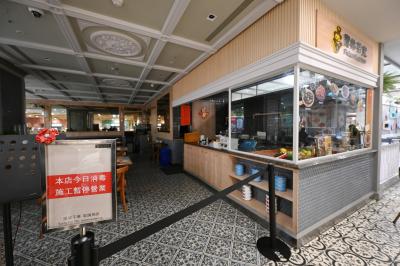
A fourth person has died in a food poisoning outbreak linked to the Xinyi (信義) branch of Malaysian restaurant chain Polam Kopitiam (寶林茶室) in Taipei, Deputy Minister of Health and Welfare Victor Wang (王必勝) said on Monday. It was the second fatality in three days, after another was announced on Saturday. The 40-year-old woman experienced multiple organ failure in the early hours on Monday, and the family decided not to undergo emergency resuscitation, Wang said. She initially showed signs of improvement after seeking medical treatment for nausea, vomiting and diarrhea, but her condition worsened due to an infection, he said. Two others who
MEDICAL: The bills would also upgrade the status of the Ethical Guidelines Governing the Research of Human Embryos and Embryonic Stem Cell Research to law The Executive Yuan yesterday approved two bills to govern regenerative medicine that aim to boost development of the field. Taiwan would reach an important milestone in regenerative medicine development with passage of the regenerative medicine act and the regenerative medicine preparations ordinance, which would allow studies to proceed and treatments to be developed, Deputy Minister of Health and Welfare Victor Wang (王必勝) told reporters at a news conference after a Cabinet meeting. Regenerative treatments have been used for several conditions, including cancer — by regenerating blood cells — and restoring joint function in soft tissue, Wang said. The draft legislation requires regenerative treatments

Taiwanese should be mindful when visiting China, as Beijing in July is likely to tighten the implementation of policies on national security following the introduction of two regulations, a researcher said on Saturday. China on Friday unveiled the regulations governing the law enforcement and judicial activities of national security agencies. They would help crack down on “illegal” and “criminal” activities that Beijing considers to be endangering national security, according to reports by China’s state media. The definition of what constitutes a national security threat in China is vague, Taiwan Thinktank researcher Wu Se-chih (吳瑟致) said. The two procedural regulations are to provide Chinese


 RSS
RSS