


Democratic Progressive Party (DPP) Legislator William Lai (
Lai told a press conference that Huang Chun-ying (黃俊英) rented the location of his headquarters from former Tainan County councilor Chen Ming-chih (陳明志), who lost his seat on the council following a court ruling sentencing him to one year in prison for operating illegal gambling activities in 2000.
Lai said that Chen is known as a major operator of liuhecai (六合彩), an illegal gambling play on the numbers of Mark Six of Hong Kong, in southern Taiwan, and he wouldn't rent the 600-ping (1,980m2) location to Huang just because he wanted to collect rent.
"Doesn't [renting the location] violate your claim of integrity? Were there secret under-the-table deals?" Lai asked, adding that he suspected Chen had made political donations to Huang.
Lai showed the press some background information on Chen, but did not present any evidence backing his suspicion of a relationship between Chen and Huang.
Meanwhile, DPP Legislator Huang Chao-hui (
He hinted that Huang Chun-ying might have promised to help Chen deal with his unpaid taxes, which total NT$900 million (US$27.8 million), if he wins the mayoral election on Saturday.
Huang Chao-hui did not present proof, however, to support his allegations.
In response, Huang said his campaign team legally rented the building as his campaign headquarters, and he did not know who was the owner.
He added that if the landlord was really involved in illegal matters, he would not protect him after he is elected mayor.
Meanwhile, in Taipei, DPP mayoral candidate Frank Hsieh (
In response, Soong yesterday acknowledged that there were people who had pocketed money from the deal but did not elaborate further. Soong said he would focus his efforts on addressing municipal issues as a Taipei mayoral candidate.
"As a former premier, Hsieh must know more than I do, and so I will let him to do the explaining. I will focus on addressing municipal issues instead," Soong said.
Although the scandal has damaged Taiwan's image in the international community, the issue has nothing to do with the mayoral election and should not be discussed now, he added.
Additional reporting by Rich Chang

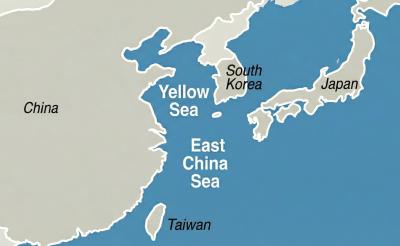
China has reserved offshore airspace in the Yellow Sea and East China Sea from March 27 to May 6, issuing alerts usually used to warn of military exercises, although no such exercises have been announced, the Wall Street Journal (WSJ) reported yesterday. Reserving such a large area for 40 days without explanation is an “unusual step,” as military exercises normally only last a few days, the paper said. These alerts, known as Notice to Air Missions (Notams), “are intended to inform pilots and aviation authorities of temporary airspace hazards or restrictions,” the article said. The airspace reserved in the alert is

South Korea is planning to revise its controversial electronic arrival card, a step Taiwanese officials said prompted them to hold off on planned retaliatory measures, a South Korean media report said yesterday. A Yonhap News Agency report said that the South Korean Ministry of Foreign Affairs is planning to remove the “previous departure place” and “next destination” fields from its e-arrival card system. The plan, reached after interagency consultations, is under review and aims to simplify entry procedures and align the electronic form with the paper version, a South Korean ministry official said. The fields — which appeared only on the electronic form
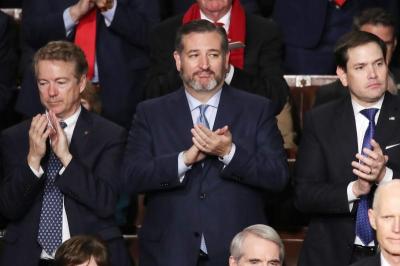
A bipartisan group of US senators has introduced a bill to enhance cooperation with Taiwan on drone development and to reduce reliance on supply chains linked to China. The proposed Blue Skies for Taiwan Act of 2026 was introduced by Republican US senators Ted Cruz and John Curtis, and Democratic US senators Jeff Merkley and Andy Kim. The legislation seeks to ease constraints on Taiwan-US cooperation in uncrewed aerial systems (UAS), including dependence on China-sourced components, limited access to capital and regulatory barriers under US export controls, a news release issued by Cruz on Wednesday said. The bill would establish a "Blue UAS

More than 6,000 Taiwanese students have participated in exchange programs in China over the past two years, despite the Mainland Affairs Council’s (MAC) “orange light” travel advisory, government records showed. The MAC’s publicly available registry showed that Taiwanese college and university students who went on exchange programs across the Strait numbered 3,592 and 2,966 people respectively. The National Immigration Agency data revealed that 2,296 and 2,551 Chinese students visited Taiwan for study in the same two years. A review of the Web sites of publicly-run universities and colleges showed that Taiwanese higher education institutions continued to recruit students for Chinese educational programs without


 RSS
RSS