


Pan-green politicians yesterday blasted Chinese Nationalist Party (KMT) Chairman Ma Ying-jeou (馬英九) for saying that he would trade a pledge of "no independence" for Taiwan if Beijing were to forswear the use of arms against the country.
In an interview with Bloomberg last Thursday that was published on the agency's Web site on Monday, Ma said that if the KMT won the 2008 presidential election, it would negotiate a peace agreement with China by 2012, promising that Taiwan would not pursue independence in exchange for Beijing promising "no use of arms" against Taiwan.
Ma also said that the KMT, if it were to win the presidential election, would make major changes to cross-strait policies, such as increasing funding for Taiwanese companies which would like to invest in China or allowing Chinese companies to invest in Taiwan to establish stronger business partnerships with China.
Ma told Bloomberg that China represented not only a threat, but also an opportunity to Taiwan, and that the KMT would like to maximize the opportunity while minimizing the threat.
Premier Su Tseng-chang (蘇貞昌) yesterday mocked Ma's comments on "peace talks," saying that Ma sounded like he was actually campaigning to become the "Taiwanese chief executive," instead of the nation's next president.
"If he [Ma] negotiates with China, he will be downgrading himself even if he wins the presidential election in 2008. He will be the `Taiwanese chief executive' instead of the president," Su said when reporters approached him for comment on Ma's interview.
Taiwan is definitely an independent country, Su said.
"If there is any negotiation with China, it will be between two independent countries," he said, adding that Taiwan should not abandon its own policies just because "gang members arrive at your front door and threaten you with weapons."
"No matter who wins the presidential election, this person is not supposed to give up our own bottom line to negotiate with China. Otherwise, the Taiwanese president will become a `Taiwanese chief executive.' We cannot let someone like this become our president," Su said.
Ma yesterday said that Taiwan was not a special administrative area of China and asked how there could be a chief executive.
"Su was just showing his ignorance about cross-strait affairs," he said.
Ma added that peace talks would only become possible when China has withdrawn all the missiles it has aimed at Taiwan.
Saying that it is the KMT's belief that the Republic of China has always been an independent country, Ma said he had told Bloomberg that "any negotiation with China needs to operate under the framework of the [so-called] 1992 Consensus."
In a telephone interview with the Taipei Times yesterday, deputy director of the Democratic Progressive Party's culture and information department Chou Yung-hong (周永鴻) said Ma was trying to sell out the sovereignty of the nation by exchanging Taiwan's right to independence for peace with China.
Whether the country will declare independence is the choice of the Taiwanese people, not a means to "please China," Chou said, adding that Ma could not decide the future of Taiwan on his own.
Taiwan Solidarity Union Legislator David Huang (黃適卓) told a press conference yesterday that Ma was trying to bargain over Taiwan's future "with China, the demon."
Under such a treaty, Taiwan would be downgraded to a special administrative region like Hong Kong, Huang said.
In doing so, Ma would sacrifice the rights and soul of Taiwanese people, Huang added.
Additional reporting by Jimmy Chuang and CNA
also see story:
Editorial: Ma offers no peaceful alternative

The Centers for Disease Control (CDC) yesterday reported the first case of a new COVID-19 subvariant — BA.3.2 — in a 10-year-old Singaporean girl who had a fever upon arrival in Taiwan and tested positive for the disease. The girl left Taiwan on March 20 and the case did not have a direct impact on the local community, it said. The WHO added the BA.3.2 strain to its list of Variants Under Monitoring in December last year, but this was the first imported case of the COVID-19 variant in Taiwan, CDC Deputy Director-General Lin Ming-cheng (林明誠) said. The girl arrived in Taiwan on

South Korea is planning to revise its controversial electronic arrival card, a step Taiwanese officials said prompted them to hold off on planned retaliatory measures, a South Korean media report said yesterday. A Yonhap News Agency report said that the South Korean Ministry of Foreign Affairs is planning to remove the “previous departure place” and “next destination” fields from its e-arrival card system. The plan, reached after interagency consultations, is under review and aims to simplify entry procedures and align the electronic form with the paper version, a South Korean ministry official said. The fields — which appeared only on the electronic form

The Ministry of Foreign Affairs (MOFA) is suspending retaliation measures against South Korea that were set to take effect tomorrow, after Seoul said it is updating its e-arrival system, MOFA said today. The measures were to be a new round of retaliation after Taiwan on March 1 changed South Korea's designation on government-issued alien resident certificates held by South Korean nationals to "South Korea” from the "Republic of Korea," the country’s official name. The move came after months of protests to Seoul over its listing of Taiwan as "China (Taiwan)" in dropdown menus on its new online immigration entry system. MOFA last week
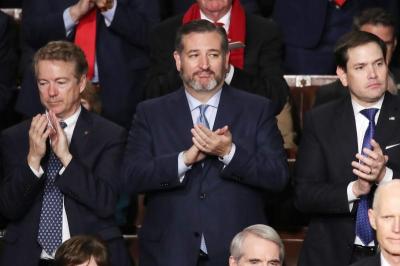
A bipartisan group of US senators has introduced a bill to enhance cooperation with Taiwan on drone development and to reduce reliance on supply chains linked to China. The proposed Blue Skies for Taiwan Act of 2026 was introduced by Republican US senators Ted Cruz and John Curtis, and Democratic US senators Jeff Merkley and Andy Kim. The legislation seeks to ease constraints on Taiwan-US cooperation in uncrewed aerial systems (UAS), including dependence on China-sourced components, limited access to capital and regulatory barriers under US export controls, a news release issued by Cruz on Wednesday said. The bill would establish a "Blue UAS


 RSS
RSS