


As more and more people turn to online chat rooms to arrange casual sexual encounters, a disturbing culture of unsafe sex is developing among the country's netizens.
A growing body of evidence suggests that one-night stands, extramarital affairs, and sexual services are increasingly being arranged in cyberspace, where anonymity and convenience make establishing casual sexual relationships easy.
For instance, in a recent incident in Taichung an HIV-positive woman solicited men online with offers of unprotected sex, only to later announce in a chat room that she had HIV and was trying to infect others.
The incident reportedly led to a string of online messages by men who had had unprotected, anonymous sex with the woman, saying that they would get themselves tested for HIV, the virus that causes AIDS.
"Although people tend to be more removed from one another [in the digital era], the need for interaction is as strong as ever, which is why virtual interaction is increasing," said Chan Tung-lin (
Chan added that the hectic pace of modern life made online chat rooms ideal for those in need of social interaction, but who lack the time and social skills to interact with others in more conventional settings.
"Besides those looking for `fast-food-style' romance, many also turn to the Internet to arrange one-off encounters and extramarital affairs," Chan said.
pressure
Lin Pen-tang (林本堂), a psychiatrist at Taichung Veterans General Hospital, told the Liberty Times (the Taipei Times' sister paper) that local youth who seek out one-night stands are often under tremendous amounts of pressure at school and use casual sex as a way of coping with academic demands.
Lin described their promiscuity as a "sickness" that could be cured with the proper medical and psychiatric treatment.
Chan agreed that pressure could be behind promiscuous behavior, but added that many other factors could be responsible as well.
"Men who have one-night stands -- besides trying to satisfy a basic sexual need, may be trying to prove that they're robust and virile, some may be trying to prove to themselves that they're charming and attractive," he said.
"Women, on the other hand, often engage in casual sex due to a feeling of emptiness or loneliness," Chan said.

Eight Chinese naval vessels and 24 military aircraft were detected crossing the median line of the Taiwan Strait between 6am yesterday and 6am today, the Ministry of National Defense said this morning. The aircraft entered Taiwan’s northern, central, southwestern and eastern air defense identification zones, the ministry said. The armed forces responded with mission aircraft, naval vessels and shore-based missile systems to closely monitor the situation, it added. Eight naval vessels, one official ship and 36 aircraft sorties were spotted in total, the ministry said.
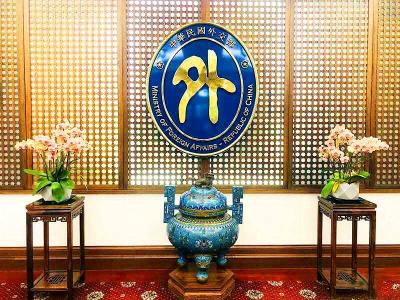
The Ministry of Foreign Affairs (MOFA) today said that if South Korea does not reply appropriately to its request to correct Taiwan’s name on its e-Arrival card system before March 31, it would take corresponding measures to alter how South Korea is labeled on the online Taiwan Arrival Card system. South Korea’s e-Arrival card system lists Taiwan as “China (Taiwan)” in the “point of departure” and “next destination” fields. The ministry said that it changed the nationality for South Koreans on Taiwan’s Alien Resident Certificates from “Korea” to “South Korea” on March 1, in a gesture of goodwill and based on the

Taiwanese officials were shown the first of 66 F-16V fighter jets purchased by Taiwan from the United States, the Ministry of National Defense said yesterday, adding the aircraft has completed an initial flight test and is expected to be delivered later this year. A delegation led by Deputy Minister of National Defense Hsu Szu-chien (徐斯儉) visited Lockheed Martin’s F-16 C/D Block 70 (also known as F-16V) assembly line in South Carolina on March 16 to view the aircraft. The jet will undergo a final acceptance flight in the US before being delivered to Taiwan, the
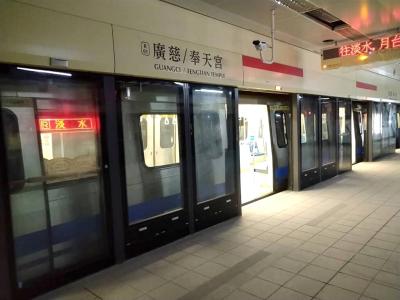
The New Taipei Metro's Sanyin Line and the eastern extension of the Taipei Metro's Tamsui-Xinyi Line (Red Line) are scheduled to begin operations in June, the National Development Council said today. The Red Line, which terminates at Xiangshan Station, would be connected by the 1.4km extension to a new eastern terminal, Guangci/Fengtian Temple Station, while the Sanyin Line would link New Taipei City's Tucheng and Yingge stations via Sanxia District (三峽). The council gave the updates at a council meeting reviewing progress on public construction projects for this year. Taiwan's annual public infrastructure budget would remain at NT$800 billion (US$25.08 billion), with NT$97.3


 RSS
RSS