

A minor scuffle between police and journalists trying to cover the release of a high-profile corruption suspect on Monday has turned into a legal showdown between the government and a TV cameraman detained by police at the scene.
During the incident on Monday afternoon, a number of court police attempted without much success to fend off members of the press at the Taipei District Court, as the reporters chased the president's son-in-law, Chao Chien-ming, (
As the press and police officers pushed one another in the chaos, Sanlih Entertainment Television employee Chu Wen-cheng (朱文正) was grabbed by several police officers and forcefully hauled into the court building, where he was taken into custody.
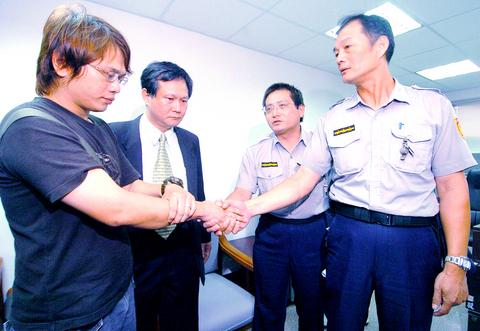
PHOTO: WANG MIN-WEI, TAIPEI TIMES
The court police then brought Chu to the Taipei District Prosecutors' Office and accused him of interfering with a public function (妨害公務罪).
The court police said they arrested Chu because he hit them and kicked a court police officer during the fray.
Prosecutors released Chu without bail late on Monday night .
Chu, who suffered minor injuries, told the press as he left the prosecutors' office that he neither swung at court police nor assaulted them.
"They got the wrong person," Chu said, adding that several cameramen had recorded the incident from different angles and could prove his innocence.
Widespread footage of the incident shown on several TV stations showed no evidence that Chu had attacked police officers.
Yesterday afternoon, Chu filed a lawsuit against the Taipei District Court police for offenses against personal liberty, causing bodily harm and malfeasance in office. He asked for NT$1 million (US$30,470) in compensation.
Chu claimed that court police beat him while he was in custody.
Meanwhile, the Judicial Yuan yesterday said it would "reflect" on the clash.
"The Judicial Yuan regrets the incident, and it will reflect on whether the court police overreacted ... But now that prosecutors have started probing the matter, any conclusions had better be made after the completion of the investigation," Judicial Yuan Secretary-General Fan Kuang-chun (
Fan said chaos often occurs at courts nationwide when the press chases important figures as they attend hearings.
"Regulations on press practices inside and outside the courts should be created to prevent this kind of chaos from repeatedly happening," he added.
The Taipei District Court yesterday afternoon also issued a press statement offering an apology for the incident.
Government Information Office Minister and Cabinet Spokesman Cheng Wen-tsang (鄭文燦) yesterday said that guaranteeing reporters' safety should be the most important thing during media events.
"Things like this could be avoided if the Taipei District Court prepared and arranged proper working areas for reporters during an event," Cheng said.
"No matter what, reporters' safety should be the priority at all times," Cheng said.
Cheng said that there might have been some misunderstandings in this case.
However, any violence should be investigated and people who attack others should not be forgiven, Cheng said.
Additional reporting by Jimmy Chuang
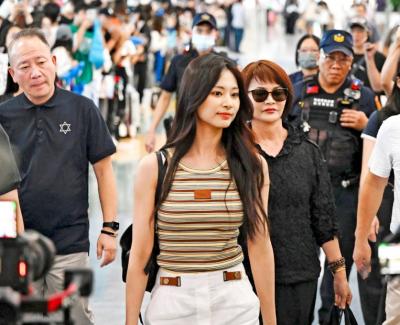
A Straits Exchange Foundation official today warned that yielding to political pressure in exchange for access to China’s entertainment industry rarely ends well, amid rumors that China is seeking to lure Taiwanese K-pop star Chou Tzu-yu (周子瑜). Chou, more commonly known as Tzuyu, is the only Taiwanese member of the girl group Twice. Her contract with JYP Entertainment is set to expire at the end of this year, and there have been widespread reports that she would not renew it. She is reportedly planning to pursue solo activities under her parents’ agency, Yu Hai Entertainment (瑜海娛樂), although China has also reportedly offered
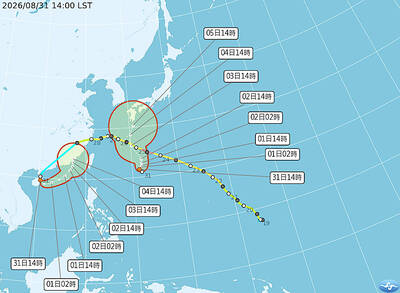
A tropical depression near Hainan that was once Typhoon Saudel may once again strengthen into a tropical storm, the Central Weather Administration (CWA) said yesterday, but a sea warning for waters around Taiwan is unlikely. CWA forecaster Huang En-hung (黃恩鴻) said that Saudel would return to being a weak tropical storm by late yesterday or early this morning. However, as the storm is to gradually weaken again and would head toward China’s Guangdong Province away from Taiwan, the chances that it would affect Taiwan enough for the CWA to issue a sea warning are relatively low,

Yielding to political pressure in exchange for access to China’s entertainment industry rarely ends well, a Straits Exchange Foundation official said yesterday amid rumors that China is seeking to lure Taiwanese K-pop star Chou Tzu-yu (周子瑜). Chou, who goes by Tzuyu, is the only Taiwanese member of the girl group Twice. Her contract with JYP Entertainment is set to expire at the end of this year, and there have been widespread rumors that she would not renew it. She is reportedly planning to pursue a solo career under her parents’ agency, Yu Hai Entertainment, although China has also reportedly offered to help Tzuyu
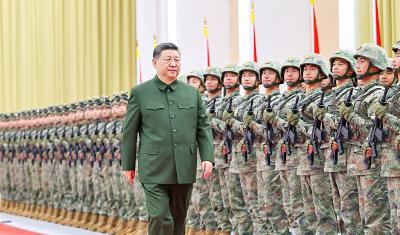
China has revised its National Defense Mobilization Law to prepare for a rapid transition to wartime, with an official today saying the measures are aimed at helping Chinese President Xi Jinping (習近平) fulfill his “historic mission of national unification.” The revised version of the mobilization law is to take effect on Oct. 1, marking the first major revision since the law was enacted in 2010. The amendments define national defense mobilization as measures taken in response to threats to national sovereignty, unification, territorial integrity, security and development interests, including efforts to ensure rapid transition between peacetime and wartime and convert economic and


 RSS
RSS